

The plates that define Montevideo: what they are, where they came from, and where to eat the canonical version.
Signature dishes
-
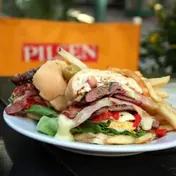
Chivito
Chivito is the national dish of Uruguay, a sandwich of sliced beefsteak, mozzarella, ham, tomatoes, mustard, mayonnaise and olives, commonly with bacon and fried or hard-boiled eggs, served in a bun, often with French fries.
Where to try it: Bar Tinkal, Mercado del Puerto
Chivito means kid, a young goat. It is reported to have arisen in Punta del Este in 1946, when a woman from northern Argentina ordered a chivito sandwich at El Mejillón Bar. Owner Antonio Carbonaro had no kid meat and used beef fillet steak instead. It can also be served as a platter, chivito al plato.
Watch out for: Gluten, Eggs, Milk
-
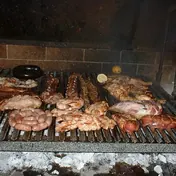
Asado
Asado is the Uruguayan barbecue, so central that the meal and the cut of meat are both called asado. A complete asado includes chorizo, morcilla, entraña, tira de asado and offal, cooked slowly over embers and served with bread, salads and sauces such as mojo, chimichurri and salsa criolla.
Where to try it: La Pulpería, Mercado del Puerto
The asado tradition came with the gauchos who lived in the country, descendants of the first families who had no land nor home and made cattle raiding their way of life. In larger cities such as Montevideo, markets commonly have grill stations where customers can order and eat asado directly at the bar.
-
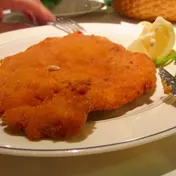
Milanesa
Milanesa is a thin breaded cutlet of veal, chicken or fish. It is served a caballo with a fried egg, a la napolitana with tomato sauce, ham and mozzarella, or al pan as a sandwich.
Where to try it: Bar Tinkal, Fellini
Most of Montevideo's bars and old style restaurants bread the cutlet starting with egg so that the last dip is also egg, a method that came from Galician and Spanish barmen and leaves a film of egg after frying.
Watch out for: Gluten, Eggs, Milk
Book food experiences in Montevideo


-
Medio y Medio
Medio y Medio, meaning half and half, is a drink of sweet sparkling wine and dry white wine, also made with caña, served as an aperitif before an asado.
Where to try it: Mercado del Puerto
The Mercado del Puerto was the birthplace of the drink, first created in the late 19th century at the Roldós bar, and Roldós is still the trademark under which it is sold.
-
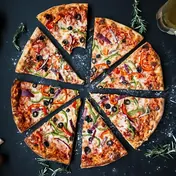
Pizza and fainá
Uruguayan pizza is usually rectangular with a thicker crust, cut in squares, and it is sold with fainá, a thin chickpea flour crepe baked like pizza. A slice of fainá laid on top of a pizza is called pizza a caballo.
Where to try it: Bar Tinkal, Rodelu
Pizza derives from Neapolitan cuisine and fainá is of Italian origin, but the two are never served together in Italy. In 20th century Montevideo pizzerias a common order was a glass of sweet muscat wine with a stacked slice of pizza and fainá.
Watch out for: Gluten, Milk
-
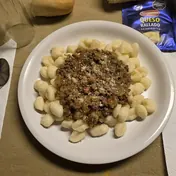
Ñoquis del 29
Ñoquis del 29 is gnocchi eaten on the 29th of each month, with tuco, a meat and tomato sauce, as the most common companion.
The tradition came with immigrants from Veneto and honors Saint Pantaleo. Families and friends gather on the 29th, and everyone puts money under the plate for good fortune.
Watch out for: Gluten
-
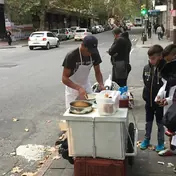
Torta frita
A torta frita is a thin round fried cake of leavened dough, sprinkled with sugar and with a hole in the center, sold on the streets and eaten with mate.
Tortas fritas descend from the sopaipilla and are typical of Uruguay and Argentina. Uruguayan folklore says they are better made and eaten on rainy days, and bizcochos and tortas fritas are a must for drinking mate.
Watch out for: Gluten
-

Alfajor
Alfajores are two round sweet doughs filled with dulce de leche and covered in chocolate or in snowy meringue, called nieve.
Alfajores were brought from Spain. Montevideo hosts the Feria Internacional del Alfajor, whose 2026 edition took place from 5 to 7 June.
Watch out for: Gluten, Milk
-
Capeletis a la Caruso
Capeletis a la Caruso is cappelletti pasta in Caruso sauce, a warm sauce of cream, ham, cheese and mushrooms, sometimes with nuts or onions.
Caruso sauce is the one pasta sauce created by Uruguayans. It was invented by chef Raymundo Monti and named after the opera singer Enrico Caruso.
Watch out for: Gluten, Milk, Tree nuts
-
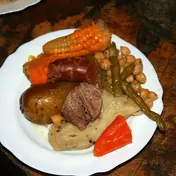
Puchero
Puchero is a rough soup in which meat and vegetables are cooked in big pieces and then served in two parts, the broth first and the meats and vegetables after with bread.
Puchero comes from Spanish tradition. Mustards such as Savora and La Pasiva garnish the meat, and each diner mashes the cooked vegetables on the plate and spreads bone marrow over bread.
Watch out for: Celery
Signature Dishes in Montevideo, FAQ
What food is Montevideo known for?
Montevideo's signature dishes include Chivito, Asado, Milanesa, Medio y Medio, Pizza and fainá. See our signature dishes chapter for where to eat each.