

The plates that define Tucson: what they are, where they came from, and where to eat the canonical version.
Signature dishes
-
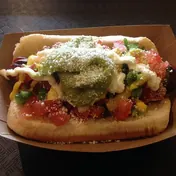
Sonoran hot dog ★ 4.9
The Sonoran hot dog is a bacon-wrapped grilled link in a steamed bolillo bun, loaded with pinto beans, onions, tomato, mayo, mustard and jalapeno salsa.
Where to try it: El Guero Canelo, BK Tacos
Price: $5-8 per dog
The Sonoran hot dog crossed the United States border from Hermosillo, Sonora in the late 1980s and 1990s through Mexican-American street vendors who clustered on South 12th Avenue in South Tucson. Daniel Contreras started El Guero Canelo as a 6-by-8 foot cart in 1993; Benny Galaz of BK Tacos sold a thousand dogos a day from his cart at age 21. The James Beard Foundation recognized El Guero Canelo with America's Classic 2018, naming Contreras the 'leading hotdoguero' in the American epicenter of the form.
Watch out for: Gluten, Dairy, Eggs
-
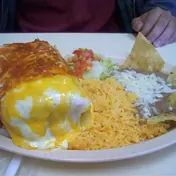
Chimichanga ★ 4.7
The chimichanga is a deep-fried burrito stuffed with shredded beef or chicken, beans, rice and cheese, topped with sour cream, guacamole, salsa and lettuce.
Where to try it: El Charro Cafe, El Charro Cafe Ventana
Price: $15-22 per plate
El Charro Cafe founder Monica Flin is said to have invented the chimichanga in 1922 by accident at her Court Avenue kitchen in El Presidio. According to family lore, she dropped a burrito into the deep fryer and shouted 'chingada' (a Spanish curse), softening it to chimichanga in front of the children. El Charro has run the dish ever since. The chimichanga is now standard at Tucson Mexican-American restaurants and across Arizona, with regional variations in Phoenix, Flagstaff and the Sonora border.
Watch out for: Gluten, Dairy
-
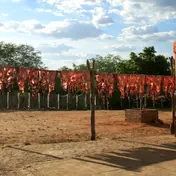
Carne seca ★ 4.7
Sonoran carne seca is beef sun-dried on the roof, then shredded and quickly sauteed with onions, green chile and tomato for tacos, burritos and chimichangas.
Where to try it: El Charro Cafe, Mi Nidito
Price: $14-22 per plate
Carne seca is the original Sonoran preserved beef, dried on rooftops in the Tucson desert before refrigeration. The Sonoran method uses thin strips of top round seasoned with salt and lime, sun-dried 4-6 hours, then shredded by hand. El Charro Cafe has run carne seca since 1922, drying beef on the roof of the Court Avenue building. The dish is the canonical filling for El Charro chimichangas and tacos and remains a Tucson signature today across El Charro, Mi Nidito and family-run Sonoran kitchens.
Book food experiences in Tucson


-
White Sonora wheat bread ★ 4.8
White Sonora wheat sourdough is a soft, sweet-flavored heritage-grain bread milled from the oldest wheat variety in the Americas, introduced by Father Kino in the 1690s.
Where to try it: Barrio Bread, Time Market, Beyond Bread Campbell
Price: $8-12 per loaf
Father Eusebio Francisco Kino introduced white Sonora wheat to the Pimeria Alta (modern Tucson region) in the late 1690s, the first wheat grown in the Americas. The variety nearly disappeared in the 20th century to commercial high-protein wheats, but Native Seeds/SEARCH preserved the heirloom seed line. Don Guerra of Barrio Bread won James Beard Outstanding Baker 2022 for his community-supported bakery that mills white Sonora wheat from Mission Garden plots and Pivot Produce growers into naturally-leavened loaves.
Watch out for: Gluten
-
Chiltepin pepper ★ 4.7
The chiltepin is a wild Sonoran chile pepper the size of a peppercorn, harvested in fall from desert shrubs and used dried as a sharp, smoky seasoning across borderlands cooking.
Where to try it: Exo Roast Co.
Price: $10-15 per ounce dried
The chiltepin (Capsicum annuum var. glabriusculum) is the only wild chile native to the United States, growing on small shrubs throughout the Sonoran Desert south of Tucson. The Tohono O'odham and Pascua Yaqui have harvested chiltepin for centuries, and the pepper is protected at the Coronado National Forest's chiltepin reserves. The harvest peaks September through November. Native Seeds/SEARCH on Campbell sells dried chiltepin, and Exo Roast Co. on North 6th uses chiltepin in their celebrated cold-brew coffee blend.
-
Cholla buds ★ 4.5
Cholla buds are the unopened flower buds of the cholla cactus, harvested in April by the Tohono O'odham and prepared like artichoke hearts in salads and stews.
Where to try it: BOCA Tacos y Tequila
Price: $8-15 per package dried
Tohono O'odham cholla bud harvest is a 4,000-year tradition in the Sonoran Desert around Tucson, peaking in April just before the cactus flowers open. The buds are harvested with long tools, dethorned by rolling between stones, then sun-dried. They taste like artichoke hearts and are high in calcium. Mission Garden runs annual cholla bud harvests demonstrating the O'odham method, and Native Seeds/SEARCH on Campbell Avenue sells dried cholla buds by the package.
-
Tepary beans ★ 4.6
Tepary beans are a Tohono O'odham heritage bean, drought-resistant and high-protein, used in Sonoran stews, refritos and modern Tucson tacos.
Where to try it: BOCA Tacos y Tequila
Price: $10-15 per pound dried
Tepary beans (Phaseolus acutifolius) are native to the Sonoran Desert and have been cultivated by the Tohono O'odham for over 4,000 years. The drought-resistant variety thrives in 100F-plus heat and minimal water, making it one of the most resilient food crops on Earth. White teparies and brown teparies survived modern agricultural marginalization through Native Seeds/SEARCH, the heirloom seed bank founded in Tucson in 1983. Mission Garden grows tepary beans every season, and modern Tucson kitchens like Mission Garden cooking demos and BOCA Tacos use them in tacos and refritos.
-
Mesquite flour ★ 4.5
Mesquite flour is the milled pod of the velvet mesquite tree, sweet and naturally gluten-friendly, used in Sonoran breads, bars and modern Tucson baking.
Where to try it: Barrio Bread
Price: $12-18 per pound
Mesquite pods are a Tohono O'odham heritage food, harvested June and July from velvet mesquite (Prosopis velutina) trees that line the Tucson Basin. The dried pods are milled in stone metates traditionally; today Native Seeds/SEARCH and Mission Garden offer milling services seasonally. The flour is naturally sweet (high in fructose and sucrose), gluten-free, and pairs well with white Sonora wheat. Don Guerra of Barrio Bread uses mesquite flour in seasonal loaves, and Mission Garden's annual mesquite milling day in late June draws Tohono O'odham elders and Tucson home bakers.
-
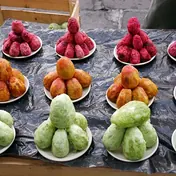
Prickly pear (tunas and nopales) ★ 4.4
Prickly pear yields two foods: the magenta tunas fruit harvested in late summer for raspados and syrup, and the green nopales paddles year-round for tacos and salads.
Where to try it: Hotel Congress Tap Room
Price: $3-6 per paddle
Prickly pear cactus (Opuntia) is native to the Sonoran Desert and has been harvested by the Tohono O'odham for over 4,000 years. The magenta fruit (tunas) ripens August through September; the green paddles (nopales) can be harvested year-round. Mission Garden cultivates heirloom Opuntia varieties on the Sentinel Peak grounds, and Tucson cocktail programs from Hotel Congress to La Cocina build prickly pear margaritas from the syrup. Mexican markets along South 12th Avenue sell whole paddles for grilling, salads and the canonical tacos de nopales.
-
Saguaro fruit (bahidaj) ★ 4.5
Saguaro fruit is the seasonal magenta fruit of the saguaro cactus, harvested by the Tohono O'odham in June with long ribs and made into syrup and ceremonial wine.
Where to try it: BOCA Tacos y Tequila
Price: Ceremonial, not commercially sold
The saguaro fruit (bahidaj in O'odham) is a Tohono O'odham sacred harvest, marking the O'odham new year. The fruit ripens at the top of the giant saguaro cactus and is harvested in late June using kuipad, long poles made from saguaro ribs. The harvested fruit is boiled into syrup or fermented into ceremonial nawait wine for the rain-summoning ceremony that marks the start of the monsoon. Mission Garden hosts ceremonial demonstrations of the harvest each June. The saguaro is also Arizona's state flower.
-
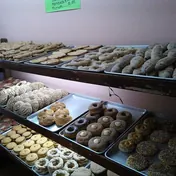
Pan dulce (Mexican sweet bread) ★ 4.6
Pan dulce is the umbrella of Mexican sweet breads, with the concha (shell-topped sweet roll) the canonical form sold at Tucson panaderias since the late 1800s.
Where to try it: La Estrella Bakery, La Estrella Bakery 12th Avenue
Price: $2-4 per piece
Mexican pan dulce arrived in Tucson with Sonoran bakers in the mid-1800s and never left. The concha, named for the shell-shape sugar topping, is the canonical form, with pink, brown and yellow toppings the most common. La Estrella Bakery has run the Jalisco-style panaderia tradition since 1986 at the Mercado San Agustin and South 12th Avenue. Other forms include empanadas (sweet hand pies, often pineapple or pumpkin), orejas (palmiers), polvorones (wedding cookies) and rosca de reyes (Three Kings bread). Sonoran panaderias make pan dulce fresh through the day.
Watch out for: Gluten, Dairy, Eggs
Signature Dishes in Tucson, FAQ
What food is Tucson known for?
Tucson's signature dishes include Sonoran hot dog, Chimichanga, Carne seca, White Sonora wheat bread, Chiltepin pepper. See our signature dishes chapter for where to eat each.