How Portland came to eat the way it does: the people, migrations and accidents that shaped the plate.
Key eras
1903-1955, the James Beard era
James Beard was born in Portland in 1903 to a hotel cook and a market-stall owner. He grew up at the Gladstone seaside cabin where his mother taught him to forage for sea salt and razor clams, and at the Multnomah County Public Market downtown. Portland in this era was a salmon-cannery town with a strong Italian, Japanese and Chinese immigrant population. Beard left for New York in the 1930s and went on to write the founding texts of American cooking, but the Pacific Northwest pantry he grew up with shaped every cookbook he wrote.
1980s-1990s, the rise of Pacific Northwest cuisine
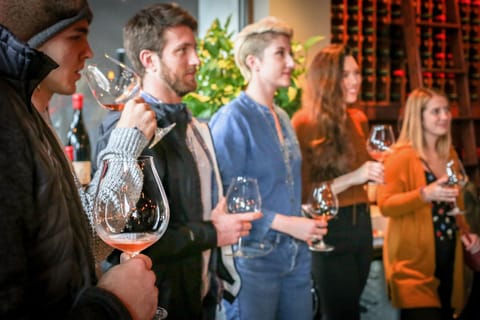
The Northwest cuisine movement crystallised in the 1980s with chefs like Greg Higgins (Higgins, 1994), Cory Schreiber (Wildwood) and Vitaly Paley (Paley's Place). The Willamette Valley's first Pinot Noir vines (David Lett, 1965) had matured; salmon, hazelnuts, marionberries and Tillamook cheese became menu fixtures. The James Beard Foundation, founded 1986 in honour of Portland's native son, awarded Higgins Best Chef Northwest in 2002. The era set the farm-to-table grammar that everything after would speak.
2003-2015, the food cart and third-wave coffee revolution
Voodoo Doughnut opened in 2003. Stumptown's flagship roastery had landed on SE Division in 1999 and Heart followed on Burnside in 2009. The food cart pods (Cartopia 2008, Mississippi Marketplace 2010) turned $10 lunch into a serious meal. Andy Ricker's Pok Pok on Division (2005) put regional Thai on the national map and won James Beard Best Chef Northwest in 2011. The era turned Portland from a mid-size west-coast city into the most-watched American food story of its decade.
2016-2026, post-Pok Pok consolidation
By 2022 most Pok Pok concepts had closed, but the chefs Andy Ricker mentored continued: Earl Ninsom (Hat Yai 2016, Eem 2019, Yaowarat 2023, OK Chicken & Khao Soi 2026 in the old Pok Pok building) is the named successor. Peter Cho's Han Oak (2016) made Korean family cooking a Portland anchor. The James Beard Public Market is scheduled to open in downtown Portland in late 2026, on SW 6th and Alder, completing a 50-year community campaign and reconnecting the city to its namesake.
Immigrant influences
- Chinese: Built Portland's Old Town Chinatown in the late 1800s, the second-largest US Chinatown by 1890. Lan Su Chinese Garden anchors the legacy.
- Japanese: Pre-WWII Japanese-American truck farmers fed Portland from Hood River; the Japanese American Historical Plaza tells the internment story.
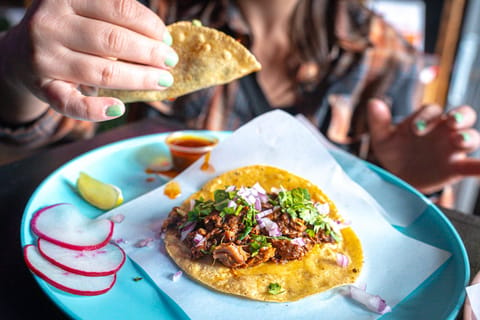
- Mexican: The largest immigrant community shapes Portland from the food carts (taquerias, mole stands) to the Willamette farm labour force.
- Vietnamese: SE 82nd Avenue, the city's Vietnamese commercial corridor, holds the strongest pho, banh mi and noodle-soup shops in the Pacific Northwest.
- Thai: Pok Pok's Andy Ricker (2005) and Earl Ninsom (2010s onward) made Portland the most credible US city for regional Thai cooking outside Los Angeles.
- Russian and Eastern European: A long-running Russian and Ukrainian community shapes the city's pierogi, blini and rye traditions; Kachka built a restaurant around them.
Signature innovations
- Voodoo Doughnut's bacon maple bar invented the savoury-doughnut category
- Stumptown set the US third-wave coffee template
- Pok Pok normalised regional Thai cooking in American fine dining
- Portland's food cart pod model became a national template for casual dining
- Salt & Straw turned ice cream into farm-to-cone Pacific Northwest seasonal cooking
Food History in Portland, FAQ
When is the best time to eat in Portland?
Peak food season in Portland is year-round.
What time do people eat in Portland?
Local dining hours: lunch around 12:30, dinner from 19:30.
How does tipping work in Portland?
service is typically included; small extra is welcome but not expected.
What is the one dish to try in Portland?
Ask the next local you meet what they would order. Portland rewards trust.