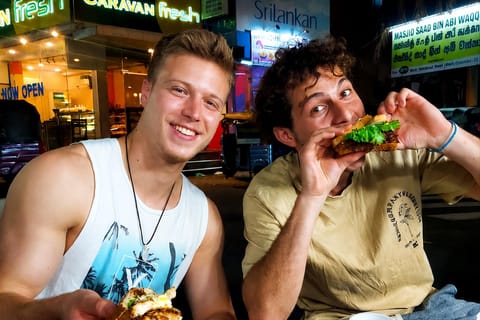
The plates that define Colombo: what they are, where they came from, and where to eat the canonical version.
Signature dishes
-
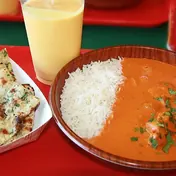
Rice and curry ★ 4.5
Boiled or steamed rice served with a curry of fish or meat, plus other curries of vegetables, lentils or fruits, and pickles, chutneys and sambols on the side.
Where to try it: Upali's by Nawaloka
Rice, coconut and seafood sit at the centre of Sri Lankan cooking, and coconut milk and grated coconut are prepared fresh almost every day in most households. Maldives fish is used heavily in vegetable dishes for umami, and coconut sambol is especially common.
Watch out for: Fish (Maldives fish), Coconut
-
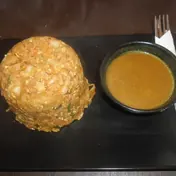
Kottu roti ★ 4.7
Chopped roti stir-fried on a griddle with vegetables, egg and a meat curry of choice, with the rhythmic chopping heard from far away.
Where to try it: Hotel de Plaza
Kottu means chopped in Tamil. It is generally thought to have begun as street food in the eastern province in the 1960s and 1970s, as an inexpensive meal made from day-old roti. In Colombo, Hotel de Plaza on Galle Road calls itself the original late-night kottu spot and is open 24 hours.
Watch out for: Wheat (roti), Egg, Milk (cheese kottu)
-
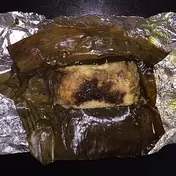
Lamprais ★ 4.6
Rice boiled in stock with frikkadel meatballs, a mixed-meat curry, blachan, aubergine curry and seeni sambol, wrapped in a banana leaf and baked.
The Dutch Burghers came up with lamprais during Dutch rule, from the Dutch word lomprijst, a packet or lump of rice, and the dish is believed to have roots in the Javanese lemper. One of its first literary mentions is in Hilda Deutrom's Ceylon Daily News Cookery Book, published in 1929.
Watch out for: Meat (beef, pork, chicken), Egg (common addition), Milk (ghee or butter in the rice)
Book food experiences in Colombo
-
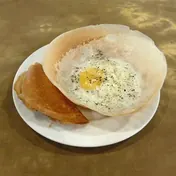
Hoppers (appa) ★ 4.4
Thin bowl-shaped pancakes of fermented rice batter and coconut milk, pan-fried or steamed, with egg hoppers the best-known variant, often eaten with lunu miris.
Hoppers are the Sri Lankan name for appam, a fermented rice pancake of South Indian cuisine popular in Kerala and Sri Lanka. They are most often served for breakfast or dinner, and spicy hoppers come with lunu miris, a relish of red onions and spices.
Watch out for: Egg (egg hoppers), Coconut
-
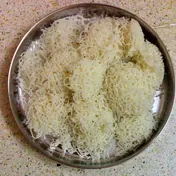
String hoppers (idiyappam) ★ 4.3
Circlets of pressed rice-meal or wheat dough, steamed on small wicker mats, and eaten with a curry such as kiri hodi rather than plain.
Where to try it: Hotel de Plaza
Called idiyappam in Tamil, string hoppers are made from a hot-water dough pressed from a string mould and steamed. Hotel de Plaza on Galle Road in Kollupitiya lists them among its specialities and cooks 24 hours a day.
Watch out for: Wheat (when made with wheat flour), Coconut (in the curries)
-
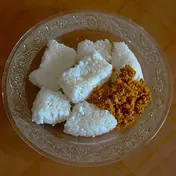
Kiribath (milk rice) ★ 4.4
Rice cooked in salted coconut milk until the grains turn soft and porridge-like, served with lunu miris, a relish of red onions and chillies.
Kiribath, or paal soru, is generally eaten for breakfast and is cooked for birthdays, New Year and religious festivals. For the Sinhalese it is the first meal of the new year, boiled in the traditional pot on a hearth lit at dawn.
Watch out for: Coconut
-

Watalappam ★ 4.5
A Sri Lankan coconut custard pudding of coconut milk or condensed milk, jaggery, cashew nuts, eggs and spices such as cardamom, cloves and nutmeg.
Watalappam is believed to have been brought to Sri Lanka by Sri Lankan Malays in the 18th century, during Dutch rule, and may descend from the Malay steamed custard serikaya. It is strongly identified with Sri Lanka's Muslim community and is part of traditional Eid al-Fitr celebrations.
Watch out for: Egg, Tree nuts (cashew), Milk (when made with condensed milk), Coconut
-
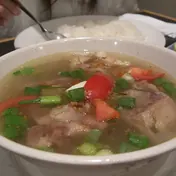
Ekor sop (oxtail soup) ★ 4.0
Oxtail soup, a delicacy of the Sri Lankan Malay community.
Ekor sop, Malay for oxtail soup, belongs to the cooking of the Sri Lankan Malays, and nasi goreng and mee goreng also came through Indonesian and Malay influence, while satay, of Indonesian origin, is a staple. Babath, a curry of cattle or goat stomach, is another dish tied to the Malay community.
-
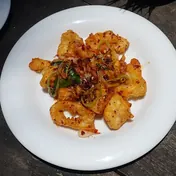
Hot butter cuttlefish (Sri Lankan Chinese) ★ 4.0
Cuttlefish cooked hot and buttery, one of the Sri Lankan Chinese dishes found in most restaurants alongside Chinese chilli paste.
Chinese restaurants have been common in Sri Lanka, especially in Colombo, since the 1940s. Over time the cooking was adapted to the local palate and Sri Lankan Chinese food was born.
Watch out for: Mollusc (cuttlefish), Milk (butter)
-
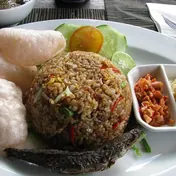
Nasi goreng and mee goreng ★ 3.9
Fried rice and fried noodles, popular street food dishes eaten by all ethnic groups in Sri Lanka.
Where to try it: Hotel de Plaza
Nasi goreng and mee goreng are a result of cultural influences from Indonesia and the country's local Malay community, and nasi goreng has been absorbed into the national conscience through the cultural impact of the Sri Lankan Malays.
-
Short eats ★ 4.1
Pastries, Chinese rolls, patties and fish patties, bought by the dozen from short eat shops and restaurants and eaten on the go.
Short eats are snacks sold in short eat shops and restaurants, eaten on the go mainly for breakfast or in the evening.

Signature Dishes in Colombo, FAQ
What food is Colombo known for?
Colombo's signature dishes include Rice and curry, Kottu roti, Lamprais, Hoppers (appa), String hoppers (idiyappam). See our signature dishes chapter for where to eat each.