
The plates that define Manila: what they are, where they came from, and where to eat the canonical version.
Signature dishes
-
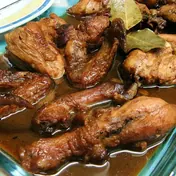
Adobo
Adobo is meat, seafood or vegetables browned in oil, then marinated and simmered in vinegar, salt or soy sauce, and garlic. It is often considered the unofficial national dish of the Philippines.
Where to try it: Commune Café
The cooking method is indigenous: precolonial peoples cooked and preserved food in vinegar and salt. Spanish colonizers applied the name adobo to it, and it was first recorded in the 1613 dictionary Vocabulario de la lengua tagala as adobo de los naturales.
Watch out for: Soy
-
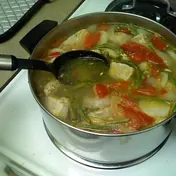
Sinigang
Sinigang is a sour and savory Filipino soup or stew, most often soured with tamarind and made with pork, beef, shrimp or fish, tomatoes, onions and vegetables such as okra, water spinach and radish. It is eaten with rice and fish sauce.
Where to try it: Sentro 1771, Max's Restaurant
Sinigang means stewed dish, from the Tagalog verb sigang, and it is seen as culturally Tagalog in origin. It originally meant any meat or seafood cooked in a sour broth, and other souring agents include unripe mango, calamansi and guava, which came to the Philippines on the Manila galleons.
Watch out for: Fish (fish sauce)
-
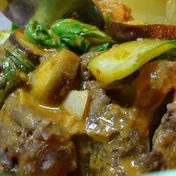
Kare-kare
Kare-kare is a stew in a thick peanut sauce, made from oxtail, tripe or pork cuts with eggplant and greens, coloured with annatto. It is eaten with bagoong, a shrimp paste, and a squeeze of calamansi.
Where to try it: Max's Restaurant, Romulo Cafe
Peanuts came to the Philippines from Mexico in the 16th century on Spanish galleons. The exact origin of kare-kare is disputed, with one account tracing it to Indian sepoys during the British occupation of Manila and another to Pampanga. Most Filipino fiestas have kare-kare.
Watch out for: Peanuts, Shellfish (shrimp paste)
Book food experiences in Manila

-
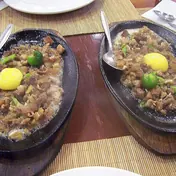
Sisig
Sisig is made from pork jowl and ears seasoned with calamansi, onions and chili peppers, and served sizzling on a hot plate. It comes from Pampanga, north of Manila, and is a staple of Kapampangan cuisine.
The word sisig was recorded in 1732 by Augustinian friar Diego Bergaño, who defined it as a salad. Lucia Cunanan of Angeles, known as Aling Lucing, is credited with the modern version, developed in mid-1974 from grilled and chopped pig ears and cheeks served on hot plates.
-
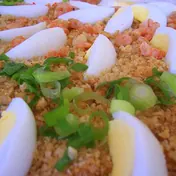
Pancit
Pancit is the general name for Filipino noodle dishes, usually sauteed with garlic, onions and vegetables or served in soup, and nearly always with calamansi. Maki mi, a thick pork tenderloin soup, comes from the Chinese-Filipino community of Binondo.
Where to try it: Golden Fortune Seafood Restaurant, Ilang-Ilang
Chinese immigrants brought noodles to the Philippines, and the word pancit is derived from Philippine Hokkien terms. The dish was nativized and took on Spanish techniques, and noodle restaurants are called panciterias or pancitans.
-
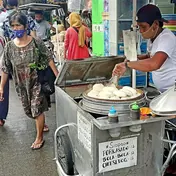
Siopao
Siopao is a large steamed bun eaten by hand, filled most often with pork asado or bola-bola, a meatball, and served with a sweet siopao sauce.
Where to try it: Golden Fortune Seafood Restaurant
Siopao is the Filipino version of the Fujianese baozi, brought by Hokkien immigrants during the Spanish colonial period. The most popular siopao in Manila were historically those made by restaurateur Ma Mon Luk at the turn of the 20th century.
Watch out for: Gluten (wheat flour)
-
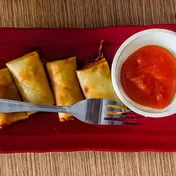
Lumpia
Lumpia are spring rolls, fried or fresh, wrapped in a thin pastry skin. Fried lumpia shanghai is usually filled with ground pork, and fresh lumpia sariwa is made for fiestas and special occasions.
Where to try it: Max's Restaurant
Lumpia is the Filipino adaptation of the Fujianese lun-pia and Teochew popiah. Its name comes from Hokkien, and the Chinese introduced the spring roll to the islands before Spanish colonization.
-
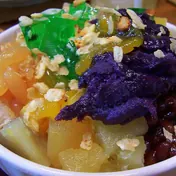
Halo-halo
Halo-halo means mix-mix: a cold dessert of crushed ice and evaporated milk with ube jam, sweetened beans, coconut strips, sago, agar, flan and fruit preserves, often topped with ube ice cream and served in a tall glass.
It traces to pre-war Japanese Filipinos and the Japanese kakigori desserts, and to an early dessert called monggo con hielo. Some authors attribute it to Japanese migrants in the Quinta Market of Quiapo, Manila, which sat near the Insular Ice Plant, Quiapo's main ice supply.
Watch out for: Milk
-
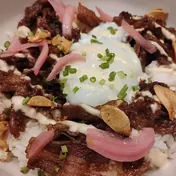
Tapsilog
Tapsilog is a breakfast plate of tapa, cured and fried or grilled beef, with sinangag, garlic fried rice, and a fried egg. Atchara, pickled papaya, or tomatoes come on the side, with vinegar or banana ketchup.
The name joins tapa, sinangag and itlog, the Tagalog words for the meat, fried rice and egg. Tapa once meant smoked fish or meat, and under Spanish rule it came to cover meats preserved other ways. A restaurant that mainly serves it is called a tapsihan, a term widely understood in Metro Manila.
Watch out for: Egg
-

Balut
Balut is a fertilized duck egg, incubated for two to three weeks, then boiled or steamed and eaten from the shell, usually with salt and vinegar. It is common Filipino street food.
The Chinese introduced balut to the Philippines in 1565. Pateros, the only municipality in Metro Manila, is famous for its duck-raising industry and balut production.
Watch out for: Egg
-

Taho
Taho is a warm snack of fresh silken tofu with arnibal, a dark caramel syrup, and sago pearls. Vendors carry it in two buckets on a pole and call out taho as they walk their routes, mostly early in the morning.
Price: ₱20 for a standard cup
Taho originated in China, and its name is the Hokkien pronunciation of the Chinese word for tofu, brought to the Philippines by Hoklo immigrants.
Watch out for: Soy
Signature Dishes in Manila, FAQ
What food is Manila known for?
Manila's signature dishes include Adobo, Sinigang, Kare-kare, Sisig, Pancit. See our signature dishes chapter for where to eat each.