
The plates that define Cebu City: what they are, where they came from, and where to eat the canonical version.
Signature dishes
-
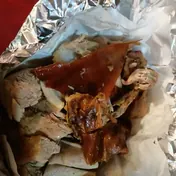
Lechón Cebu
Cebu lechon is a whole roast pig stuffed with lemongrass, garlic and green onions, roasted over charcoal for hours until the skin is crisp, and served with a vinegar and soy dipping sauce.
Where to try it: Ayers Lechon Banilad
Lechón is a Spanish word for roast suckling pig, and the Spanish introduced it to Filipino cuisine. Chef Anthony Bourdain dubbed Lechon de Cebu the best pig ever.
Watch out for: Soy, Pork
-
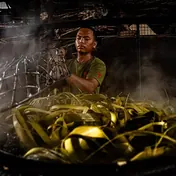
Pusó (hanging rice)
Pusó is rice boiled in a woven coconut-leaf pouch, shaped like a diamond or a heart, and eaten cold with lechon, barbecue, ngohiong and tuslob buwa.
Pusó means heart in Cebuano, after its heart-like shape. It is still sold by pungko-pungko street food peddlers, and the related ketupat is found across Maritime Southeast Asia.
-
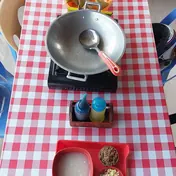
Tuslob Buwa
Tuslob buwa is a communal wok of pork liver, brain and broth cooked down into a bubbling oil and paste, into which diners dip pusó.
It comes from the wet markets of Pasil and Carbon, where laborers once got the bubbling pan scum free with cheap pusó. Azul on Gorordo Avenue began selling it in a convenience store lot in February 2014 and social media made it a hit.
Watch out for: Shellfish (shrimp paste), Soy
Book food experiences in Cebu City
-
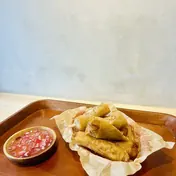
Ngohiong
Ngohiong is a deep-fried Cebuano lumpia of pork or shrimp, jicama or heart of palm and five-spice powder, served with sweet and sour or spicy chilli sauce.
Where to try it: Sialo Cebu
A Filipino adaptation of the Hokkien ngo hiang, it originates from Cebu City and shows the city's Chinese roots.
Watch out for: Gluten, Egg, Shellfish (shrimp, optional)
-

Bam-i
Bam-i is stir-fried bihon (thin rice noodles) and canton (egg noodles) with meat, seafood and local vegetables, a mainstay of celebrations in Cebu City.
One of the Cebu dishes with Fil-Chi roots, from the city's strong Chinese community.
Watch out for: Gluten, Egg, Soy
-
Ginabot
Ginabot is Cebu's chicharon bulaklak, deep-fried pork intestines with a crunchy outside and juicy inside, served with vinegar and soy sauce and eaten with pusó.
A pungko-pungko specialty, the Cebuano street food eateries where diners squat on low benches.
Watch out for: Soy, Pork
-
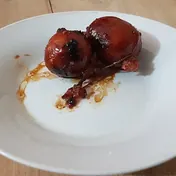
Chorizo de Cebu
Chorizo de Cebu is a garlicky, slightly sweet pork sausage coloured red with achuete seeds, eaten fried or grilled.
Cebu City's own spin on chorizo, made with salt, garlic and local spices.
Watch out for: Pork
-
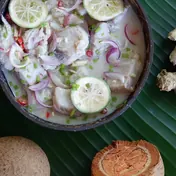
Kinilaw
Kinilaw is the Filipino ceviche, fresh seafood in a vinegar and coconut milk marinade with aromatic spices, one of the traditional dishes of Cebu City.
Kilaw, to soak in vinegar, is one of the foundations of Visayan cooking and one of the three methods in su-tu-kil.
Watch out for: Fish, Shellfish
-
Su-tu-kil
Su-tu-kil is a way of eating rather than one dish: fresh seafood grilled (sugba), stewed or boiled (tula) and marinated in vinegar (kilaw) in one meal.
The three methods are described as the foundations of Visayan cooking. Su-tu-kil restaurants cluster on Mactan Island, across the channel from Cebu City.
Watch out for: Fish, Shellfish
-
Buwad danggit
Buwad danggit is sun-dried rabbitfish, a Cebu specialty fried or grilled and dipped in vinegar, eaten with rice for breakfast.
Daing is originally a preservation technique, since salt inhibits bacteria. In Central and Southern Philippines it is called bulad or buwad in Cebuano.
Watch out for: Fish

Signature Dishes in Cebu City, FAQ
What food is Cebu City known for?
Cebu City's signature dishes include Lechón Cebu, Pusó (hanging rice), Tuslob Buwa, Ngohiong, Bam-i. See our signature dishes chapter for where to eat each.