
The plates that define Auckland: what they are, where they came from, and where to eat the canonical version.
Signature dishes
-
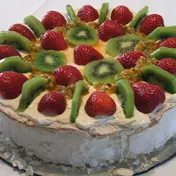
Pavlova ★ 4.9
Pavlova is the meringue dessert with a crisp shell and a marshmallow centre, topped with whipped cream and seasonal fruit. New Zealand and Australia have claimed origin for a century.
Where to try it: Amano, Daily Bread Ponsonby
Price: NZD $12-18 per slice
Pavlova is named after Russian ballerina Anna Pavlova, who toured Australia and New Zealand in 1926. The first documented New Zealand pavlova cake recipe is from 1929, with a fuller version printed in The Evening Star in 1934. Australia's competing claim points to Bert Sachse at Perth's Esplanade Hotel in 1935. Researchers now trace pavlova's origins to the Austro-Hungarian Spanische Windtorte, adapted through meringue desserts in both nations. The dispute remains informally settled; the dessert keeps appearing on Christmas tables on both sides of the Tasman Sea.
Watch out for: Egg, Dairy
-
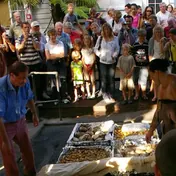
Hangi ★ 4.8
Hangi is the Maori earth oven, cooking meat and root vegetables in a pit of stone-heated coals under wet sacks for 2 to 4 hours. The flavour is deep, smoky and tender.
Where to try it: Metita
Price: NZD $35-65 per plate (festival serving)
Hangi traces to early Polynesian cooking pits dug at sites like Wairau Bar (circa 1280 CE). The technique uses heated rocks (600-700C) placed in a pit; food baskets sit on the rocks, the pit is covered with damp cloths and earth, and cooks for 2-4 hours. Original Maori pits cooked cordyline root before European arrival. Wire baskets replaced leaves in the 19th century. Today the hangi appears at hui, funerals, weddings, midwinter Matariki celebrations and Pasifika festivals across Auckland. Gas-heated steel hangi machines replicate the technique without digging.
-

Whitebait Fritter ★ 4.8
The whitebait fritter is an egg-bound omelette holding tiny juvenile galaxiid fish from West Coast rivers. The fish must be barely held together by egg white so the taste shines.
Where to try it: Depot Eatery
Price: NZD $35-60 per plate (seasonal)
Whitebait (juvenile galaxiids) was harvested by Maori for centuries before European arrival, with traditional fishing on West Coast rivers. The fish became commercially expensive through the 20th century and is now a strictly regulated seasonal fishery running August to November. The fritter form (eggs bound with whitebait, fried) became the dominant preparation, with purists arguing for egg whites only to avoid masking the fish. Auckland menus serve them seasonally; the fritter remains a national treasure when in season at NZD $35-60 a plate. Whitebait have been in commercial decline; sustainability advocates argue for tighter quotas.
Watch out for: Egg, Fish
Book food experiences in Auckland


-
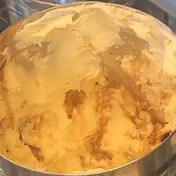
Hokey Pokey Ice Cream ★ 4.8
Hokey pokey ice cream is vanilla ice cream studded with small balls of golden honeycomb toffee. It is New Zealand's second most-loved flavour after vanilla, and the country's signature ice cream.
Where to try it: Bestie, The Store
Price: NZD $5-9 per scoop
The term 'hokey pokey' for honeycomb toffee appears in New Zealand from the late 19th century. The ice cream version emerged in the mid-20th century, with solid toffee pieces. The defining moment was around 1980, when manufacturer Tip Top switched to small balls of honeycomb toffee, creating the form Kiwis know today. Hokey pokey has become a frequently cited piece of Kiwiana (the everyday national identity); the ice cream has been exported to Japan, Australia and the Pacific Islands. Tip Top still produces the canonical version, though many small NZ ice cream makers now run their own honeycomb-based flavours.
Watch out for: Dairy, Egg
-
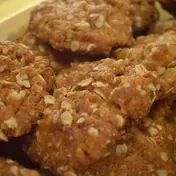
Anzac Biscuit ★ 4.6
The Anzac biscuit is a buttery oat biscuit made with golden syrup, desiccated coconut and baking soda. The texture stays chewy or crisp depending on bake time; the recipe is regulated by law in NZ.
Where to try it: Daily Bread Ponsonby, Amano Bakery
Price: NZD $3-5 each
The earliest Anzac biscuit recipe combining 'Anzac' (Australian and New Zealand Army Corps) with the name appeared in Perth, June 1916. The recipe matching today's biscuit was documented in Adelaide late 1919 or early 1920. The biscuits were sent by wives and women's groups to WWI soldiers because the ingredients (oats, golden syrup, butter, flour) don't spoil and the biscuits keep well during naval transport. Today both NZ and Australia regulate commercial production: Anzac biscuits must be sold as 'biscuits' or 'slice' (never 'cookies'), and recipes can't deviate substantially. The Royal NZ Returned Services' Association sells them annually as a fundraiser.
Watch out for: Gluten, Dairy
-
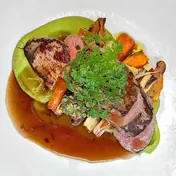
New Zealand Lamb Roast ★ 4.7
Roast lamb shoulder or leg is the canonical NZ Sunday meal. Slow-roasted with rosemary, garlic and lemon; the pasture-raised lamb is what built the country's export reputation.
Where to try it: Ahi, Metita, Cazador
Price: NZD $42-78 per main
Sheep were introduced to New Zealand by Captain James Cook in the late 18th century, with commercial flocks established by the 1850s. Refrigerated meat shipments to Britain from 1882 onward made lamb New Zealand's signature export and built the rural economy. Sunday roast lamb became a national domestic ritual through the 20th century, served with mint sauce, kumara, peas and gravy. Modern NZ lamb is grass-fed, free-range and considered the world's best by Michelin chefs from London to Tokyo. Auckland fine dining rooms feature lamb on most menus; Ahi, Metita and Cazador all use NZ lamb seasonally.
-
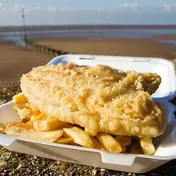
Fish and Chips ★ 4.5
Fish and chips, the British settler legacy plate, is fillet of snapper or hoki in beer batter with hand-cut chips. Eat from newsprint at the harbour edge; the canonical NZ takeaway.
Where to try it: Depot Eatery
Price: NZD $14-22 per pack
Fish and chips arrived in New Zealand with British settlers in the mid-19th century. By the early 20th century every NZ town had a 'chippie' (fish and chips shop), most run by Greek-immigrant families who dominated the trade. The traditional New Zealand version uses local fish (snapper, hoki, gurnard, lemon fish) in beer batter, served with hand-cut chips and salt and vinegar. Eating fish and chips from newsprint at the beach is a national ritual. Auckland's best chippies cluster along Tamaki Drive's eastern bays and at Devonport; Mission Bay sees crowds on weekend afternoons.
Watch out for: Gluten, Fish
-
Kumara Fries ★ 4.4
Kumara fries are the New Zealand sweet potato cut into thick wedges, roasted with rosemary salt and served with aioli. The orange-fleshed kumara is the Maori staple turned cafe standard.
Where to try it: The Store, Depot Eatery
Price: NZD $12-18 per side
Kumara (Ipomoea batatas) is the sweet potato brought by Maori from eastern Polynesia around 1300 CE. It was the foundational starch of pre-European Maori cuisine, cultivated in pa (fortified village) gardens across the North Island. The orange-fleshed variety dominates modern New Zealand markets; red and gold varieties grow in Northland. Through the 20th century kumara moved from Maori staple to national vegetable; today it sits in every Auckland cafe and brunch room as a chip or fry, often with aioli or lemon-thyme salt. Kumara fries became canonical brunch sides in the 1990s alongside the rise of the modern New Zealand cafe.
-
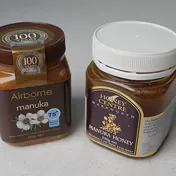
Manuka Honey ★ 4.6
Manuka honey is the New Zealand monofloral honey from the manuka tree (Leptospermum scoparium). Dark, caramel-thick, with high methylglyoxal content; sold as both food and medicine.
Where to try it: La Cigale French Market, Matakana Farmers Market
Price: NZD $20-200 per 250g jar by UMF rating
Manuka has been used by Maori for medicine and antiseptic purposes for centuries. The honey itself was largely a byproduct of commercial beekeeping until the 1980s, when University of Waikato research identified its uniquely high methylglyoxal (MGO) content as the source of antibacterial activity. By the 2000s manuka honey became a global commodity; counterfeit production from Australian L. polygalifolium became a trade-dispute issue. Today certified manuka must meet New Zealand government UMF (Unique Manuka Factor) standards, with the highest grades selling at NZD $200+ per 250g jar. Northland, Coromandel and East Cape are the production hotspots.
-
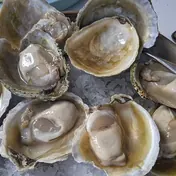
Bluff Oyster ★ 4.7
Bluff oysters (Ostrea chilensis) are New Zealand's wild flat oyster, fished from Foveaux Strait off Bluff at the South Island's bottom. Sweet, creamy, ranking with Belon and Olympia.
Where to try it: Depot Eatery
Price: NZD $5-9 per oyster (half shell)
Ostrea chilensis is endemic to the southern coasts of New Zealand and Chile; the Foveaux Strait population off Bluff at the South Island's bottom edge has been commercially fished since 1864. The fishery operates from March 1 to August 31 annually, with quota-managed harvests. Peak shipping arrives at Auckland fishmongers in May-July. Aucklanders rate Bluff oysters with the world's best flat oysters; Depot Eatery's oyster bar runs them as half-shell on ice with a mignonette of shallot and red wine vinegar. The 1986 bonamia parasite collapse cut the fishery to a fraction of historical volumes; recovery is ongoing.
Watch out for: Shellfish
-
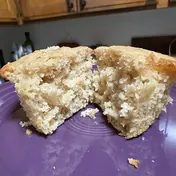
Feijoa ★ 4.5
Feijoa (Acca sellowiana) is the tart green-fleshed fruit that grows in nearly every Auckland backyard in autumn. Eaten with a spoon scooping the flesh; the canonical NZ home-grown.
Where to try it: La Cigale French Market, Matakana Farmers Market
Price: NZD $5-12 per kg
Feijoa is native to subtropical Brazil, Argentina and Uruguay; it was brought to New Zealand in the early 20th century. By the 1980s it had become a near-universal Auckland backyard tree because of the mild humid climate. Commercial production developed in the 1980s in Bay of Plenty and Northland. The fruit ripens March to May, drops naturally, and floods the market in autumn. Feijoa never went commercial outside the NZ-Australian export channel; nearly every Aucklander has a household supply each autumn. Used in jams, chutneys, cakes, cocktails and (most commonly) eaten with a teaspoon scooping the soft flesh.
-
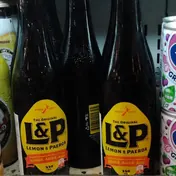
Lemon & Paeroa (L&P) ★ 4.4
L&P is the New Zealand-invented lemon soft drink combining mineral spring water from Paeroa (Coromandel) with lemon flavouring. World famous in New Zealand.
Where to try it: Daily Bread Ponsonby, Wise Boys Burgers
Price: NZD $3-5 per 330ml bottle
Lemon & Paeroa was first produced in 1907 in the small Coromandel town of Paeroa, combining mineral water from the local spring with lemon juice. The original tagline 'World Famous in New Zealand' has become a national in-joke about NZ cultural exports. The recipe was bought by Schweppes in 1965 and is now manufactured by Coca-Cola Amatil; the original Paeroa spring water is no longer used commercially, but the bottle design and branding remain unchanged. A giant L&P bottle landmark stands in Paeroa town. L&P appears on every NZ supermarket shelf, every BBQ table and every late-night service station; alongside Marmite (NZ formula), it is the country's most-recognised home-grown food brand.
Signature Dishes in Auckland, FAQ
What food is Auckland known for?
Auckland's signature dishes include Pavlova, Hangi, Whitebait Fritter, Hokey Pokey Ice Cream, Anzac Biscuit. See our signature dishes chapter for where to eat each.