
The plates that define St. Paul's Bay: what they are, where they came from, and where to eat the canonical version.
Signature dishes
-
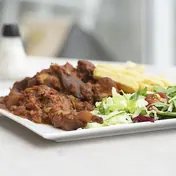
Stuffat tal-Fenek
Stuffat tal-fenek is Maltese stewed rabbit, often identified as the national dish.
The stew quite possibly started as symbolic resistance to the hunting restrictions imposed by the Knights of St John and became popular after the restrictions were lifted in the late 18th century, when the indigenous Tax-Xiber rabbit had multiplied and prices dropped.
Watch out for: Sulphites (wine)
-
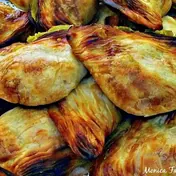
Pastizzi
Pastizzi are savoury pastries filled with ricotta (tal-irkotta) or curried peas (tal-piżelli), diamond-shaped or round, baked in a pastizzerija and sold in bars, cafés and by street vendors.
The pastry is much like Greek filo pastry, though a puff pastry version exists. Ricotta pastizzi are traditionally folded down the middle and pea pastizzi down the side, as a means of identification.
Watch out for: Gluten, Milk (ricotta)
-
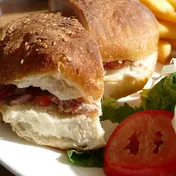
Ftira
Ftira is a ring-shaped leavened Maltese bread, usually eaten with fillings such as sardines, tuna, potato, fresh tomato, onion, capers and olives.
Its making dates back to the sixteenth century according to a local expert, and in 2020 the culinary art and culture of flattened sourdough bread in Malta was added to UNESCO's Intangible Cultural Heritage List.
Watch out for: Gluten, Fish (tuna, sardines)
Book food experiences in St. Paul's Bay
-
Ħobż biż-żejt
Ħobż biż-żejt is Maltese sourdough bread rubbed with tomatoes or tomato paste, drizzled with olive oil and filled with tuna, olives, capers, onion, bigilla and ġbejna.
Maltese bread is a crusty sourdough usually baked in wood ovens, and its making is considered a dying art. Qormi, once called Casal Fornaro, the bakers' town, is the main bread making town.
Watch out for: Gluten, Fish (tuna), Milk (ġbejna)
-
Lampuki Pie
Lampuki pie is a pie of lampuki, the dolphinfish also called dorado or mahi-mahi, a traditional dish of the season that starts in mid-August.
Lampuki are caught under palm frond floats called kannizzati, a technique that has remained unchanged for generations. The season is opened on the Marsaxlokk waterfront, where the priest blesses every luzzu and its crew.
Watch out for: Fish, Gluten
-
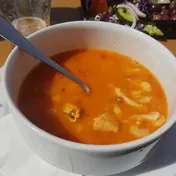
Aljotta
Aljotta is a Maltese fish broth with garlic, herbs and tomatoes.
It is the Maltese adaptation of bouillabaisse, a dish the Knights of St John, who hailed from France, Italy and Spain, are linked to.
Watch out for: Fish
-
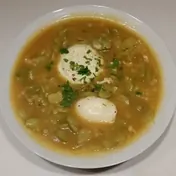
Kusksu
Kusksu is a traditional Maltese soup made primarily from seasonal broad beans, small pasta beads and fresh ġbejniet.
The pasta beads look like couscous but are lighter and fluffier, and the soup is made with fresh broad beans around spring.
Watch out for: Gluten, Milk (ġbejniet)
-
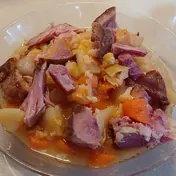
Kawlata
Kawlata is a traditional Maltese vegetable soup, typically made with cabbage and pork, and eaten in the winter months.
Adding some pork to dishes such as kawlata has been common practice in Maltese cooking for centuries, and during World War II it was a staple prepared by the Communal Feeding Kitchens.
-
Imqaret
Imqaret are Maltese sweets of deep fried pastry filled with dates, infused with aniseed and bay leaf, and sold in street markets and village feasts, sometimes with ice cream.
They are of Arabic origin, introduced during the Arab invasion of the island between 870 AD and the 11th century, and a similar sweet, makroudh, exists in Tunisia.
Watch out for: Gluten
-
Qagħaq tal-Għasel
Qagħaq tal-għasel are honey and treacle rings of pastry with a filling of honey, molasses, aniseed, cinnamon and cloves.
They were traditionally made for Christmas but became so popular they are made all year round. The ring symbolizes eternal happiness, and the oozing filling signifies overflowing with goodness.
Watch out for: Gluten
-

Kinnie
Kinnie is a bittersweet carbonated soft drink brewed from bitter oranges and extracts of wormwood, drunk straight or mixed with alcohol.
Invented by Simonds Farsons Cisk's managing director Anthony Miceli Farrugia and first produced in 1952 as an alternative to cola drinks.
Signature Dishes in St. Paul's Bay, FAQ
What food is St. Paul's Bay known for?
St. Paul's Bay's signature dishes include Stuffat tal-Fenek, Pastizzi, Ftira, Ħobż biż-żejt, Lampuki Pie. See our signature dishes chapter for where to eat each.