
The plates that define St. Julian's: what they are, where they came from, and where to eat the canonical version.
Signature dishes
-
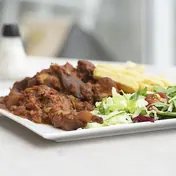
Stuffat tal-Fenek
Stuffat tal-fenek is the traditional Maltese rabbit stew, often identified as the national dish.
Where to try it: Gozitan
It quite possibly started as symbolic resistance to the hunting restrictions imposed by the Knights of St John and became popular after the restrictions were lifted in the late 18th century, when the indigenous Tax-Xiber rabbit had multiplied and prices dropped.
Watch out for: Sulphites (wine)
-
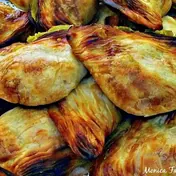
Pastizzi
Pastizzi are savoury pastries filled with ricotta (tal-irkotta) or curried peas (tal-piżelli), diamond-shaped or round, baked in a pastizzerija and sold in bars, cafés and by street vendors.
The pastry is much like Greek filo pastry, though a puff pastry version exists. Ricotta pastizzi are traditionally folded down the middle and pea pastizzi down the side, as a means of identification.
Watch out for: Gluten, Milk (ricotta)
-

Ftira
Ftira is a ring-shaped leavened Maltese bread, usually eaten with fillings such as sardines, tuna, potato, fresh tomato, onion, capers and olives.
According to a local expert, the making of the Ftira Maltija dates back to the sixteenth century, and in 2020 the culinary art and culture of flattened sourdough bread in Malta was added to UNESCO's Intangible Cultural Heritage List.
Watch out for: Gluten, Fish (sardines, tuna)
Book food experiences in St. Julian's
-
Torta tal-Lampuki (Lampuki Pie)
Lampuki pie is a fish pie made with lampuki, the dolphin fish, a traditional dish Visit Malta tells visitors to look out for.
The lampuki season typically starts in mid-August and represents a long-standing tradition among Malta's fishing families.
Watch out for: Gluten, Fish
-

Aljotta
Aljotta is a Maltese fish broth with garlic, herbs and tomatoes.
It is the Maltese adaptation of bouillabaisse, a dish that came to Malta with the Knights of St John.
Watch out for: Fish
-

Imqaret
Imqaret are Maltese sweets of pastry filled with dates, deep fried and usually infused with aniseed and bay leaf, sometimes served with ice cream.
They are of Arabic origin, introduced during the Arab invasion of the island between 870 AD and the 11th century, and the name is the plural of maqrut, meaning diamond-shaped.
Watch out for: Gluten
-

-
Ħobż biż-żejt
Ħobż biż-żejt is a round of bread dipped in olive oil, rubbed with ripe tomatoes and filled with a mix of tuna, onion, garlic, tomatoes and capers.
Visit Malta lists it, with pastizzi, among the snacks that must be tried in Malta.
Watch out for: Gluten, Fish (tuna)
-
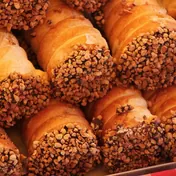
Kannoli
Kannoli are tubes of crispy, fried pastry filled with ricotta, one of the favourite dessert delicacies listed by Visit Malta.
Visit Malta places kannoli beside Sicilian-style semi-freddo desserts, in line with the strong Sicilian influence on Maltese cooking.
Watch out for: Gluten, Milk (ricotta)
-
Qagħaq tal-Għasel
Qagħaq tal-għasel are honey and treacle rings, a pastry ring with slits through which a dark filling of honey, molasses, aniseed, cinnamon and cloves oozes.
They were traditionally made for Christmas but became so popular that they are now made all year round. The ring symbolizes eternal happiness.
Watch out for: Gluten
Signature Dishes in St. Julian's, FAQ
What food is St. Julian's known for?
St. Julian's's signature dishes include Stuffat tal-Fenek, Pastizzi, Ftira, Torta tal-Lampuki (Lampuki Pie), Aljotta. See our signature dishes chapter for where to eat each.