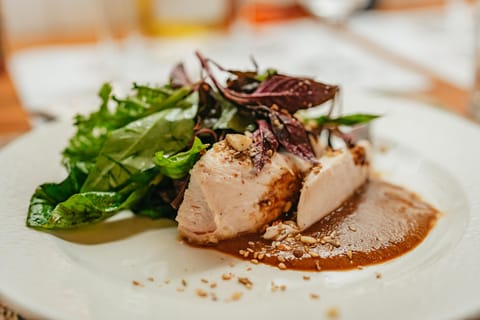
How Gozo came to eat the way it does: the people, migrations and accidents that shaped the plate.
Key eras
-
Farmers, Phoenicians and Romans (from 5000 BC)
Gozo has been inhabited since 5000 BC, when farmers from nearby Sicily crossed the sea. Visit Gozo dates the island's sea salt making to the Phoenician era, with significant developments in Roman times.
-
Arab period (870 AD to the 11th century)
Imqaret, the date-filled pastries sold at village festas, are of Arabic origin, introduced during the Arab period on the islands between 870 AD and the 11th century. Għawdex, the Maltese name of the island, descends from Arabic.
Taste it todayImqaret -
Knights of St John (1530 onwards)
Charles V gave Gozo and Malta to the Knights Hospitaller in 1530. In July 1551 the Ottomans enslaved most of the island's 5,000 inhabitants, and Gozo was repopulated between 1565 and 1580 by mainland Maltese. The Knights came from France, Italy and Spain: aljotta, the fish broth, is the Maltese adaptation of bouillabaisse, and the stewed rabbit stuffat tal-fenek possibly began as resistance to the Knights' hunting restrictions.
-
French and British rule (1798 onwards)
After the French garrison surrendered on 28 October 1798, Gozo enjoyed a short period of independence until 4 September 1800. British food products such as English mustard, Bovril, HP Sauce and Worcestershire sauce remain a subtle presence in Maltese cooking.
-
Small and local (2000s onwards)
Visit Gozo says that today Gozitan cuisine promotes the small and local. Tal-Massar Winery in Għarb opened in 2010, Lord Chambray, Malta's first craft brewery, was founded on Gozo in 2014, and the Delicata Classic Wine Festival in Nadur reached its 22nd Gozo edition in 2026.
Taste it todayTal-Massar Winery
Immigrant influences
- Sicilian and Italian
- Italian, specifically Sicilian, foods exerted a strong influence on Maltese cooking, and Visit Gozo lists Italian colonial influence on Gozo's food.
- Arab
- Arab foods exerted a strong influence, and imqaret, the date pastries sold at festas, are of Arabic origin.
- French, Spanish and the Knights
- The Knights hailed from France, Italy and Spain and brought influences from those countries; aljotta is the Maltese adaptation of bouillabaisse.
- British
- The British military presence created a market of a garrison and their families and, later, mass tourism from the United Kingdom.
Signature innovations
- Ftira Għawdxija: the Gozitan ftira is served open with thinly sliced potato over the crust, or folded over like a calzone, where the Maltese ftira is more of a sandwich bread.Taste it todayFtira Għawdxija
- Ġbejna as a filling: Gozitan cheeselets fill ravioli instead of the usual ricotta.
- Ftira tal-ġbjeniet: a filling of local fresh cheese and beaten eggs over a layer of sliced potatoes, offered by most bakeries year-round.
- Kunserva helwa, a sweet tomato paste matured in the sun, made at Ta' Mena Estate with traditional recipes that used the sun and marine salt as preservatives.Taste it todayTa' Mena Estate
Book food experiences in Gozo

