The plates that define Chiba: what they are, where they came from, and where to eat the canonical version.
Signature dishes
-
Peanut monaka (rakkasei monaka)
A crisp wafer filled with a chunky blend of peanuts and sweet anko bean paste, Chiba's best known peanut sweet, sold in Chiba City at Owada inside Perie Chiba.
Price: ¥220 each at Owada
Chiba is the number one producer of peanuts in Japan, with five main types grown; Chiba Handachi, the most prominent, has a rich flavour that suits roasting. The prefectural tourism board calls peanut monaka the star of Chiba's peanut show, a wafer-like cookie filled with peanuts and anko and sold in souvenir shops nationwide. In Chiba City, Owada inside Perie Chiba makes peanut monaka and mamezutsumi mainly with Chiba Handachi peanuts, and the city tourism association lists famous peanut sweets among the city's souvenirs.
Watch out for: Peanuts
-
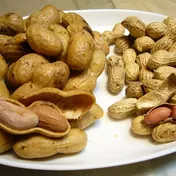
Boiled peanuts (yude rakkasei)
Fresh peanuts boiled in their shells in salted water for 40 to 50 minutes, soft and flaky with a delicate sweetness, a seasonal autumn dish wherever peanuts grow.
Peanuts reached Japan via East Asia in 1706, and Chiba trialled them in 1876. Because fresh peanuts harden soon after harvest, boiled peanuts were long a local dish made from nuts just dug from the field, known to few outside the growing areas. Better preservation and distribution now ship them widely, sealed in airtight packs at roadside stations and supermarkets. In Chiba City's Midori Ward, the city's agricultural administration division has run a day of peanut digging for families with boiled peanuts to taste.
Watch out for: Peanuts
-
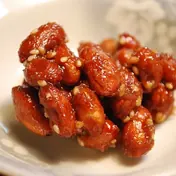
Peanut miso (rakkasei miso)
Peanuts cooked with miso and sugar into a sweet and savoury side dish eaten on rice, with tea or with drinks; each household seasons it to its own taste.
Peanut growing in Chiba began when Manuemon Makino, a farmer from Nango village in Sanbu district, bought seeds from Kanagawa for a trial crop, and Chiba now accounts for 80% of Japan's domestic peanut harvest. Farmers devised rakkasei miso to use peanuts too irregular to sell. Rich in fat and protein, it was a valuable preserved food when food was scarce. Many households still make their own, and it appears in school lunches and on supermarket shelves.
Watch out for: Peanuts, Soy
-
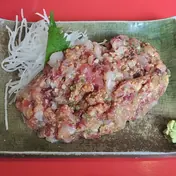
Namero
Raw horse mackerel chopped with miso, green onion and ginger, then pounded with a knife until sticky; a Boso fishermen's dish now served at izakaya well beyond Chiba.
Namero was invented by fishermen of Kazusa and Awa, today's southern Chiba, to prepare freshly caught fish on their unsteady boats. They used miso instead of soy sauce, which would spill in rough seas. The name is said to come from licking the plate clean. Green onion and ginger were added as it became a home dish, and sardine, saury or flying fish can stand in for horse mackerel. The Minami-Boso Namero Research Association, founded in 2009, promotes it nationwide.
Watch out for: Fish, Soy
-
Sangayaki
Namero cooked: the pounded fish and miso mix grilled on an iron plate or packed into scallop or abalone shells over a grill, eaten with rice or with drinks.
Horse mackerel, sardines and saury have been plentiful around the Boso Peninsula since ancient times, and fishermen made namero on their boats. When they went to work in the mountains they carried namero in abalone shells and steamed or grilled it in their huts. In old Chiba dialect a house can be called ga, so the dish became sangayaki: mountain, hut, grill. It now appears on the menus of Japanese bars and seafood restaurants across the country.
Watch out for: Fish, Soy
-
Futomaki matsuri zushi (Boso festival rolls)
Thick sushi rolls whose cut face shows a picture, from cherry blossoms to birds and pandas, made with rice, nori, egg, dried gourd, greens and sakura denbu.
Futomaki zushi has been handed down in Chiba farming households since the Kansei era and is made all over the prefecture, mainly in the Kazusa and Shimousa areas. It is eaten at festivals, cherry blossom viewing, weddings and family events. Men of standing made it before the Second World War; afterwards women took over and the rolls grew more colourful. From 1955 Eiko Ryusaki surveyed its history and designs, published a recipe book and taught classes, and cooks now compete to make the best designs in the prefecture.
Watch out for: Egg, Fish
-
Fuukashi (asari clams in miso broth)
Asari clams boiled in kelp broth until they open, finished with a little miso and piled high in the bowl with their soup, a dish of the Chiba shore of Tokyo Bay.
Fuukashi belongs to the Tokyo Bay coast from Futtsu to Funabashi. In the Edo period the bay's asari were plentiful and meaty, and with no refrigeration, fishermen steamed the clams before shipping them; the broth, mixed with a little precious miso, is said to be the origin of the dish. Asari grew scarcer in the Heisei era, and clam-digging shores in the prefecture are now kept up with imported juvenile clams. It is eaten in the clam seasons of February to April and September to October.
Watch out for: Shellfish, Soy
-
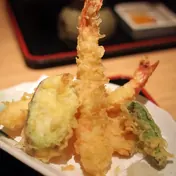
Salted bamboo shoot tempura (shiozuke takenoko no tempura)
Bamboo shoots kept in salt, soaked, simmered in soy sauce, sugar and sake, then battered with flour and egg and fried crisp; a dish from one of Chiba City's crops.
Chiba produces the most bamboo shoots in the Tokyo metropolitan area, with Otaki, Nagara, Chiba City, Kimitsu and Katsuura the main growing areas. Fresh shoots are a spring food, so cooks preserve them in salt to make this tempura all year round. Since 2002 Chiba has certified Chiba Eco Agricultural Products grown with less than half the usual chemicals, and Chiba bamboo shoots are grown without pesticides. In Chiba City a nature farm offers bamboo shoot digging in spring.
Watch out for: Gluten, Egg, Soy
Signature Dishes in Chiba, FAQ
What food is Chiba known for?
Chiba's signature dishes include Peanut monaka (rakkasei monaka), Boiled peanuts (yude rakkasei), Peanut miso (rakkasei miso), Namero, Sangayaki. See our signature dishes chapter for where to eat each.