
The plates that define Jakarta: what they are, where they came from, and where to eat the canonical version.
Signature dishes
-
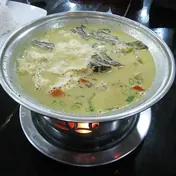
Soto Betawi
Soto betawi is the Betawi soup of beef or beef offal in a cow's milk or coconut milk broth, served with fried potato and tomato.
Soto betawi from Jakarta uses minyak samin (ghee), which points to Arab or Muslim Indian influence. Soto as a whole was recognised by the Indonesian government as one of five national dishes in 2018.
Watch out for: Milk (when made with cow's milk)
-
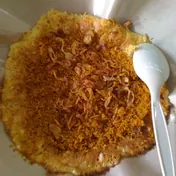
Kerak Telor
Kerak telor is a spicy omelette of glutinous rice and egg, chicken or duck, cooked fresh on a small wok over charcoal and topped with serundeng, dried shrimp and fried shallots.
It dates from the Dutch colonial era, when the local glutinous rice was of poor quality and egg and toppings were added to make it more palatable. It is a snack rather than a main dish and is popular at the annual Jakarta Fair.
Watch out for: Egg, Shellfish (dried shrimp)
-
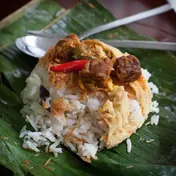
Nasi Uduk
Nasi uduk is rice steamed in coconut milk with clove, cassia bark and lemongrass, topped with fried shallots and served with side dishes such as empal, krechek and semur jengkol.
Price: Rp 10,000 per serving on average
Javanese migrants introduced uduk to Batavia in 1628, and historians also trace it to Malay nasi lemak. Jakarta's style calls for sambal kacang, and the Kebon Kacang area near Tanah Abang is known for its nasi uduk.
Watch out for: Peanuts (sambal kacang), Fish (teri anchovy)
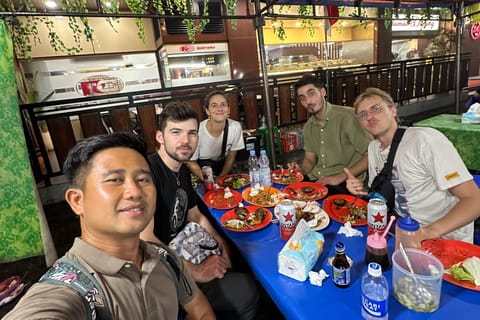
Book food experiences in Jakarta

-

Gado-Gado
Gado-gado is a salad of raw, blanched or steamed vegetables with hard-boiled egg, boiled potato, fried tofu and tempeh and sliced lontong, dressed in peanut sauce.
Gado-gado is thought to have started as a Sundanese dish, and it is most common in western Java, which includes Jakarta. In Jakarta, Gado-Gado Boplo has been around since 1970 and Gado-Gado Bonbin in Cikini since 1960.
Watch out for: Peanuts, Soy (tofu, tempeh), Egg
-
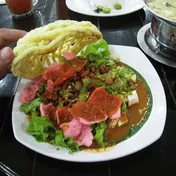
Asinan Betawi
Asinan Betawi is the Betawi pickled vegetable salad of Chinese cabbage, cabbage, bean sprouts, tofu and lettuce in a thin, hot peanut sauce with vinegar, topped with peanuts and krupuk.
Asinan is among the dishes that show Chinese influence and is shared with Chinese Indonesian cooking. Food expert William Wongso notes that the dish is not guaranteed to come from Jakarta and may reflect Indian, Chinese, Arab, Portuguese or Dutch cooking.
Watch out for: Peanuts, Soy (tofu)
-

Ketoprak
Ketoprak is a Betawi street dish of vegetables, tofu, rice vermicelli and rice cake in peanut sauce.
Ketoprak is one of the dishes listed as Betawi cuisine, which grew from the many communities that traded and settled in the port of Batavia.
Watch out for: Peanuts, Soy (tofu)
-
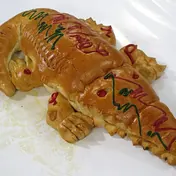
Roti Buaya
Roti buaya, crocodile bread, is a Betawi two piece sweetened bread shaped like a crocodile, always present at traditional Betawi wedding ceremonies.
Europeans in Batavia, the Portuguese and Dutch, introduced bread making, and the modern version was created in the colonial era. The Betawi believe crocodiles mate with one partner, so the bread stands for the fidelity of married couples.
-
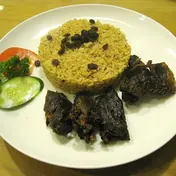
Nasi Kebuli
Nasi kebuli is rice cooked in goat meat broth, goat milk and clarified butter, an Indonesian variation of pilaf popular among Arab-descent Betawi in Greater Jakarta.
Its origin traces to Middle Eastern cooking, especially Yemeni mandi and kabsa, with Indian biryani and Afghan kabuli palaw influence. In Betawi culture it is usually served at Islamic festivities such as Eid al-Fitr, Eid al-Adha and Mawlid.
Watch out for: Milk (goat milk and ghee)
-
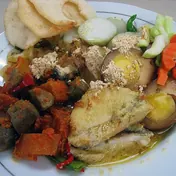
Lontong Cap Go Meh
Lontong cap go meh is lontong rice cake served with opor ayam in coconut milk, sayur lodeh, liver in chilli and a marbled egg, topped with koya powder of soy and dried shrimp.
It is a Chinese Indonesian take on Javanese cooking, eaten at the Cap go meh celebration, and it is among the dishes Betawi cooking shares with Chinese Indonesians.
Watch out for: Egg, Soy, Shellfish (dried shrimp)
-
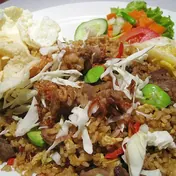
Nasi Goreng Kambing
Nasi goreng kambing is Betawi-style goat fried rice, made with mutton or goat meat, rich spices and minyak samin (ghee), the kind of dish traditionally favoured by Arab Indonesians.
Nasi goreng, fried rice, is regarded as a national dish of Indonesia. One theory holds that the Betawi goat version was inspired by Middle Eastern pilaf, which also cooks rice in seasoned broth.
Watch out for: Milk (ghee), Soy
-

Bir Pletok
Bir pletok is a non-alcoholic Betawi drink made from ginger, pandan leaves, boiled sappan wood and lemongrass, called beer although it contains no alcohol.
It was inspired by the Dutch colonists' late night drinking in Batavia. Betawi people, mostly Muslim and forbidden alcohol, made their own alcohol-free brew.
Signature Dishes in Jakarta, FAQ
What food is Jakarta known for?
Jakarta's signature dishes include Soto Betawi, Kerak Telor, Nasi Uduk, Gado-Gado, Asinan Betawi. See our signature dishes chapter for where to eat each.