
The plates that define Bangalore: what they are, where they came from, and where to eat the canonical version.
Signature dishes
-

Masala Dosa
A masala dosa is a savoury dosa crepe stuffed with a spiced potato stir fry, served with chutneys and sambar. In Bengaluru it is the signature dish of Vidyarthi Bhavan.
Where to try it: Paakashala JP Nagar, Udupi Sri Krishnarajathadri, Vidyarthi Bhavan, IDC Kitchen, Babai Tiffins
Wikipedia credits K. Krishna Rao with creating it in Madras in the 1930s. Vidyarthi Bhavan in Gandhi Bazaar, open since 1943, is noted for a crispy and buttery version.
Watch out for: Legumes (black gram)
-
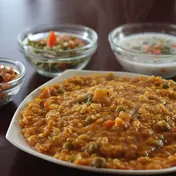
Bisi Bele Bath
Bisi bele bath, literally hot lentil rice, is a spicy rice dish made with a huliyanna masala, toor dal, ghee and vegetables, often eaten with boondi, papad or chips.
Where to try it: Paakashala JP Nagar
It is said to have originated in the Mysore Palace, where its recipe was almost a secret among the cooks for two centuries. It is commonly found in restaurants that serve Udupi cuisine.
Watch out for: Milk (ghee), Legumes (toor dal)
-
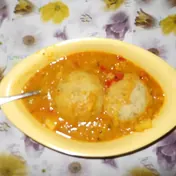
Rava Idli
Rava idli is a variation of idli made with rava (coarse ground wheat or rice) or semolina, eaten hot with saagu and coconut chutney, with a dash of ghee.
Mavalli Tiffin Rooms of Bangalore says it invented it during World War II, when rice was in short supply and the kitchen tried semolina instead.
Watch out for: Gluten (semolina), Milk (ghee)
Book food experiences in Bangalore


-
Benne Dose
Benne dose, or butter dosa, is a soft rice crepe made with butter in the batter and topped with more butter and coconut chutney. Several variants are popular in Bangalore.
Where to try it: Kesar Kunj
It originated in Davanagere, where tradition links it to a cook named Chennamma who set up an eatery there in 1927. In 2024 the Union Minister of State for Commerce and Industry denied it a Geographical Indication, noting its popularity in several districts.
Watch out for: Milk (butter), Legumes (black gram)
-
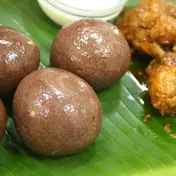
Ragi Mudde
Ragi mudde is a finger millet swallow dish made from only ragi flour and water, rolled into balls and dipped in saaru. It is not meant to be chewed.
Where to try it: Badoota Nati Style Restaurant
It is a staple in the districts around Bengaluru, including Bengaluru Rural, and military hotels in the city list it with biryani, mutton chaap and keema.
-
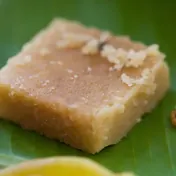
Mysore Pak
Mysore pak is a confection of gram flour (besan), sugar and ghee, often flavoured with cardamom, with a texture between fudge and a buttery dense cookie.
It was first prepared in the early 20th century in the royal kitchens of Krishna Raja Wadiyar IV of Mysore, according to tradition by the palace chef Kakasura Madappa.
Watch out for: Milk (ghee), Legumes (gram flour)
-
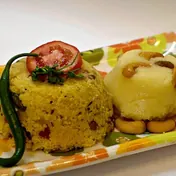
Kesari Bath and Chow Chow Bath
Kesari bath is a semolina dessert with sugar, ghee, water and milk, coloured with saffron. A plate with kesari bath and khara bath together is popularly called chow chow bath.
Where to try it: Paakashala JP Nagar
It is common in Karnataka cuisine and popular during festivals such as Ugadi, and in southern India it is also eaten at ordinary breakfasts.
Watch out for: Gluten (semolina), Milk
-
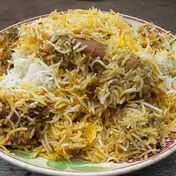
Military Hotel Biryani
Bengaluru's military hotels serve mainly non-vegetarian food, with biryani, mutton chaap, keema, chicken and ragi mudde among the usual items, generally without beef and pork.
Shivaji Military Hotel, established in 1924, is one of the oldest of these eateries. Others include Ranganna Military Hotel and S.K Donne Biryani Military Hotel.
-
Avarekai Dishes
Avarekai is the hyacinth bean, and its peeled (hithkabele) and unpeeled (avarebele) forms go into varied dishes at the Avarekai Mela of VV Puram Food Street in December and January.
The mela started as an effort to sell the produce of avarekai farmers, and more than 1000 kg of avarekai was bought directly from farmers on each day of the festival.
Watch out for: Legumes
Signature Dishes in Bangalore, FAQ
What food is Bangalore known for?
Bangalore's signature dishes include Masala Dosa, Bisi Bele Bath, Rava Idli, Benne Dose, Ragi Mudde. See our signature dishes chapter for where to eat each.