
The plates that define Accra: what they are, where they came from, and where to eat the canonical version.
Signature dishes
-
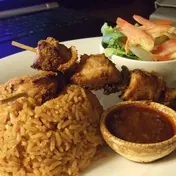
Ghanaian Jollof Rice ★ 4.8
Ghanaian jollof is rice, typically jasmine, cooked with onion, ginger, garlic, chillies and tomato paste with beef, goat or chicken, and served with shito and salad at parties.
Where to try it: Zara Kitchen, Asaase Kitchen, Favoured Foods, Starbites East Legon
Price: GH₵90 with grilled chicken
The name jollof comes from the Wolof people, and the Jolof or Wolof Empire ruled parts of modern Senegal, Mali, The Gambia and Mauritania from around the 12th century. Ghana is among the countries most competitive over who makes the best jollof, and in the 2010s the rivalry with Nigeria became a friendly one known as the Jollof wars. In 2016 Sister Deborah released the song Ghana Jollof. Ghanaian jollof typically leaves out green leafy vegetables and is served with plantains and fried fish, chicken or beef.
Watch out for: Fish and crustaceans (in the shito served alongside)
-
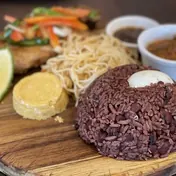
Waakye ★ 4.7
Waakye is rice and black-eyed peas or cow beans cooked with dried sorghum leaf sheaths that turn it red, served with wele stew, boiled eggs, garri, shito, spaghetti or fried plantain.
Where to try it: Azmera Restaurant, Asaase Kitchen, Zara Kitchen
Price: GH₵125 with beef, wele and egg
The word waakye comes from the Dagbani language and refers to a particular kind of bean; in Hausa the dish is called wake, short for shinkafa da wake, rice and beans. It is thought to have originated in northern Ghana among the Mole-Dagbon people, and it is also common among Hausa settlers in the Zongo communities of southern Ghana. Waakye is commonly sold by roadside vendors, often wrapped in banana leaf, and it may be the precursor of the rice and beans dishes of the Caribbean and South America.
Watch out for: Egg, Gluten (in the spaghetti), Fish and crustaceans (in shito)
-
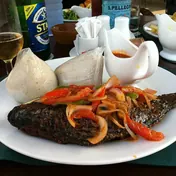
Banku and Grilled Tilapia ★ 4.7
Banku is a fermented corn and cassava dough cooked in hot water to a smooth, whitish paste and eaten with grilled tilapia and pepper sauce, okra stew or soup.
Where to try it: Azmera Restaurant, Favoured Foods, Asaase Kitchen, Zara Kitchen
Price: GH₵80 to GH₵125 with grilled tilapia
Banku is a distinctively Ga-Dangme term, and historically banku was stored in leaves. The Ga-Dangme eat a softer variety, while the Fante have a drier variant they call ɛtsew. The main ingredients are corn flour, cassava, salt and water, and the dough is fermented for two to five days, depending on temperature, before it is cooked. Ga meals built on it include banku ke aklo, banku with the Ga light soup, garnished with cooked blended okra.
Watch out for: Fish
Book food experiences in Accra


-
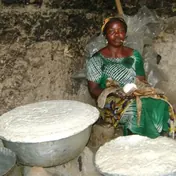
Kenkey (Komi) ★ 4.6
Kenkey, called komi by the Ga, is maize steeped and milled into a dough that ferments for days, then is partly cooked, wrapped in corn husks or banana leaves and steamed; shito goes with it.
Kenkey or komi is fermented corn dough wrapped in corn, originating from the Ga people of the Ga-Adangbe, and the Ga kenkey is the more common version in most parts of Ghana. A variation from the Fanti people, Fante dokono, is wrapped in plantain leaves, which give it a different texture, flavour and colour. Unlike ugali, kenkey is left to ferment before cooking, for four days to a week. Ice kenkey, made from refrigerated kenkey, is a chilled dessert sold by street vendors in open-air markets.
-
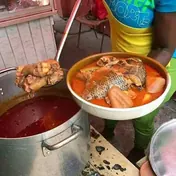
Fufu and Light Soup ★ 4.7
Fufu is boiled cassava pounded with plantain or cocoyam in a wooden mortar into a soft, sticky dough, eaten with light soup, a thin broth of tomatoes, chili peppers and fish or goat.
Where to try it: Azmera Restaurant, Asaase Kitchen
Price: GH₵125 with goat light soup
Fufu is a Twi word from the Akans of Ghana, and the dish is believed to originate with the Asante, Akuapem, Akyem, Bono and Fante peoples. Before Portuguese traders brought cassava to Africa from Brazil in the 16th century, fufu was mainly made from cocoyam, plantain and yams. Light soup was first a tomato based seafood soup called nkra nkra or aklor, made for fishermen on the coast of Accra, and over time it came to be cooked with goat, lamb or beef too. The Ga call it toolo wonu.
Watch out for: Fish
-
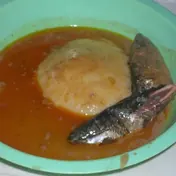
Groundnut Soup (Nkatenkwan) ★ 4.6
Groundnut soup, nkatenkwan in Akan, is a soup made from peanuts; in Ghana it is often very spicy and eaten with fufu, banku or omo tuo, the Ghanaian rice balls.
Where to try it: Azmera Restaurant, Favoured Foods, Asaase Kitchen
Price: GH₵70 with omo tuo
In Ghana groundnut soup is known as nkatenkwan in the Akan language and azidetsi in Ewe. It is one of the common Ghanaian soups, alongside light soup, palm nut soup, kontomire soup, ayoyo and okra soup, and fufu is eaten with it as one of its liquid soups (nkwan). Omo tuo, Twi for rice balls, is made from broken rice cooked soft, beaten smooth and shaped into balls, and in Ghana it is usually served with groundnut or palm nut soup. Kokonte, made from dried cassava powder, is usually served with groundnut soup too.
Watch out for: Peanuts
-
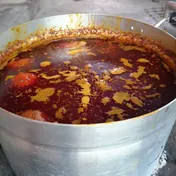
Palm Nut Soup (Abenkwan) ★ 4.4
Palm nut soup, abenkwan in Twi, is made from a palm cream or palm nut base with stewed meats, smoked dried fish and aromatics, and is eaten with fufu, omo tuo or banku.
Where to try it: Asaase Kitchen
Abenkwan is one of the liquid soups (nkwan) that fufu is eaten with in Ghana, and palm nuts are among the main ingredients of Ghanaian soups and stews. Omo tuo, the Ghanaian rice balls, is usually served with groundnut or palm nut soup. In Accra the Ga eat palm nut soup with kpokpoi, the steamed and fermented corn meal of the Homowo festival, together with smoked fish. Palm oil itself is one of the important cooking oils of Ghana.
Watch out for: Fish
-
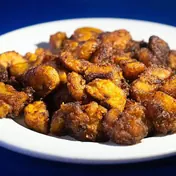
Kelewele ★ 4.6
Kelewele is a Ghanaian snack of plantains fried with spices such as ginger, onion and chilli; the name also covers the spice mix, and it is a side for red red and fish stew.
Where to try it: Asaase Kitchen, Favoured Foods
Price: GH₵55 with spicy gizzard
Kelewele comes from Ghana, where it is a popular food made of fried plantains seasoned with spices, and the word names the spice mix itself as well. It is typically served as a side dish for red red, the stewed black-eyed peas, and for fish stew. Fried plantain is cooked wherever plantains grow, from West Africa to the Caribbean and Southeast Asia, and its spices can include cayenne pepper, ginger, onion powder or garlic powder; some cooks fry onions and fresh ginger along with the plantain slices.
-

Red Red ★ 4.5
Red red is a stew of black-eyed peas with red palm oil, tomatoes, onions, Scotch bonnet peppers and fish such as mackerel, served with fried plantain and garri.
Red red was created by the GaDangme, or Ga, people, and the dish takes its name from the red colour it gets from red palm oil (zomi) and the fried plantain. In Ghana it is commonly known as Yɔ kɛ Gari. It is usually made with fish such as tinned mackerel or pilchards, though it can also be vegetarian, and palm oil is one of the oils a Ghanaian cook will not substitute in it. Many Ghanaian families buy staples such as kenkey, red red and waakye from street food vendors.
Watch out for: Fish
-
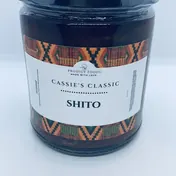
Shito ★ 4.5
Shito is a hot black pepper sauce of oil, ginger, dried fish, prawns, garlic, peppers and spices cooked for a little over an hour, eaten with kenkey, rice, garri, waakye and banku.
Where to try it: Asaase Kitchen
Shito, or shitor din, takes its name from the Ga language, and the sauce owes its original recipe to the Ga, though the blend of spices and fish differs between regions and villages. It is ubiquitous in Ghanaian cuisine, and its uses have been adapted to those of a local ketchup, hot sauce or chili oil; it is not uncommon to find shito eaten with white bread or spring rolls. Jollof in Ghana is often served alongside shito and salad at parties and other ceremonies.
Watch out for: Fish, Crustaceans
-
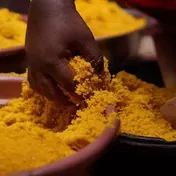
Kpokpoi ★ 4.4
Kpokpoi is steamed and fermented corn meal mixed with palm oil, eaten with palm nut soup and smoked fish; it is the food of Homowo, the Ga harvest festival in Accra.
Homowo is celebrated each year between August and September by the Ga people of the Greater Accra Region, and it recalls a famine the Ga endured during a migration, followed by a bountiful harvest. Visit Ghana says homes begin preparing kpokpoi, steamed maize mixed with palm oil, in early September, and that turning it into kpokpoi was an act of transformation, hunger into nourishment. In the most visible ritual, kpashimo, chiefs and elders move through the community sprinkling kpokpoi in public spaces, an offering meant to please the ancestors.
Watch out for: Fish
Signature Dishes in Accra, FAQ
What food is Accra known for?
Accra's signature dishes include Ghanaian Jollof Rice, Waakye, Banku and Grilled Tilapia, Kenkey (Komi), Fufu and Light Soup. See our signature dishes chapter for where to eat each.