


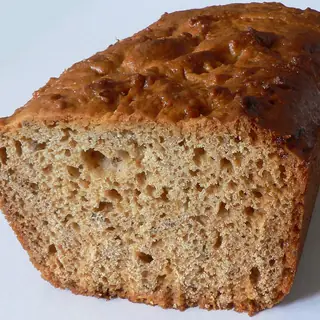
Pain d'épices is Dijon's spiced honey bread, sold in loaves and as nonnettes, small round spice cakes with a jam filling such as blackcurrant or apricot; in France we have verified places to eat it in Dijon, Reims and Strasbourg.
Pain d'épices · Dijon
Pain d'épices is Dijon's spiced honey bread, sold in loaves and as nonnettes, small round spice cakes with a jam filling such as blackcurrant or apricot.
Pain d'épices came originally from China, as mi-kong or honey bread, and was introduced to Burgundy in the 14th century by Margaret of Flanders, wife of Philip the Bold. Mulot et Petitjean, whose house goes back to Barnabé Boittier at the end of the 18th century, is now the only artisanal company in Dijon making it, where there were fourteen in 1940.
Where to eat in Dijon:
- Mulot et Petitjean
Where to eat Pain d'épices in Dijon: the editor picks
Pain d'épices de Reims · Reims
Pain d'épices de Reims is a dense spiced loaf of rye flour and three kinds of honey, meadow, pale and buckwheat, and the Reims name is reserved for gingerbread made with rye.
Reims bakers began spicing honey bread around the 14th century and were given the name pâtissiers de pain d'épices; the city's is held to be the oldest recorded mention of the trade. The pain d'épices makers asserted their monopoly on 2 August 1571 and founded a guild that Henri IV recognised in 1596, and the Reims aldermen offered pain d'épices to Louis XV at his coronation in 1722. Before the Revolution the city had only twelve master makers, and the number halved under the First Empire.
Where to eat in Reims:
- Maison Fossier
Where to eat Pain d'épices de Reims in Reims: the editor picks
Pain d'epices · Strasbourg
Alsatian pain d'epices, or gingerbread, made with honey and the four spices of cinnamon, clove, ginger and anise, once sold as figurines of people.
Pain d'epices is made traditionally with honey, and the Alsatian recipe uses the four spices of cinnamon, clove, ginger and anise. The village of Gertwiller received the title of capital of gingerbread, succeeding Reims and Dijon. Two makers remain there, Fortwenger and Lips, and the village has a gingerbread and Alsatian folk art museum. Gingerbread was long sold as figurines of people and religious subjects, and in animal and heart shapes.
Where to eat in Strasbourg:
- Patisserie Christian
- Maison Naegel
Where to eat Pain d'epices in Strasbourg: the editor picks
Book food experiences in Dijon


Check dates and prices
Powered by GetYourGuide