
The plates that define Punta Cana: what they are, where they came from, and where to eat the canonical version.
Signature dishes
-
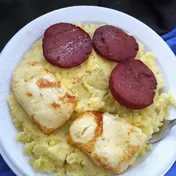
Mangú
Mangú is the national breakfast of the Dominican Republic: boiled green plantains mashed smooth and topped with pickled red onions, with fried cheese, salami and eggs beside it.
Mangú's origins are linked to West African fufu, which came to the Caribbean and Latin America through the transatlantic slave trade. Enslaved Africans and their descendants adapted it with local ingredients. The plate of fried cheese, fried eggs and fried Dominican salami beside it is known as los tres golpes, the three hits.
Watch out for: Eggs, Dairy
-
La bandera
La bandera is the traditional Dominican lunch. Stewed meats, carnes guisadas, are one of its components, served with white rice and stewed beans.
Guisados are meat, fish, beans or vegetables cooked in a tomato sauce base with Dominican-style sazón, and the sazón depends on personal preferences and family traditions. They are a popular staple in Dominican kitchens, and bouillon cubes are used heavily in preparing Dominican lunch food.
-
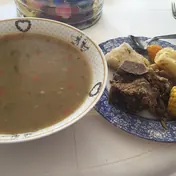
Sancocho de siete carnes
Sancocho de siete carnes is a seven meat stew of large pieces of meat, tubers and vegetables in a broth, called the Dominican Republic's national soup.
Sancocho takes its name from the Spanish verb sancochar, to parboil, and is a traditional stew in several Caribbean and Latin American cuisines. In the Dominican Republic the seven meat version is the national soup, and with beans added it is known as sancocho de habichuela.
Watch out for: Meat
Book food experiences in Punta Cana


-
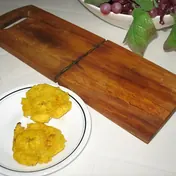
Tostones
Tostones are green plantain slices fried twice, flattened between the two fryings, then salted and eaten much like potato chips or french fries.
Tostones are common across Latin American and Caribbean cooking, and in the Dominican Republic they are also called fritos. Unripe plantains are peeled, sliced and fried, pounded flat with a tostonera or between two plates, and fried again until crisp and golden.
-
Chillo frito
Chillo frito is fried red snapper, a typical dish of small restaurants near the Higüey market, served with mangú and tostones.
Seaside Dominican fishing villages have great varieties of seafood, and a guide to Higüey describes the local cuisine as simple and flavourful, reflecting the blend of Taíno, African and Spanish influences that define Dominican gastronomy.
Watch out for: Fish
-
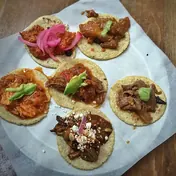
Chicharrón de pollo
Chicharrón de pollo, also called pica pollo, is fried chicken marinated in lime juice and coated with flour, garlic and oregano, served with tostones and lime.
The dish goes by pica pollo as well as chicharrón de pollo. Chicken is marinated in lime juice and coated with flour, garlic and orégano, and some recipes use rum or soy sauce as the marinade. It is served with tostones and lime.
Watch out for: Gluten
-
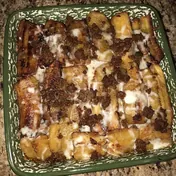
Pastelón
Pastelón is a casserole of boiled mashed ripe plantains layered with Dominican style picadillo and cheddar cheese, baked in a pan.
Pastelón is a dish of the Dominican Republic and Puerto Rico, and its origins can be found in other Latin American countries such as Venezuela, Panama and Cuba. There are more than six Dominican variations, the most popular being pastelón de plátano maduro and pastelón de yuca.
Watch out for: Dairy
-
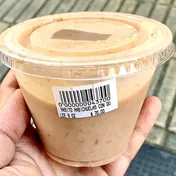
Habichuelas con dulce
Habichuelas con dulce is a sweet bean dessert of red beans, coconut milk, evaporated milk, raisins and sweet potato, especially popular around Easter.
The origins are unclear. One account holds that enslaved Africans created it, and another credits the colonial period, with sugar and coconut milk from African slaves, sweet potato from the Taíno and beans and spices from Spanish settlers. It is traditionally garnished with milk cookies or casabe.
Watch out for: Milk, Coconut
-
Quipes
Quipes are deep-fried bulgur rolls filled with picadillo, a Lebanese-derived snack that Dominican cooks make with beef instead of lamb.
Quipes and tipili are two dishes brought by Levantine Middle Eastern immigrants and made with bulgur along the south central coast. Dominican versions use beef instead of lamb, and Dominican oregano, bell peppers and chicken bouillon replace many of the original spices.
Watch out for: Gluten
-
Mama Juana
Mama Juana is an alcoholic drink made by letting rum, red wine and honey soak in a bottle with tree bark and herbs, alongside the local rum, called romo.
Rum, locally known as romo, is the most popular drink of the Dominican Republic with beer, especially Presidente, and coffee. Mama Juana is made by soaking rum, red wine and honey in a bottle with tree bark and herbs.
Watch out for: Alcohol
-
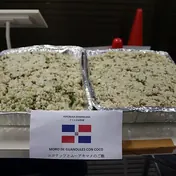
Moro de guandules con coco
Moro de guandules con coco is rice cooked with pigeon peas (guandules), sofrito and coconut milk, the rice dish served for Christmas.
Most dishes in the Dominican Republic are served with long-grain rice, a staple of the cuisine. Moro de guandules con coco is the festive version, cooked with pigeon peas, sofrito and coconut milk for Christmas.
Watch out for: Coconut
Signature Dishes in Punta Cana, FAQ
What food is Punta Cana known for?
Punta Cana's signature dishes include Mangú, La bandera, Sancocho de siete carnes, Tostones, Chillo frito. See our signature dishes chapter for where to eat each.