

History
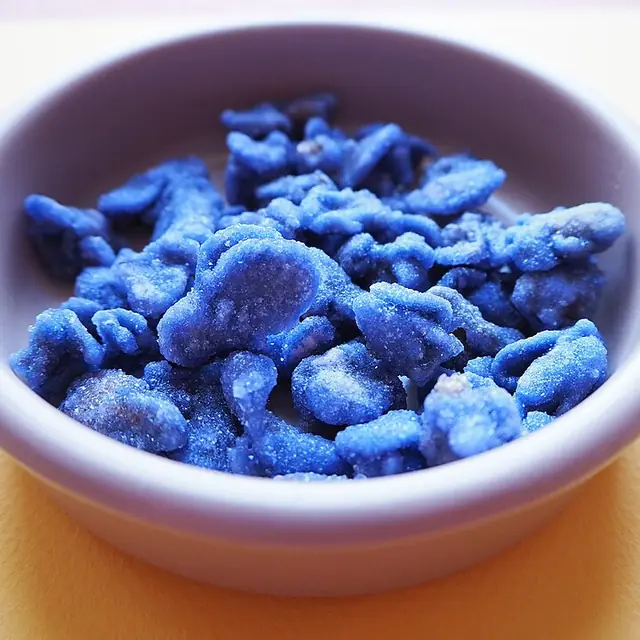
Violets were first cultivated in Toulouse from 1850 in the Lalande quarter, with 600 families growing 30 tons of cut flowers a year by 1900. A Toulouse druggist first popularised crystallised violet candies in the early 20th century. The candies became permanent fixtures of Toulouse confectionery via Maison Pillon (1894). The recipe sugar-coats fresh violet petals one at a time, then dries them to lock in the perfume.
Book a food experience
Tours, tastings and classes that match this page, bookable on GetYourGuide.

Make it at home
Ingredients
- 30 fresh Parma violet flowers (food-grade)
- 1 egg white
- 200g caster sugar
Method
- Pick the violet flowers in the morning when they are still fragrant. Wash them gently and pat dry.
- Lightly beat the egg white in a bowl until just frothy.
- Using a small soft brush, paint each violet petal with egg white on both sides.
- Dip the painted flower into the caster sugar, coating evenly.
- Place on baking parchment to dry. Sprinkle extra sugar on top.
- Leave at room temperature for 24 hours, until completely dry and brittle.
- Store in an airtight container with silica gel. The candies keep for several months.
Tip from the editors. Use food-grade Parma violets (Viola odorata), not garden violets. Pick early in the morning when fragrance is strongest.
Where to eat violet candy of toulouse
Violet candy of Toulouse in Toulouse
Maison Pillon ★ 4.5
Maison Pillon on Rue Ozenne is the canonical Toulouse patisserie and chocolatier since 1967, famed for crystallised violet candy and the cachous de Toulouse.
Worth the queueBonbons a la violette de Toulouse
TipPick up violet candies and cachous de Toulouse for souvenirs; the apple croustade is the patisserie pick.
Violettes et Pastels ★ 4.0
Violettes et Pastels on Rue Saint-Pantaleon since 1995 is the only Toulouse boutique pairing the city's emblematic violet with the pastel plant, with jams.
Worth the queueCrystallised violet petals
TipClosed Sunday and Monday; pick up crystallised violet petals to take home, the canonical Toulouse souvenir.
More places near Maison Pillon and Violettes et Pastels
Not on this list, but close by, nearest first. Every one is in our guide with its address, hours and what to order.
- Cafe au Pluriel Café, about 100 m away
- Hubsbob Coffee Café, about 200 m away
- Hubsbob Coffee Roasters Coffee roaster, about 200 m away
- Peche Mignon Bakery, about 200 m away
- LaBelleBrune Café, about 200 m away
- Bapz Bakery and Tea Room Café, about 250 m away
More cities are in research. Want violet candy of toulouse covered somewhere specific? Tell us where you want to eat.