History
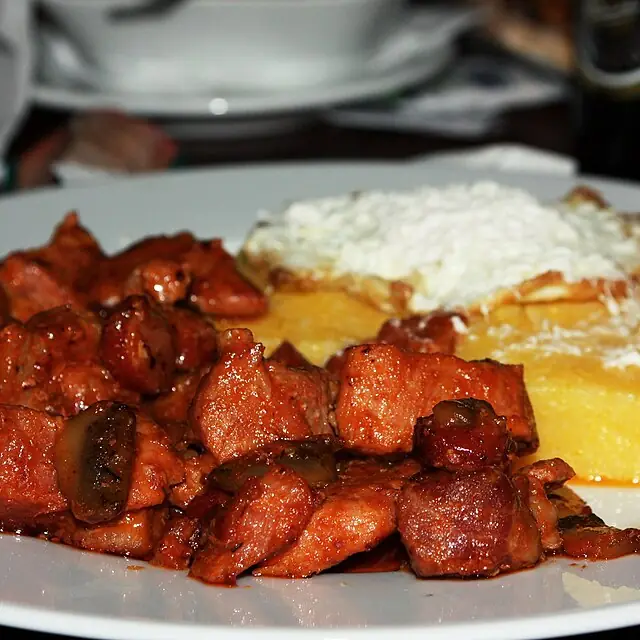
Tochitură takes its name from the verb a topi, meaning to melt; the pork is cubed and rendered down slowly in a cast-iron pot until the fat clarifies and the meat braises in it. The dish originates in the historical principality of Moldavia and is shared across the Prut between Romania and Moldova. It is the classic restaurant version of a peasant make-do, designed to use up the cuts of a slaughtered pig before refrigeration, finished with the kitchen's eggs and the dairy from that morning's milk.
Make it at home
Yield Serves 4Hands-on 30 minTotal 2 hrDifficulty Easy
Ingredients
- 800g boneless pork shoulder, cut in 2 cm cubes
- 200g smoked pork belly, cut in 1 cm strips
- 2 tbsp lard or sunflower oil
- 1 large onion, finely chopped
- 6 garlic cloves, minced
- 1 tbsp sweet paprika
- 1 tsp dried thyme
- 1 bay leaf
- 150 ml dry white wine
- 300 ml chicken stock
- 1 tbsp tomato paste
- 1 tsp fine sea salt
- Black pepper, to taste
- 4 large eggs
- 150g sheep's brânză, crumbled
- Prepared mămăligă (recipe above), to serve
Method
- Heat the lard in a heavy pot over medium-high heat. Brown the pork shoulder in batches until deeply coloured, about 8 minutes per batch.
- Lower the heat. Add the smoked pork belly and render for 4 minutes; add the onion and cook for 6 minutes until translucent.
- Stir in the garlic, paprika, thyme and bay leaf; cook for 30 seconds.
- Pour in the wine and scrape the base. Add the stock and tomato paste and return the shoulder to the pot. Bring to a simmer.
- Cover loosely and braise on the stove or in a 160°C / 320°F oven for 1.5 hours, until the pork is fork-tender and the liquid has reduced to a glossy sauce.
- Season with salt and pepper. Keep warm.
- Fry the eggs sunny-side up in a separate pan. Plate each serving with a wedge of mămăligă, a generous ladle of tochitură, a fried egg balanced on top and crumbled brânză scattered across the egg.
Tip from the editors. The dish wants pork shoulder, not loin; the loin dries out before the sauce reduces. Drink it with a glass of Fetească Neagră.
This is the TableJourney editorial recipe, modelled on the canonical bistro / counter version. The first place to try the dish in its city of origin is below.