

History
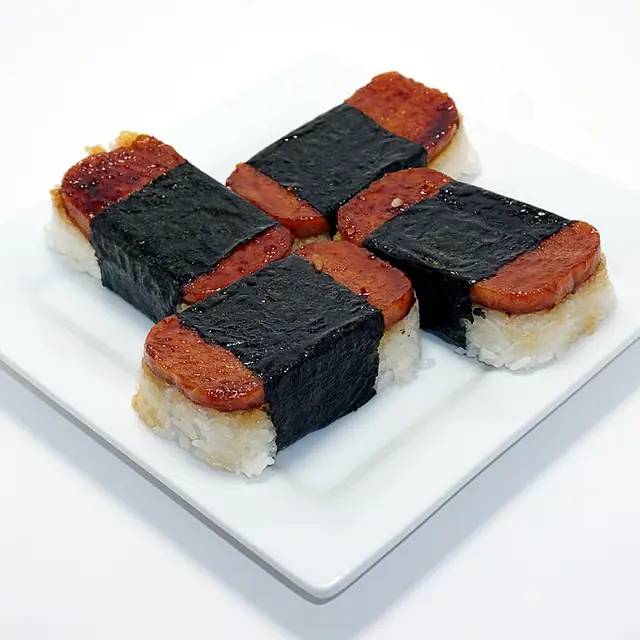
Spam came to Hawaii during World War II when fresh meat shipments stopped; the canned protein was rationed across the islands. Japanese-Hawaiian cooks layered a slice of pan-fried Spam onto rice, wrapped it in nori, and a portable snack was born. Musubi Cafe Iyasume in Waikiki opened in 2000 to formalize the artisanal version with handmade Koshihikari rice and a dozen creative combinations. Every 7-Eleven Hawaii now stocks Spam musubi at the register; locals eat them for breakfast, the beach, and after the bars close.
Book a food experience
Tours, tastings and classes from the cities on this page, bookable on GetYourGuide.


Common allergens: Soy, Wheat, Pork
Make it at home
Ingredients
- 1 can (340g) Spam classic
- 300g uncooked Koshihikari or Calrose short-grain rice
- 60ml shoyu (Japanese soy sauce)
- 40g granulated sugar
- 30ml mirin
- 4 sheets toasted sushi nori, each cut in half lengthwise
Method
- Rinse the rice three times until the water runs clearer. Cook in a rice cooker with the standard ratio, about 380ml water.
- Slice the Spam into 8 equal slabs lengthwise (about 1cm each).
- In a small pan, simmer the shoyu, sugar and mirin together until syrupy, about 3 minutes. Set aside.
- Pan-fry the Spam slices over medium heat 2 minutes per side until lightly crisp. Pour the glaze over and turn the slices once to coat.
- Spread a half-sheet of nori on the work surface. Place a Spam-musubi mould (or the empty Spam can with both ends removed) on top.
- Press a half-cup of rice into the mould, lay one slab of glazed Spam on top, then another half-cup of rice. Press firmly, lift the mould, wrap the nori around the brick. Repeat with the rest.
Tip from the editors. The musubi mould is cheap online and gives the canonical Iyasume shape. Without one, use the open ends of the Spam can or pack by hand into a rectangular brick.
Where to eat spam musubi
Spam musubi in Honolulu
Musubi Cafe Iyasume ★ 4.4
Musubi Cafe Iyasume on Kuhio in Waikiki Honolulu holds the line for late-night handheld spam musubi until 21:00, the easiest after-drinks fuel.
OrderTeriyaki spam musubi.
TipDaily 06:30-21:00. Order the teriyaki spam musubi to go before 20:30 to avoid the last-call rush.
More places near Musubi Cafe Iyasume
Not on this list, but close by, nearest first. Every one is in our guide with its address, hours and what to order.
- Mugen Waikiki Modern Hawaiian, about 200 m away
- Stripsteak Waikiki New American, about 300 m away
- Marukame Udon Waikiki Japanese Udon, about 400 m away
- La Mer at Halekulani French, about 900 m away
- Sushi Sho Hawaii Japanese sushi, about 900 m away
- Rainbow Drive-In Plate Lunch, about 950 m away
More cities are in research. Want spam musubi covered somewhere specific? Tell us where you want to eat.