

History
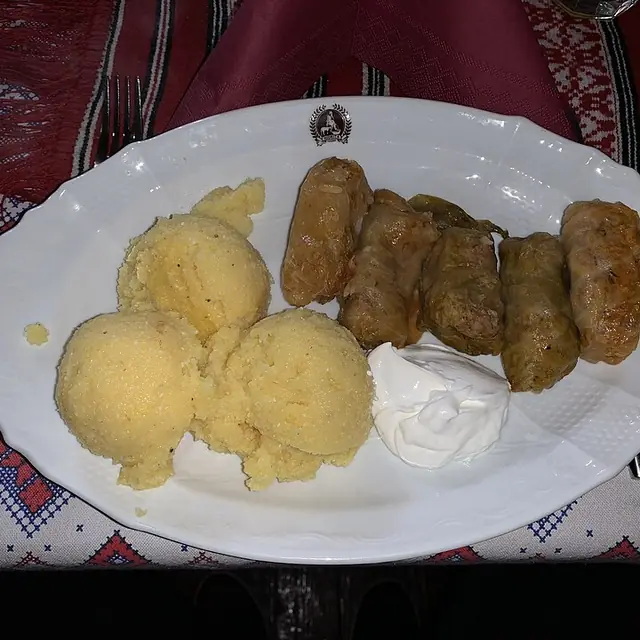
Sarmale arrived in Bessarabia through the Ottoman Empire, where stuffed-leaf parcels (dolma) had been documented in Persian cookbooks by the early 1500s. The Moldovan version stuffs cabbage or vine leaves with seasoned pork and rice and braises them slowly in a cast-iron pot with smântână. They appear at almost every Moldovan family celebration and are a key dish on the post-wedding morning, served alongside zeamă to soak up the previous night's wine. Each household keeps a variation of the recipe and the smallest sarmale in the country, the size of a thumb, are rolled at Hanul lui Hanganu in Lalova.
Book a food experience
Tours, tastings and classes from the cities on this page, bookable on GetYourGuide.

_-_img_01.jpg)
Common allergens: Pork, Rice, Cabbage
Make it at home
Ingredients
- 1 large green cabbage, cored (about 1.5 kg) or 24 large vine leaves, brined
- 500g minced pork (80/20 lean to fat)
- 100g long-grain rice, rinsed
- 1 medium onion, finely chopped
- 1 medium carrot, finely grated
- 2 tbsp sunflower oil
- 1 tbsp sweet paprika
- 1 tsp dried thyme
- 1 tsp fine sea salt
- 0.5 tsp black pepper
- 400g passata or crushed tomatoes
- 300 ml chicken or vegetable stock
- 200 ml smântână or crème fraîche, to serve
Method
- Bring a large pot of water to the boil. Plunge the cored cabbage in for 6 minutes, then carefully peel off the outer leaves as they soften and set them on a tray. If using vine leaves, blanch for 1 minute and pat dry.
- Soften the onion and carrot in the oil over medium heat for 6 minutes. Stir in the paprika and thyme and cook for 30 seconds.
- Combine the pork, rice, cooked aromatics, salt and pepper in a bowl. Mix gently but evenly.
- Trim the thick stem from each cabbage leaf. Place a heaping tablespoon of filling at the stem end, fold in the sides and roll into a snug parcel.
- Line a heavy pot with any shredded leftover cabbage. Pack the sarmale in tightly, seam-side down, in two layers. Pour the passata and stock over the top.
- Bring to a gentle simmer on the stove, then cover and transfer to a 160°C / 320°F oven. Bake for 2 hours; the rice should be tender and the parcels firm to the touch.
- Rest for 10 minutes off heat. Serve three or four sarmale per plate with mămăligă on the side and a heavy spoon of smântână on top.
Tip from the editors. Roll the sarmale tight; loose ones unwrap during baking and the rice will not cook evenly. A second batch freezes well unbaked, in their tomato sauce.
Where to eat sarmale
Sarmale in Bucharest
Caru' cu bere ★ 4.6
Caru' cu bere is a traditional Romanian restaurant at Strada Stavropoleos 5 in the Old Town, serving beer made to an original recipe from 1879.
OrderMititei, the grilled minced meat rolls.
TipReservations can be made online or by phone, at least 24 hours ahead.
Hanu' lui Manuc ★ 4.4
Hanu' lui Manuc is a Traditional Romanian restaurant at Strada Franceză 62-64, a legendary setting in the historic centre of Bucharest with party rooms.
SignatureMici, Sarmale, Lamb tochitură
TipBook ahead: the restaurant's own site says a reservation is necessary here.
Vatra ★ 4.3
Vatra is a Romanian restaurant at Strada Ion Brezoianu 19, neighbouring Cismigiu Park, where Romanian cuisine meets Transylvanian interior decorations.
OrderSarmale with mămăliguță, and the Romanian cheese plate of sheep and cow telemea with burduf.
TipExpect traditional music with the meal; Vatra is near Cismigiu Park and takes table bookings on its own site.
Hanu' Berarilor Casa Oprea Soare ★ 4.0
Hanu' Berarilor Casa Oprea Soare is a Romanian restaurant at Strada Poenaru Bordea 2, one of three Hanu' Berarilor gastronomic breweries in Bucharest.
SignatureMici, Sarmale, Roast pork knuckle
TipThe group pairs its meat products with its strongest and most aromatic beers.
La Mama Universitate ★ 3.9
TrySarmale in cabbage leaves with mămăligă
TipEvery day, 30 minutes before closing, La Mama restaurants offer 50% off food that is for takeaway only.
Sarmale in Chișinău
La Taifas ★ 4.4
La Taifas in Chișinău is the old village house with porch on Strada București, serving rustic Moldovan cooking and live folk music in a clay-pottery room.
OrderTocăniță cooked in the cauldron with mămăligă and a shot of house țuică.
TipBook a porch table on a warm evening; the kitchen leans on cauldron stews and the placinte are made to order with a 20-minute wait.
Sălcioara ★ 4.3
Sălcioara in downtown Chișinău is the traditional Moldovan dining room with carved-wood interiors, evening live music and a kitchen built on village recipes.
OrderSarmale wrapped in vine leaves with sour cream and mămăligă on the side.
TipReserve a corner table for the live music nights; order the house brandy alongside the zeamă starter.
More cities are in research. Want sarmale covered somewhere specific? Tell us where you want to eat.