
History
Port became very popular in England after the Methuen Treaty of 27 December 1703, under which Portuguese wine paid a third less duty than French wine while war with France made French wine hard to get. A royal charter of 10 September 1756 defined the Port production region, and the Douro Wine Company was founded that year during the rule of the Marquis of Pombal. Barrels came down the Douro on rabelo boats to be aged in lodges at Vila Nova de Gaia, where shipper names such as Croft, Sandeman and Taylor show the British trade.
Book a food experience
Tours, tastings and classes that match this page, bookable on GetYourGuide.

Make it at home
Ingredients
- A bottle of white port (Andresen Branco or similar)
- A bottle of ruby port (Graham's Six Grapes or similar)
- A bottle of 10-year tawny port (Taylor's, Niepoort or Croft)
- A bottle of late-bottled vintage (LBV) port (Warre's or Smith Woodhouse)
- Almonds, dried fig and small slices of aged sheep cheese for pairing
- Four small wine glasses (port glasses or small white-wine glasses)
Method
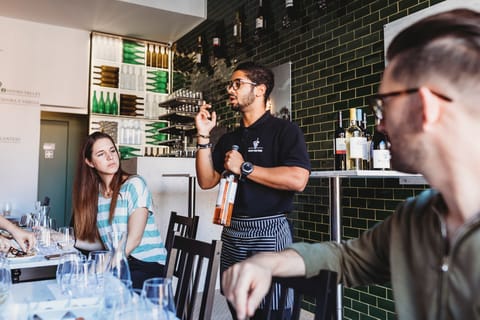
- Chill the white port in the fridge for 1 hour; serve at 8 to 10C.
- Serve ruby, tawny and LBV at 14 to 16C. Take them out of the bottle 20 minutes before pouring.
- Pour 40ml of each port into separate small glasses, arranged left to right: white, ruby, tawny, LBV.
- Taste in that order. The white is dry and citrus-forward; the ruby is young and grippy; the tawny is nutty and oxidative; the LBV is full and structured.
- Pair almonds with the white, dried fig with the tawny and aged cheese with the LBV.
- Discuss differences between styles before opening any further bottles.
Tip from the editors. Open the LBV at least 30 minutes before serving; the cork is real, not a stelvin closure, and the wine opens up considerably in the glass.
Where to eat port wine flight
Port wine flight in Porto
Featured by TableJourney as a signature dish of Porto. See where to eat Port wine flight in Porto or the Porto signature dishes guide.
More cities are in research. Want port wine flight covered somewhere specific? Tell us where you want to eat.