Palermo
Guided tour · 3 hours
Palermo: Street Food and History Walking Tour
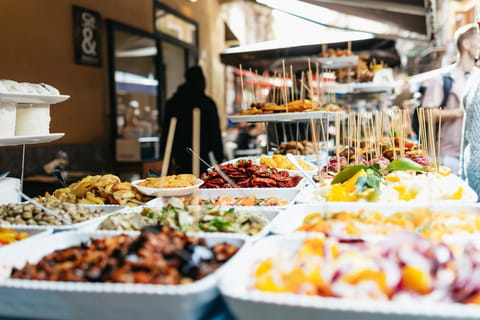
Set off on a guided walking tour of Palermo’s old town, admiring its landmarks and exploring its bustling markets. Stop to taste a selection of...
from€49Check dates
Whole boiled octopus tentacles, hand-sliced cold from a wooden board at the Vucciria market, dressed with olive oil, lemon and parsley. Sold by the slice from copper pots that have been simmering since dawn.
Where to eat it: 4 restaurants across 1 city.
Polpo bollito has been a Palermo street-market dish since at least the 18th century, when the city's fishmongers boiled the day's octopus haul in seawater right at the dock and sold it cold by the slice to passing labourers. The Vucciria, Capo and Ballaro markets all preserve the tradition; a copper pot simmers on a portable stove from sunrise to sunset, and the cook hand-slices warm tentacles with a long thin knife. The dish has zero garnish at the market level; restaurants add olive oil, lemon and parsley. Naples claims a similar tradition with cuoppo di polpo, but the Palermo version is the older market form.
Tours, tastings and classes that match this page, bookable on GetYourGuide.
Guided tour · 3 hours
Set off on a guided walking tour of Palermo’s old town, admiring its landmarks and exploring its bustling markets. Stop to taste a selection of...
Guided tour · 2 hours
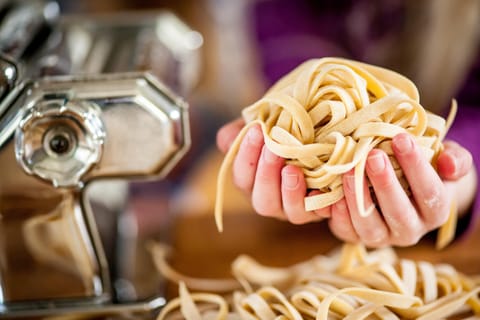
Learn to make fresh pasta like the grandmothers of Italy during a class at a cooking school inside Florence's medieval tower. Learn every step of the...

2h 30m
Discover the secrets to making authentic homemade pasta and tiramisu from a local chef. The cooking class takes place in a locally loved restaurant,...
3 hours
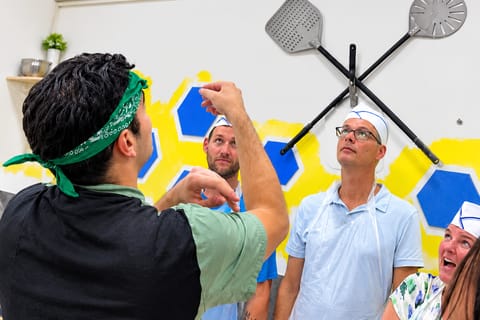
Roll up your sleeves and discover the flavors of Naples by making authentic pizza and creamy tiramisù with a passionate local chef. Cook, laugh, eat,...
Common allergens: Shellfish
Tip from the editors. The 30-minute rest in the cooking water is the Sicilian secret; the octopus tenderises as it cools in its own broth. Don't drain immediately.
Mercato della Vucciria on Piazza Caracciolo in Palermo is the city's oldest market (1,000-plus years), quiet by day, raucous at night when sfincione.
TipBest at night for the street food and bar scene. Morning fish market starts 05:00; sfincione vendors at the Piazza San Domenico end.
Mercato del Capo runs along Via Sant'Agostino, Via Carini and Via Beati Paoli in Palermo's Seralcadio quarter, the city's prime fish and cheese market.
TipBest on Saturday morning. The fish stalls peak 08:00-11:00; Le Angeliche bistro hides in the market at Vicolo Abbadia.
Mercato di Ballaro in Palermo's Albergheria quarter has run since the 10th-century Arab era, extending from Piazza Ballaro along Via Albergheria to Corso.
TipBest on Saturday morning when all stalls open. The stigghiolari fire braziers from dusk for night-market street food.
Piccolo Napoli on Piazzetta Mulino a Vento in Palermo's Borgo Vecchio is a three-generation family seafood trattoria with a daily catch board dictated.
Why locals goA 70-year family seafood room on Piazzetta Mulino a Vento in Borgo Vecchio, lunch-only, dictated-from-memory chalkboard carte by Pino's grandson; tourists rarely find it.
TipLunch only most days. Book one day ahead.
More cities are in research. Want polpo bollito covered somewhere specific? Tell us where you want to eat.