


History
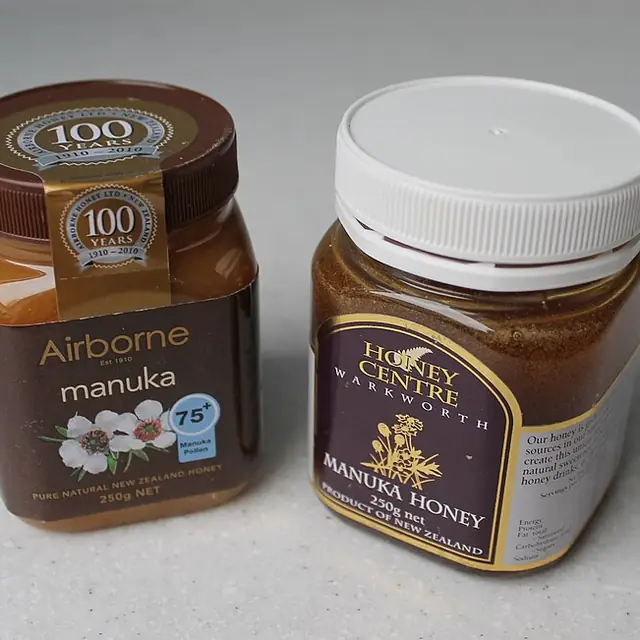
Manuka has been used by Maori for medicine and antiseptic purposes for centuries. The honey itself was largely a byproduct of commercial beekeeping until the 1980s, when University of Waikato research identified its uniquely high methylglyoxal (MGO) content as the source of antibacterial activity. By the 2000s manuka honey became a global commodity; counterfeit production from Australian L. polygalifolium became a trade-dispute issue. Today certified manuka must meet New Zealand government UMF (Unique Manuka Factor) standards, with the highest grades selling at NZD $200+ per 250g jar. Northland, Coromandel and East Cape are the production hotspots.
Book a food experience
Tours, tastings and classes that match this page, bookable on GetYourGuide.

Make it at home
Ingredients
- 250g certified manuka honey (UMF 10+ ideal)
- Optional: 1 cinnamon stick
- Optional: 1 strip lemon peel
- Sterilised glass jar with lid
Method
- Sterilise the jar by boiling in water for 5 minutes; air dry.
- If using cinnamon or lemon peel, place in the jar first.
- Pour manuka honey into the jar slowly to avoid air bubbles.
- Seal and store at room temperature out of direct sunlight.
- Honey will keep indefinitely at room temperature.
- Use a small spoonful on toast, in tea, or for sore throats; high-UMF honey has medicinal use.
Tip from the editors. Buy UMF certified, not just MGO numbers. UMF is the New Zealand government quality mark; foreign 'manuka' honey often isn't.
Where to eat manuka honey
Manuka Honey in Auckland
La Cigale French Market ★ 4.6
La Cigale at 69 St Georges Bay Road in Parnell, Auckland runs Saturday and Sunday morning French-inspired markets. Cheese, charcuterie, pastry, hot food.
Matakana Farmers Market ★ 4.5
Matakana Farmers Market at 2 Matakana Valley Road runs Saturday mornings 45 minutes north of Auckland. Fresh local produce, artisan cheese, breakfast vendors.
More places near La Cigale French Market and Matakana Farmers Market
Not on this list, but close by, nearest first. Every one is in our guide with its address, hours and what to order.
- Non Solo Pizza Italian, about 400 m away
- Hugo's Bistro Modern European, about 1.5 km away
- Amano Italian, about 1.6 km away
- Ebisu Japanese, about 1.6 km away
- Culprit New American, about 1.7 km away
- The Store Brunch, about 1.7 km away
More cities are in research. Want manuka honey covered somewhere specific? Tell us where you want to eat.