History

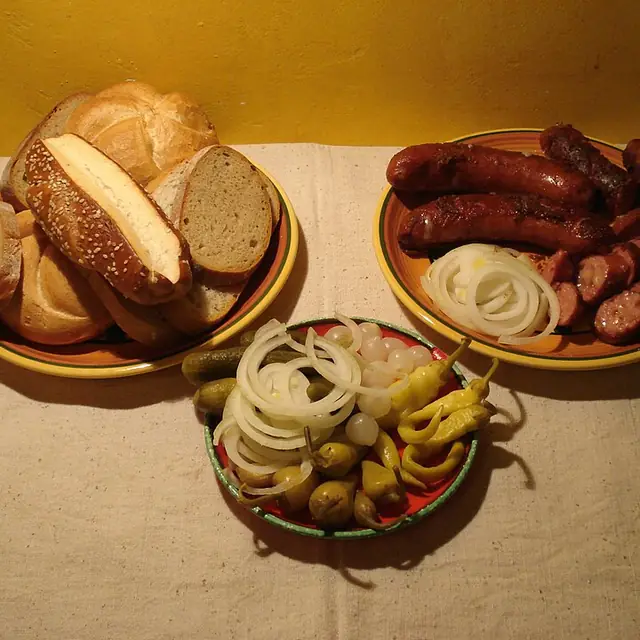
The Krainer Wurst itself dates from the Slovenian-Austrian border region of Krain (Carniola). The cheese-injected Kaesekrainer was developed in the 1970s by Austrian sausage producers and quickly became the most-ordered Vienna street-food plate. The blistered casing and molten cheese earned the affectionate nickname Eitrige (the pus-y one) in Wiener slang. The Bitzinger, Hoher Markt and Leo Wuerstelstaende all cook the canonical version.

Common allergens: Gluten, Dairy

Where to eat kaesekrainer

Kaesekrainer in Vienna

Bitzinger Wuerstelstand Albertina ★ 4.5

innere-stadtUntil 04:00 daily

Bitzinger on Augustinerstrasse in Vienna is the city's late-night Wuerstelstand of choice, open 08:00 to 04:00 daily and the Opera-and-Albertina post-show carte.

Try: Kaesekrainer

Tip: Order the Kaesekrainer with sweet mustard; the side bench takes a small standing crowd.

Wuerstelstand am Hohen Markt ★ 4.3

innere-stadtUntil 04:00 daily

Wuerstelstand am Hohen Markt in Vienna's first district sits under the Anker Clock and runs 07:00 to 04:00 daily, the bar-crawl regulars' late-night Kaesekrainer counter.

Try: Kaesekrainer

Tip: The blistered-casing Kaesekrainer is the counter's most-ordered after midnight.

Wuerstelstand LEO ★ 4.4

doeblingUntil 04:00 daily

Wuerstelstand LEO on Doeblinger Guertel in Vienna's 19th district is the city's oldest Wuerstelstand, open until 04:00 daily, the Cobenzl-residents' late-night standby since 1928.

Try: Big Mama Kaesekrainer

Tip: The Big Mama Kaesekrainer is double the standard size; one is plenty for two appetites.

More cities are in research. Want kaesekrainer covered somewhere specific? Tell us where you want to eat.

Browse all dishes →