History

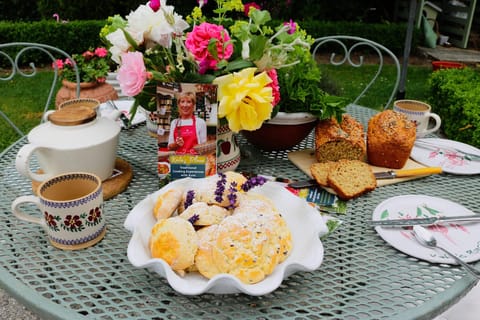
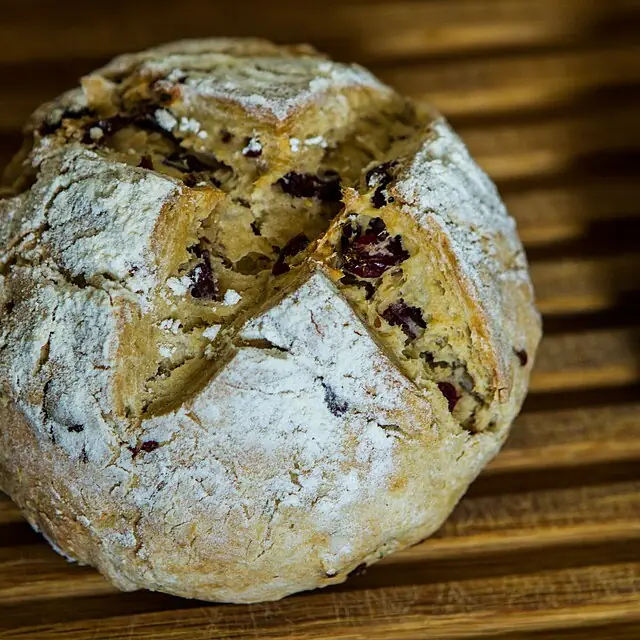
Soda bread became the Irish household loaf in the 1840s when bicarbonate of soda arrived in Ireland, giving cooks a quick yeast-free leavener for the rough wheat available to small farms. The brown soda variant uses wholemeal and was the working everyday loaf; the white soda variant arrived later. The cross cut into the top was practical (helps the loaf bake evenly) and superstitious (lets the fairies out). Today every Dublin restaurant serves a brown soda variant with butter; the Brazen Head, the Bretzel Bakery and the Winding Stair bake the city's references.

Common allergens: Gluten, Dairy

Make it at home

Yield Makes one loaf, 8 slicesHands-on 10 minTotal 55 minDifficulty Easy

Ingredients

  • 450g wholemeal flour
  • 50g plain flour
  • 1 tsp bicarbonate of soda
  • 1 tsp salt
  • 400ml buttermilk
  • 1 tbsp pinhead oatmeal for the top

Method

  1. Heat the oven to 200C fan. Line a baking sheet with parchment.
  2. Sift the flours, bicarbonate of soda and salt into a large bowl. Make a well in the centre.
  3. Pour the buttermilk into the well and use a wooden spoon to mix from the centre outwards in one direction. Stop when you have a soft, slightly sticky dough.
  4. Turn out onto a lightly floured surface, shape into a round about 4cm thick. Place on the baking sheet.
  5. Cut a deep cross into the top with a sharp knife; this lets the loaf bake evenly. Scatter the oatmeal over the top.
  6. Bake for 35 to 40 minutes until the loaf sounds hollow when tapped on the bottom.
  7. Cool on a wire rack for at least 30 minutes before slicing or the crumb tears.

Tip from the editors. Do not overwork the dough; the cross-cut and the quick bake are the secret. Mix once and shape; do not knead like a yeast bread.

This is the TableJourney editorial recipe, modelled on the canonical bistro / counter version. The first place to try the dish in its city of origin is below.

Where to eat irish soda bread

Irish soda bread in Dublin

The Winding Stair ★ 4.4

Irish€€north-inner-city

The Winding Stair on Ormond Quay in Dublin 1, Elaine Murphy's upstairs dining room above the bookshop overlooking the Ha'penny Bridge and the Liffey.

Signature: Smoked Burren salmon, Irish stew, Brown bread ice cream

Order: Smoked Burren salmon, then a bowl of Irish stew with brown bread.

Tip: Window seats face the Ha'penny Bridge; book three weeks ahead for the four river-view tables. Walk through the bookshop and up.

Spitalfields ★ 4.5

Modern Irish€€the-liberties

Spitalfields on The Coombe in Dublin's Liberties, a Michelin Bib Gourmand pub-set kitchen serving the city's most considered classical Irish menu.

Signature: Tom Crean's oyster stew, Slow-cooked beef cheek, Dublin coddle

Order: The seasonal stew with soda bread, and the coddle when it lands on the daily card.

Tip: Tuesday to Saturday dinner only, 17:00 to 21:00. Walk through the public bar and ask for the back dining room.

The Brazen Head ★ 4.4

Traditional pubthe-liberties

The Brazen Head on Bridge Street Lower in Dublin 8, established 1198 as Ireland's oldest pub, the present 1754 coaching inn serves Irish stew and trad sessions nightly.

Signature drink: Guinness with an Irish stew

Food: Full Irish pub kitchen, food to 21:00

Tip: Food served until 21:00 daily; nightly trad music sessions from 21:00. The back snug holds eight; the courtyard runs summer only.

Bewley's Cafe Grafton Street ★ 4.0

south-city-centreWifi

Bewley's Cafe on Grafton Street in Dublin, the Ernest Bewley grand cafe since 1927, restored across three floors, the city's heritage tea-room and lunch room.

Signature drink: Bewley's coffee blend

Order: The Bewley's house blend coffee and a sticky bun; an afternoon cream tea upstairs.

Tip: Three floors; the first floor is the historic Harry Clarke window room. The basement Theatre cafe runs lunchtime plays.
More cities are in research. Want irish soda bread covered somewhere specific? Tell us where you want to eat.

Browse all dishes →