

Metita ★ 4.7
Metita is Michael Meredith's Pasifika room at The Grand by SkyCity, Federal Street, Auckland. One Cuisine hat; Hotel Restaurant of the Year 2025.
Book2 weeks ahead
Hangi is the Maori earth oven, cooking meat and root vegetables in a pit of stone-heated coals under wet sacks for 2 to 4 hours. The flavour is deep, smoky and tender.
Where to eat it: 1 restaurant across 1 city.
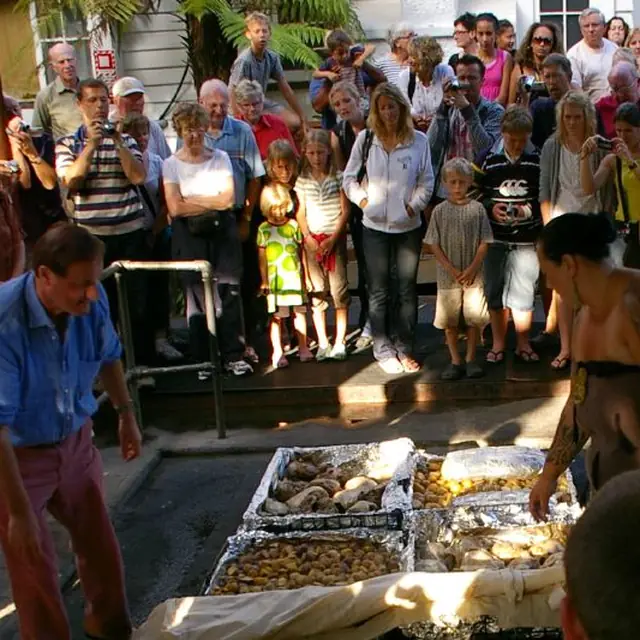
Hangi traces to early Polynesian cooking pits dug at sites like Wairau Bar (circa 1280 CE). The technique uses heated rocks (600-700C) placed in a pit; food baskets sit on the rocks, the pit is covered with damp cloths and earth, and cooks for 2-4 hours. Original Maori pits cooked cordyline root before European arrival. Wire baskets replaced leaves in the 19th century. Today the hangi appears at hui, funerals, weddings, midwinter Matariki celebrations and Pasifika festivals across Auckland. Gas-heated steel hangi machines replicate the technique without digging.
Tip from the editors. A real pit hangi requires hours of fire-tending and a backyard. This stovetop version captures the steam-and-smoke principle for a domestic kitchen.
Metita is Michael Meredith's Pasifika room at The Grand by SkyCity, Federal Street, Auckland. One Cuisine hat; Hotel Restaurant of the Year 2025.
Book2 weeks ahead
Not on this list, but among the highest we score in this city. Every one is in our guide with its address, hours and what to order.
More cities are in research. Want hangi covered somewhere specific? Tell us where you want to eat.