

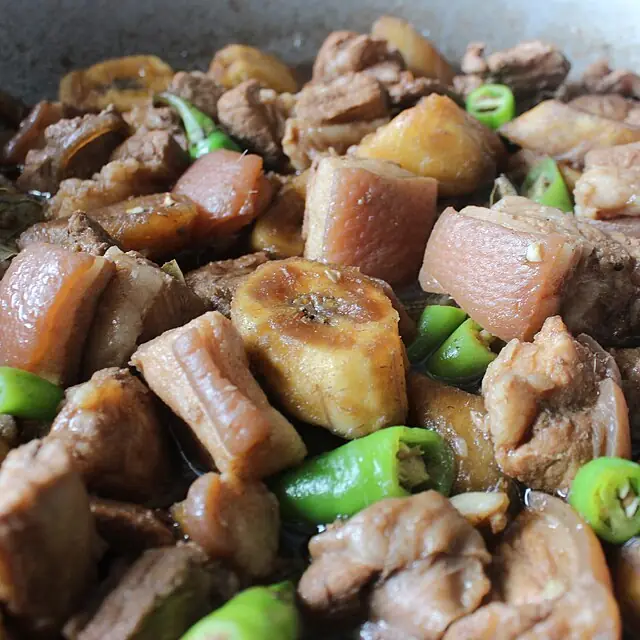
History
The name adobo comes from the Spanish adobar, meaning marinade, but it is believed the name was applied to a native dish that already existed before the Spanish arrived, and the food historian Doreen Fernandez argued that adobo may be indigenous. The main ingredients are beef, chicken, pork, seafood or vegetables, cooked with soy sauce, vinegar, cooking oil, garlic, black peppercorn and bay leaf, and some cooks add a little sugar for a sweet-salty taste or cook it dry with little sauce.
Book a food experience
Tours, tastings and classes from the cities on this page, bookable on GetYourGuide.


Common allergens: Soy
Make it at home
Ingredients
- 1.2kg bone-in skin-on chicken thighs
- 120ml cane vinegar (Datu Puti) or white wine vinegar
- 120ml dark soy sauce (Filipino is best; Kikkoman as substitute)
- 60ml water
- 10 garlic cloves, peeled and smashed
- 3 bay leaves
- 1 tbsp whole black peppercorns
- 2 tbsp dark brown sugar (optional, for Visayan-style sweetness)
- 2 tbsp neutral oil
- 1 small bunch spring onions, sliced, to garnish
- Steamed jasmine rice, to serve
- Sliced cucumber and tomato salad, to serve
Method
- Pat the chicken thighs dry. Marinate 30 minutes in a large bowl with the vinegar, soy sauce, water, smashed garlic, bay leaves, peppercorns and brown sugar if using. Do not skip the marinade.
- Lift the chicken from the marinade; reserve the liquid.
- Heat the 2 tbsp oil in a heavy pan or Dutch oven over medium-high heat. Brown the chicken thighs skin-side down for 4 minutes until the skin is deep gold.
- Flip the chicken. Pour the reserved marinade back into the pan with the garlic and bay.
- Bring to a simmer. Cover partially and cook 30 minutes, turning the chicken every 10 minutes.
- Uncover and turn the heat to medium-high. Reduce the sauce for 12 to 15 minutes until it thickens to a glossy syrup that coats the chicken.
- Spoon the sauce continuously over the chicken in the last 5 minutes so the skin lacquers.
- Taste; if too sharp, add another teaspoon of sugar. If too sweet, splash in more vinegar off the heat.
- Plate the chicken with the garlic and bay clinging. Pour over the reduced sauce.
- Scatter with sliced spring onion. Serve with steamed jasmine rice and a cucumber-tomato salad.
Tip from the editors. The vinegar-and-soy ratio (1:1) is the canonical Filipino balance; do not add more soy. Cane vinegar is sweeter and rounder than white vinegar; seek it out.
Where to eat filipino adobo
Filipino Adobo in Seattle
Featured by TableJourney as a signature dish of Seattle. See where to eat Filipino Adobo in Seattle or the Seattle signature dishes guide.
More cities are in research. Want filipino adobo covered somewhere specific? Tell us where you want to eat.