
History
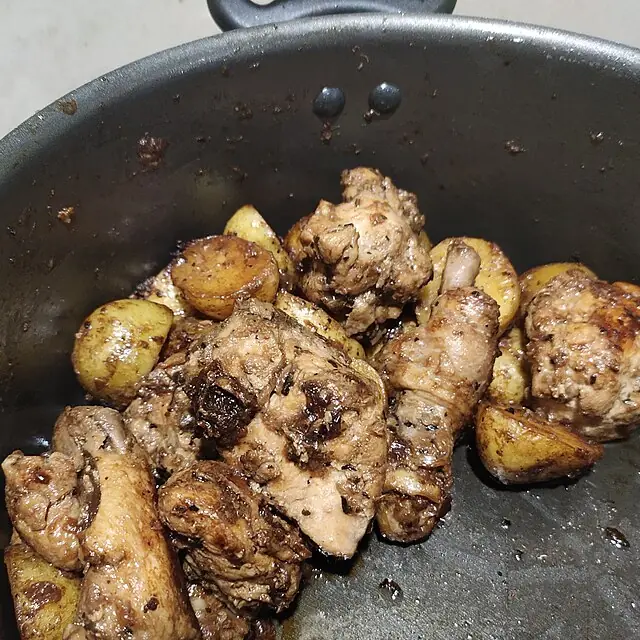
The Philippines' national dish predates Spanish colonisation, though the name 'adobo' is Spanish for seasoning. Filipino cooking uses vinegar and soy sauce as preservation and flavouring agents rather than the oil-based Spanish adobo. San Jose has had a significant Filipino community since the mid-20th century, with major immigration waves following the Philippine Nurses Act of 1948 and the Immigration Act of 1965. By the 2020s San Jose had the largest concentration of Filipino-Americans in any US city outside Hawaii, and chicken adobo anchors Filipino family cooking across East San Jose and Berryessa.
Common allergens: Soy
Make it at home
Ingredients
- 1 kg bone-in chicken thighs and drumsticks
- 120 ml white cane vinegar or rice vinegar
- 80 ml soy sauce
- 1 whole head of garlic, cloves separated and smashed
- 1 tsp whole black peppercorns
- 4 bay leaves
- 2 tsp sugar
- 2 tbsp neutral oil
Method
- Combine chicken, vinegar, soy sauce, garlic, peppercorns, bay leaves and sugar in a wide pan. Marinate 30 minutes at room temperature.
- Bring to a boil over high heat, then reduce to a medium simmer. Cook uncovered 25 to 30 minutes, turning chicken occasionally, until sauce reduces by half.
- Remove chicken from the sauce. Heat oil in a separate pan or under a grill and brown chicken skin-side down 3 to 4 minutes until crisp.
- Return chicken to the reduced sauce and coat. Serve over steamed white rice with the sauce poured over.
Tip from the editors. The vinegar cooks off completely during the simmer: the tartness becomes mellow and rounded rather than sharp. Do not rush this reduction step.
Where to eat chicken adobo
Chicken adobo in San Jose
Featured by TableJourney as a signature dish of San Jose. See where to eat Chicken adobo in San Jose or the San Jose signature dishes guide.
More cities are in research. Want chicken adobo covered somewhere specific? Tell us where you want to eat.