Tunisian cuisine is the spiciest of the North African kitchens, distinguished from its Moroccan and Algerian neighbors by its reliance on harissa (the chile paste that is to Tunisia what salsa is to Mexico), by a heavier hand with seafood from the Mediterranean coast, and by a flavor profile that is more directly Mediterranean and less inflected with the Saharan and Andalusian sweetness of Moroccan cooking. The country's small size belies a deep regional variation, from the seafood-heavy coast of Sfax and Mahdia to the inland tagines of Kairouan to the date-and-olive cooking of the south.
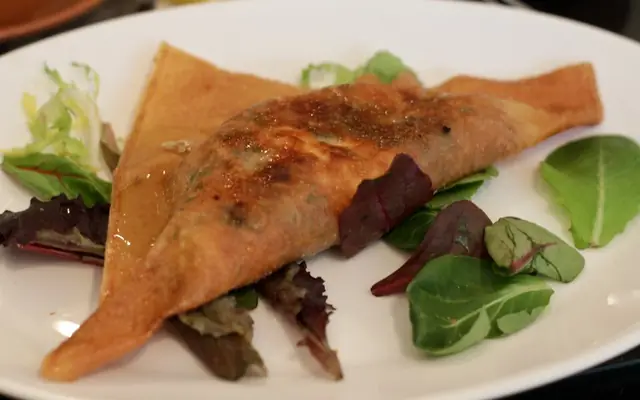
The defining items are harissa (chile-garlic paste, used as condiment and cooking base), brik (the thin warqa-pastry triangle stuffed with tuna, parsley, capers, and a runny egg, deep-fried until crisp), couscous in dozens of regional preparations, slata mechouia (the grilled vegetable salad), and the strong tea-and-pastry culture inherited from the Ottoman period. Olive oil is the primary cooking fat, and Tunisia is one of the largest olive oil producers in the world.
The French colonial period (1881 to 1956) left a baguette-and-patisserie layer that is now fully naturalized: sandwich tunisien (a baguette with tuna, harissa, olives, egg, and salad) is the country's signature street food. Italian influence from Sicilian migrants in the 19th century gave Tunisia its pasta dishes, including the Tunisian-Italian hybrid macarouna, and a strong pizza scene. The Sephardic Jewish community, one of the oldest continuous Jewish communities in North Africa, contributed brik variations, fish couscous traditions, and pastry techniques that remain part of the national table even as the community itself has dwindled. The result is a small country with a disproportionately layered cuisine, more cosmopolitan in its references than its size would suggest.
Book a food experience
Tours, tastings and classes that match this page, bookable on GetYourGuide.
Chez Yassine in Marseille's 1er Noailles has cooked Tunisian home plates since 2014, all-day service, no reservations, the brik with egg and the kefteji.
OrderThe brik with tuna and egg, and the ojja with merguez to share.
TipNo reservations; expect a shared table and cash-friendly counter service.
The Tunisian Sandwich Center on HaPatish Street, run by the Ramla Market original's Haim Bukovza, bakes its own baguettes for Tunisian and merguez sandwiches.
TryTunisian sandwich and merguez sausage in baguettes baked on site
TipOrder the Tunisian complete, the most popular baguette on the menu, or the merguez sausage version; the bread is baked on site.
Chez Yassine in Marseille's 1er Noailles has cooked Tunisian home plates since 2014, all-day service, no reservations, the brik with egg and the kefteji.
OrderThe brik with tuna and egg, and the ojja with merguez to share.
TipNo reservations; expect a shared table and cash-friendly counter service.
Marche des Capucins in Marseille's 1er Noailles runs all day with halal butchers, Tunisian pastries and counter-food stalls, cheapest fresh fast lunch.
TryMaghrebi snacks and produce-stand lunch
TipCash is faster than card; arrive before noon for the freshest fish.
The Tunisian Sandwich Center on HaPatish Street, run by the Ramla Market original's Haim Bukovza, bakes its own baguettes for Tunisian and merguez sandwiches.
TryTunisian sandwich and merguez sausage in baguettes baked on site
TipOrder the Tunisian complete, the most popular baguette on the menu, or the merguez sausage version; the bread is baked on site.
La Kahena in Marseille's 1er near the Vieux Port has cooked Tunisian halal cuisine since 1978, mosaics and portraits of beys on the walls, the couscous.
OrderThe mixed couscous and the brick with tuna and egg as a starter.
TipOpen daily, book for weekend lunch when the room fills with families.
The capital's cooking is the most cosmopolitan, with French and Italian overlays. Lablabi (chickpea soup with day-old bread, cumin, harissa, and a poached egg) is the Tunis breakfast. Kafteji (fried vegetables with egg) is a Tunis street-food staple.
Sfax and the coast
Seafood-led: tuna, octopus, sea bream, and shrimp in tagine and grill preparations. Mloukhia (jute-leaf stew) is the local Sfax pride. Strong olive oil and harissa identity, with cuisine considered the most refined in the country.
Kairouan and the center
Conservative, more inland in palate, with strong lamb and offal tagines. Famous for makroudh, the date-stuffed semolina pastry that is the Kairouan signature.
Djerba and the south
Date palms, fresh fish, and the strongest Jewish-Tunisian heritage on the island. Couscous with fish and merguez, brik variations, and the unique Djerba date-and-olive table.
Defining tunisian dishes
Brik
Thin warqa pastry triangle filled with tuna, parsley, capers, harissa, and a whole egg, deep-fried until crisp on the outside with the yolk still runny. Eaten with a squeeze of lemon. The most iconic Tunisian dish.
Harissa
Tunisia's signature chile paste: dried red chiles, garlic, caraway, coriander, cumin, olive oil. Used as condiment, marinade, and cooking base. The version with rose petals (harissa de gabes) is the most refined.
Couscous Tunisien
Spicier than the Moroccan version, often made with fish (couscous au poisson, especially in Sfax), lamb, merguez, or beef. The semolina is steamed three times and tossed with harissa-based tomato broth.
Lablabi
Chickpea soup with cumin, harissa, garlic, and olive oil, served over torn day-old bread with a poached egg, capers, olives, and pickled vegetables. The Tunis breakfast and hangover cure.
Slata mechouia
Grilled tomato, pepper, onion, and garlic salad with olive oil, harissa, and tuna. Served as part of the cold-salad spread that opens any Tunisian meal.
Sandwich tunisien
A baguette split and filled with tuna, harissa, olives, hard-boiled egg, pickled vegetables, capers, and slata mechouia. The national lunch sandwich, sold from carts and shops everywhere.
Mloukhia
Jute-leaf stew with beef or lamb, served over couscous or with bread. Dark green, deeply earthy, distinct from the Egyptian molokhia in technique (Tunisian version is darker and thicker).
Ojja
Spicy tomato-pepper-egg one-pan dish, often with merguez sausage, shrimp, or octopus. Shakshuka's spicier Tunisian cousin.
Makroudh
Diamond-shaped semolina pastry stuffed with date paste, deep-fried, and dipped in honey or orange-blossom syrup. The Kairouan specialty.
Bambalouni
Tunisian doughnut: ring-shaped yeasted dough deep-fried and dusted with sugar. Sold from street stalls, especially in tourist promenade areas.
Merguez
Spicy lamb or beef sausage with harissa, paprika, garlic, and cumin. North African origin, now naturalized across France and the western Mediterranean. Tunisian merguez is the spiciest of the regional versions.
Fricassé
Small deep-fried savory doughnut split and filled with tuna, harissa, olives, potato, and egg. A Tunis street-food snack.
How to order
A Tunisian meal typically opens with a spread of cold salads (slata mechouia, slata blankit, ommok houria carrot salad), olives, and harissa with bread. Brik is the iconic starter; order one per person. A main is usually a tagine (the Tunisian tagine is closer to a Spanish tortilla, a baked egg-and-meat-and-cheese dish, distinct from the Moroccan tagine), couscous, or a grilled fish. The bill arrives with a glass of mint tea or strong coffee at the end.
The rookie mistakes: assuming a Tunisian tagine is the same as a Moroccan one (it is not, it is a baked egg dish), under-ordering harissa (it goes on everything), declining the cold salad spread (it is the meal's foundation), skipping the brik because it looks simple (the whole-egg fold is a technical signature and the dish is one of the best things in North African cooking), and ordering a sandwich tunisien thinking it will be light (the baguette is large and packed; one is a full lunch). Tunisian tea, served with pine nuts floating on top, follows every meal; refusing it is rude.
What to drink with it
Tunisian wine has a long history, with the strongest Maghreb wine tradition outside Morocco. The vines around Cap Bon and Mornag produce competent rose and red blends that pair well with the harissa-forward food. Boukha, the local fig brandy, and laghmi (date palm wine in the south) are the traditional spirits. Mint tea with pine nuts (the Tunisian variation) closes the meal. Citronnade and date juice are the non-alcoholic options. With brik, a chilled rose is the classic pairing.
Where to eat it
Tunis for the cosmopolitan capital scene and the best lablabi; Sfax for seafood and refined coastal cooking; Sidi Bou Said for the picture-postcard cafe culture; Djerba for the island's distinct Jewish-Tunisian heritage. Outside Tunisia, Paris has the largest Tunisian diaspora kitchen in the world, particularly in Belleville and the northeast, with serious brik, couscous, and harissa cooking. Marseille has its own Tunisian-Sephardic scene, and Brussels and Montreal hold smaller but serious diaspora restaurants.
A short history
Tunisian cuisine descends from Berber agricultural cooking layered with Punic (Carthaginian), Roman, Arab (7th century), Andalusian, Ottoman, Italian (Sicilian migration in the 19th century), Sephardic-Jewish (one of the oldest Jewish communities in North Africa), and French colonial (1881 to 1956) influences. The harissa-forward modern kitchen took shape in the 19th century with the introduction of New World chiles, and the Tunisian diaspora in France has carried the cuisine into European awareness from the 1960s onward.
Frequently asked
Is Tunisian food spicier than Moroccan?
Yes, by a wide margin. Moroccan cooking uses warm spices (cumin, cinnamon, ginger, saffron) but rarely chile heat. Tunisian cooking is built on harissa, the chile paste that goes into and onto nearly every savory dish.
Is Tunisian tagine the same as Moroccan tagine?
No. A Moroccan tagine is a slow-cooked stew in a conical clay pot. A Tunisian tagine is a baked egg dish, closer to a Spanish tortilla or Italian frittata, made with eggs, meat, cheese, and vegetables, baked in a low oven until set.
What is the difference between Tunisian and Algerian cuisine?
Algerian cuisine is closer to Moroccan in flavor profile (less chile-driven, more warm spices, larger emphasis on lamb and Saharan ingredients). Tunisian cooking is more Mediterranean, more chile-forward, more seafood-led on the coast, and more Italian-influenced from the Sicilian migration.