Slovenian cuisine is the food of a small country (about 2 million people) wedged between Italy, Austria, Hungary, and Croatia, and the cooking reflects all four of its neighbors plus an indigenous Slavic and Alpine base. In the west, the Primorska region runs Mediterranean: olive oil, prsut (cured ham, the Slovenian relative of Italian prosciutto and Croatian prsut), seafood from the short Adriatic coast, Karst-region Teran red wine. In the north, the Gorenjska and Koroska regions run Alpine: smoked meats, sheep cheese (the Bohinj and Bovec varieties), kranjska klobasa (the protected Carniolan sausage), and the deep dumpling-and-strudel tradition. In the east, the Prekmurje region runs Pannonian: paprika-spiced dishes, pumpkin-seed oil, gibanica (the layered Prekmurje pastry, a UNESCO-recognized Slovenian dish), and Hungarian-influenced cooking. In the south, Bela Krajina and Dolenjska run Croatian-Slavic, with stews and slow-cooked pork.
The defining dishes that travel across regions are kranjska klobasa (the Carniolan sausage, protected by EU Geographical Indication), prekmurska gibanica (the layered pastry with poppy seed, walnut, apple, and curd cheese, also EU-protected), idrijski zlikrofi (the Idrija dumplings, the country's first protected food product), jota (the Karst bean-sauerkraut stew), bograc (the Prekmurje meat stew from the Hungarian gulyas family), and struklji (rolled dumplings, savory or sweet, in dozens of regional variants). At the high end, Ana Ros at Hisa Franko in Kobarid has put Slovenian fine dining on the world map; she was named World's Best Female Chef in 2017 and Hisa Franko holds three Michelin stars (the country's highest).
The wine industry is the other major story. Slovenia has three main wine regions (Primorska, Posavje, Podravje), with Goriska Brda (the western hills bordering Italy's Collio) producing some of Eastern Europe's best whites and orange wines. The country has been continuously making wine for over 2,000 years; the oldest grapevine in the world is in Maribor, still producing fruit.
Book a food experience
Tours, tastings and classes that match this page, bookable on GetYourGuide.
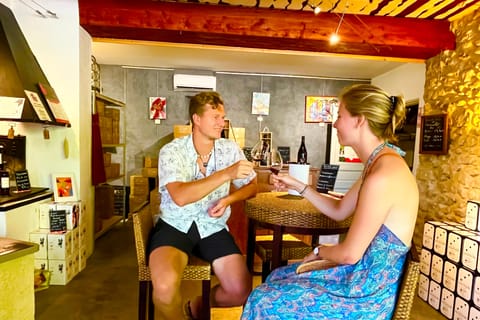
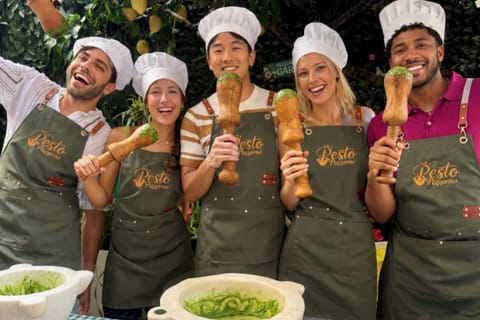
The Wine Tour is an amazing and real experience not to be missed in the surrounding area of Cagliari. Enjoy the beautiful scenery while tasting some...
€€€€LjubljanaModern Slovenian Casual, Market-driven Sharing PlatesCenter
Ana Ros's Ljubljana casual concept on Copova, opened 2023. Head chef Alex Iacoviello (ex-Hisa Franko) runs daily sharing plates off the Central Market.
€€€€LjubljanaModern Slovenian Casual, Market-driven Sharing PlatesCenter
Ana Ros's Ljubljana casual concept on Copova, opened 2023. Head chef Alex Iacoviello (ex-Hisa Franko) runs daily sharing plates off the Central Market.
€€€€LjubljanaModern Slovenian Tasting, Local-producer IngredientsStari Grad
Landerik is chef Izidor Krzisnik's Stari trg tasting-only room. Ex-Mirazur pedigree, listed in the Michelin Guide for modern-Slovenian local-producer cooking.
SignatureGuided tasting menu, Local-producer Slovenian
Mediterranean. Prsut, olive oil, jota (bean-sauerkraut stew with smoked pork), fuzi (hand-rolled pasta) with truffle, Adriatic seafood, Teran red wine (the indigenous Karst grape). The Goriska Brda hills produce orange wine and serious whites. Cross-pollinated heavily with Italian Friuli.
Gorenjska (Alpine, northwest)
Mountain cooking. Sirovi struklji (cheese dumpling rolls), zlikrofi from Idrija, bohinj smoked sheep cheese, kranjska klobasa, ajdovi zganci (buckwheat porridge), apple strudel. Bled cream cake (the Bled lakeside dessert) is the regional sweet.
Stajerska (east, Pannonian)
Hungarian-influenced. Pumpkin-seed oil (the regional cooking fat), bujta repa (turnip-and-pork stew), Prekmurska gibanica, bograc (the local goulash). Maribor anchors the region; the world's oldest vine is here.
Prekmurje (far east, beyond the Mura river)
The most Hungarian-influenced region. Bograc (the meat stew), prekmurska gibanica (the UNESCO-recognized layered pastry), pumpkin-seed oil, dodole (cornmeal dumplings). Crosses the cultural border with Hungary's western edge.
Ljubljana and central
The convergence point of all four regional traditions. Hisa Franko sits in nearby Kobarid (technically Primorska), but Ljubljana's modern fine-dining scene (Atelje, JB, Strelec, Monstera Bistro) covers the full Slovenian canon plus modernist technique.
Defining slovenian dishes
Kranjska Klobasa
The Carniolan sausage, a smoked pork sausage made by a strictly protected recipe (EU PGI status). Eaten with mustard, horseradish, and bread, or in stews. The defining Slovenian charcuterie product.
Prekmurska Gibanica
Layered pastry from the Prekmurje region with poppy seed, walnut, apple, and curd cheese, baked in alternating layers. EU-protected, considered the national dessert.
Idrijski Zlikrofi
Hand-pinched dumplings from the town of Idrija, with a potato-bacon-marjoram filling, traditionally served with a lamb gravy (bakalca). The country's first protected food product.
Jota
Karst bean-and-sauerkraut stew with smoked pork, potato, and bay leaf. The Primorska region's defining cold-weather dish; the closest Slovenian relative of Italian jota friulana.
Struklji
Rolled dumplings in dozens of variants: cottage cheese (skutni), walnut (orehovi), apple, tarragon (pehtranovi). Boiled or steamed and sliced, eaten as a starter or dessert. The most distinctively Slovenian dish.
Bograc
Prekmurje meat stew with three or four meats (beef, pork, game, sometimes venison), onion, paprika, and red wine. Related to Hungarian gulyas but slow-cooked over open fire.
Bled Cream Cake (Kremsnita)
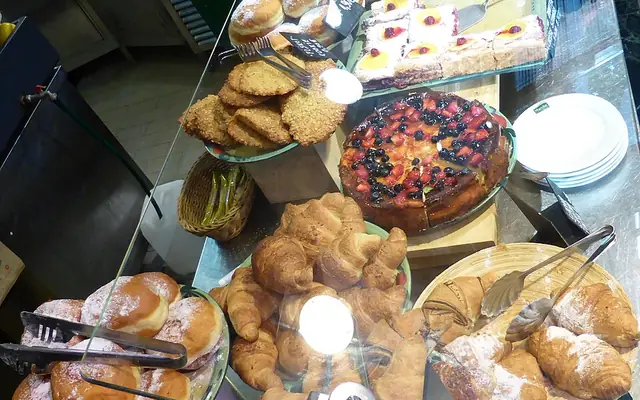
Vanilla custard and whipped cream between two thin layers of puff pastry, the cream layer almost twice as tall as the pastry layers. Originated at the Park Hotel in Bled in 1953.
Prsut
Air-cured ham from the Karst region (Karst prsut, EU PGI). Cured in the bora wind of the Karst plateau, similar in character to Italian prosciutto di San Daniele or Croatian Istrian prsut.
Ajdovi Zganci
Buckwheat porridge with crispy cracklings (ocvirki) on top, eaten as a side or a peasant main. The grain heritage of the Alpine north.
Hisa Franko Tasting Menu
Ana Ros's three-Michelin-star menu in Kobarid, built around the Soca river valley pantry: river trout, foraged herbs, mountain dairy, fermented vegetables, charred meats. The defining modern Slovenian fine-dining experience.
How to order
At a traditional gostilna (Slovenian tavern), order a soup (the soup course is taken seriously), a meat-and-starch main, and a dessert (struklji, gibanica, or kremsnita). Wine is the right pairing; the local label is almost always better than any import in Slovenia. The country's wine list is short on French labels and long on Goriska Brda whites, Vipava reds, and Maribor Rieslings. At Hisa Franko or the Ljubljana fine-dining rooms, the tasting menu (8 to 14 courses) is the only sensible order, with wine pairing.
The rookie mistakes: confusing Slovenia with Slovakia (a Slovenia versus Slovakia airport mix-up is a national joke; the cuisines are unrelated), expecting Slovenian food to be Croatian or Italian (it overlaps but is distinct), refusing the schnaps (slivovka, the plum brandy, is the standard after-meal pour), and skipping the gibanica at a Prekmurje restaurant (the layered pastry is the country's national dessert and the regional pride). Tip 10 percent.
What to drink with it
Slovenian wine is the obvious pair. Goriska Brda for whites (Rebula, Sauvignon Blanc, Pinot Grigio, Chardonnay, plus the orange-wine tradition shared with Italian Friuli's Collio). Vipava for whites and lighter reds (Zelen, Pinela, Malvazija). Karst for Teran (the deeply colored indigenous red, drunk with cured meats). Stajerska and Prekmurje for Riesling, Sipon (the local name for Furmint), and lighter reds. Slivovka (plum brandy) and viljamovka (pear brandy, with the pear inside the bottle) are the after-meal spirits. Lasko and Union are the domestic beers.
Where to eat it
Kobarid in the Soca river valley is the country's culinary capital, anchored by Hisa Franko (three Michelin stars, Ana Ros). Ljubljana holds the densest fine-dining cluster: Atelje (one star, Jorg Zupan), JB (the elder statesman of Slovenian fine dining), Strelec (Igor Jagodic, in the Ljubljana castle tower), Monstera Bistro, Druga Violina. Bled has Vila Podvin (Uros Stefelin) and Pikol. Maribor anchors the eastern wine region with Mak (Tomi Sturbej). Idrija is the destination for zlikrofi at Gostilna Pri Skafarju, and Prekmurje for gibanica and bograc at Gostilna Rajh. Outside Slovenia, the diaspora restaurants in Cleveland (the largest Slovenian community outside Slovenia), Trieste's Slovenian-influenced rooms, and Vienna's eastern-Habsburg-tradition rooms hold the diaspora line.
A short history
Slovenian cuisine took its modern shape under the Habsburg empire (Slovenia was part of Austria-Hungary until 1918), with Italian, Hungarian, and Austrian cross-pollination across the four regional traditions. Independence in 1991 and EU membership in 2004 opened the country to international gastronomy; Ana Ros at Hisa Franko (named World's Best Female Chef 2017) put the fine-dining scene on the global map. The country's first Michelin Guide was published in 2020.
Frequently asked
Is Slovenian food just Croatian or Italian food?
It overlaps with both (especially Croatian and Italian Friuli) but is distinct. Slovenian cooking has its own protected products (kranjska klobasa, prekmurska gibanica, idrijski zlikrofi), its own dumpling tradition (struklji), its own buckwheat tradition (ajdovi zganci), and its own wine grammar (Goriska Brda whites, Teran, Sipon, the Maribor old-vine tradition). The four-region cooking is a Slovenian-specific framework, not a Croatian or Italian one.
How serious is Slovenian wine?
Genuinely serious. Slovenia has been making wine continuously for over 2,000 years, with the world's oldest grapevine in Maribor (over 400 years, still producing fruit). The Goriska Brda region (bordering Italy's Collio) produces some of Eastern Europe's best whites, and the country is a major source of orange wine (the maceration-of-white-grapes style now popular globally).
Is Hisa Franko really three Michelin stars?
Yes. Ana Ros's restaurant in Kobarid, on the Soca river in northwest Slovenia, received its third Michelin star in 2023. It is the only three-star restaurant in Slovenia and one of the few in Eastern Europe (along with Atelier de Joel Robuchon in Warsaw, since closed). Booking is months ahead.
.jpg)