.jpg)

San Francisco
Day trip · 8 hours
San Francisco: Napa and Sonoma Valley Wine Tour
Experience the fine wines and beautiful scenery of Napa and Sonoma on a guided day trip from San Francisco.
from$157Check dates
1 editor-picked modern mexican restaurants across 1 city.
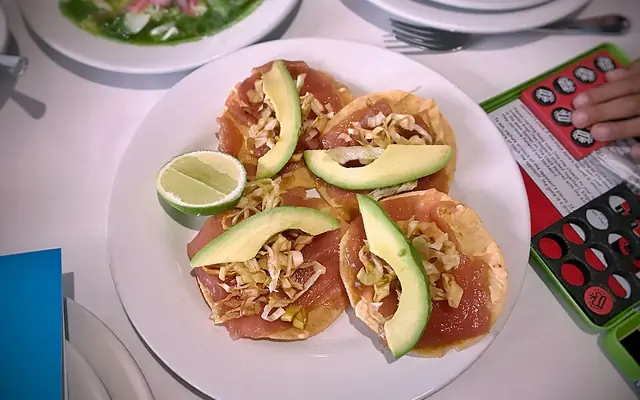
Modern Mexican is the post-2000 fine-dining movement that took the country's pre-Columbian larder, particularly nixtamalized heirloom corn, native chiles, and Mesoamerican ferments like pulque and tepache, and rebuilt it inside the format of the contemporary tasting menu. The defining rooms sit in Mexico City: Enrique Olvera's Pujol, Jorge Vallejo's Quintonil, and Elena Reygadas's Rosetta together turned Mexican cooking from the world's most underrated cuisine into one of its most awarded in barely two decades.
The project is twofold. First, it reframes Mexican cuisine as deeply technical and seasonal, the equal of any French or Japanese tradition rather than a casual food culture. Second, it draws a direct line from rural producers, the small Oaxacan masa miller, the Veracruz vanilla grower, the Tlaxcala chile farmer, into urban dining rooms. A Pujol mole madre, aged for years and refreshed daily, makes the point literal: this is a cuisine of slow time and accumulated memory, not novelty.
Where classic Mexican cooking is regional, modern Mexican is consciously pan-national. Chefs source from every state, work with criollo corn varietals that were nearly lost to industrial agriculture, and treat the menu as a survey of Mexican geography compressed into one room. The drinks list does the same with mezcal, raicilla, sotol, bacanora, and Mexican wine from Valle de Guadalupe.
Tours, tastings and classes from the cities on this page, bookable on GetYourGuide.
Day trip · 8 hours
Experience the fine wines and beautiful scenery of Napa and Sonoma on a guided day trip from San Francisco.

Guided tour · 2 hours
Choose a 2-hour express or 3-hour full Boston food tour. Taste clam chowder, arancini, brick oven pizza, cannoli, and more while exploring the North...
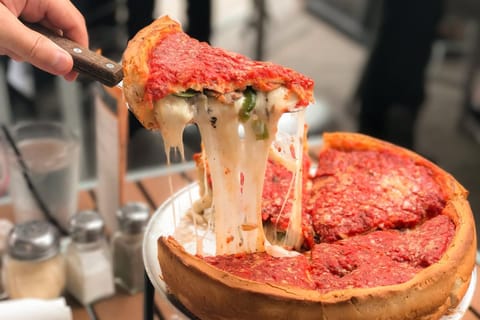
Guided tour · 2 hours
Taste some of Chicago's most iconic foods while walking through one of the Prohibition Era’s most fashionable and notorious gangster-ridden...
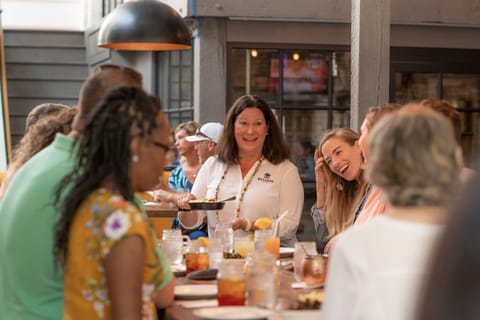
Guided tour · 2.5 hours
Experience the flavors of Charleston with the help of local guides. Delve into over 300 years of culinary history as you taste your way through the...
The best-scored modern mexican place in each of 1 cities.
Californios in San Francisco is Val Cantu's two-Michelin-star modern Mexican tasting room, 16 seats, the most cerebral table in the city right now.
OrderWhatever the corn course is on the night; the kitchen sources nixtamal heirloom corns directly.
TipThere is only one seating a night; book six weeks out for any Friday or Saturday.
Californios in San Francisco is Val Cantu's two-Michelin-star modern Mexican tasting room, 16 seats, the most cerebral table in the city right now.
OrderWhatever the corn course is on the night; the kitchen sources nixtamal heirloom corns directly.
TipThere is only one seating a night; book six weeks out for any Friday or Saturday.
 San Francisco1 place
Californios
San Francisco1 place
Californios
The center of the movement. Pujol (Enrique Olvera), Quintonil (Jorge Vallejo), Rosetta (Elena Reygadas), Maximo Bistrot (Eduardo Garcia), and Sud 777 set the tasting-menu benchmark. The menus are pan-Mexican rather than CDMX-regional, sourcing across all 32 states.
The deepest single-region modern kitchen, with Origen (Rodolfo Castellanos), Casa Oaxaca (Alejandro Ruiz), and Levadura de Olla (Thalia Barrios Garcia) building on the seven moles, criollo corn, and mezcal ecosystem. The most ingredient-honest expression of modern Mexican.
Roberto Solis at Nectar (Merida) and the Yucatecan-trained chefs reframe peninsula cooking, achiote, recados, citrus, habanero, banana leaf pib, in tasting-menu form. Distinct enough to warrant its own pillar.
Valle de Guadalupe winemaking and Pacific seafood produced a distinct modern coastal scene. Drew Deckman, Diego Hernandez at Corazon de Tierra, and the Ensenada food-truck and wine-country circuit make this the most modern-European-feeling Mexican region.
At the top modern Mexican rooms (Pujol, Quintonil, Rosetta, Sud 777), the tasting menu is the way. A la carte is usually limited or unavailable, and the menu is designed to be eaten in sequence. Pujol's omakase-style 'Taco Omakase' counter is a separate experience worth booking on its own. At Rosetta, the chef Elena Reygadas runs both the restaurant and a separate bakery (Panaderia Rosetta) that is its own destination.
Reservations open 30 to 90 days ahead at most modern Mexican rooms; the most-sought (Pujol counter, Maximo Bistrot) require months. Mezcal pairings are usually offered alongside the wine pairing and are often the better choice: the cuisine is built around the spirit. Don't skip the welcome snack courses (the 'tetelita and hoja santa' moments). The mistake is treating modern Mexican as a fancy version of taqueria food; it's the opposite, a slow, ingredient-deep tasting tradition.
Mezcal is the spirit of the cuisine. Serious modern Mexican rooms now hold mezcal lists organized by maguey species (espadin, tobala, madrecuixe, arroqueno, tepeztate, cuishe), with bottlings from specific palenqueros named on the menu. Pulque (fermented agave sap) and tepache (fermented pineapple) are the historic Mesoamerican drinks, increasingly returned to fine-dining bar programs. Mexican wine from Valle de Guadalupe (Casa Magoni, Vena Cava, Lechuza) is genuinely good and pairs well with the menus. Tequila, while dominant for cocktails, is less common as a tasting-menu pour.
Mexico City is the obvious center, with Pujol, Quintonil, Rosetta, Sud 777, Maximo Bistrot, Maizajo, Em, and the Rosetta-led pastry scene all within a short radius. Oaxaca is the second city, with Origen, Casa Oaxaca, and Levadura de Olla as the modern regional flagships. Merida (Nectar), Tijuana and the Valle de Guadalupe wine country, Guadalajara (Hueso, Alcalde), Puebla (Augurio), and Monterrey (Pangea, Koli) all hold serious modern Mexican rooms. Outside Mexico, Cosme and Atla in New York (Olvera's stateside projects), Damian in Los Angeles, and the new generation of Mexican-trained chefs in Madrid, Tokyo, and London have begun exporting the format.
Modern Mexican fine dining took shape in the 2000s. Enrique Olvera opened Pujol in 2000; by the mid-2010s it sat in the World's 50 Best top 20. UNESCO's 2010 inscription of traditional Mexican cuisine on the Intangible Cultural Heritage list was the cultural validation. The 2017 Netflix Chef's Table episode on Olvera and the 2018 Pujol cookbook 'Tu Casa Mi Casa' built the global audience. Today the movement is the most internationally awarded national fine-dining tradition outside Europe and Japan.
Traditional Mexican cooking is regional, home-rooted, and largely a la carte. Modern Mexican is pan-national, tasting-menu-driven, sources heirloom and rare ingredients, and operates as fine dining. The two share a larder; they don't share a format.
Yes. Pujol's mole madre has been aged continuously since 2013 (over a decade as of 2026), with new mole added to refresh it daily. The technique is closer to a sourdough culture than to a static sauce.
No. Modern Mexican fine-dining rooms operate in English at the front of house and most menus are bilingual. Mexico City's restaurant scene is internationally legible.
More cities are in research. Want modern mexican covered somewhere specific? Tell us where you want to eat.