Modern Hungarian cuisine is the Budapest-led fine-dining movement that took the deep Hungarian pantry, with its paprika, sour cream, foie gras, Mangalica pork, river fish, and Tokaji wine, and recomposed it into tasting-menu cooking that earned the country its first Michelin stars and has kept them since. The scene began in earnest in the early 2000s with chefs like Karoly Gerendai and Tamas Szell, accelerated through the 2010s as Onyx, Costes, and Borkonyha received and held stars, and now runs at a half-dozen Michelin-starred rooms plus a wider Bib-Gourmand-tier ecosystem.
The defining grammar is the rehabilitation of paprika as a serious seasoning (after decades of being treated as a tourist cliche), the use of indigenous Hungarian breeds (Mangalica pig, Gray Cattle, Hungarian-bred chickens, foie gras from the country's traditional duck and goose farms), the river-fish tradition (fogas, the Lake Balaton pike-perch, is the signature), and the obvious but historically underused Tokaji aszu, with its 6-puttonyos botrytis sweetness, as a pairing option. The defining dishes still read as Hungarian: paprikash, halaszle, gulyas, toltott kaposzta, libamaj (foie gras). The execution is what changes.
The leading rooms are Onyx (two Michelin stars until its closure in 2023, now Costes leads), Costes Downtown (one star, the original Costes since 1948), Borkonyha (one star, the wine-bar-evolved fine-dining room), Salt Budapest (one star, the youngest of the bunch), Babel (the modern Transylvanian crossover), and Stand (Tamas Szell's room, also Michelin-starred). The wider ecosystem includes the bistronomic rooms (Hild, KIOSK, Felix Kitchen and Bar) and the New Hungarian cuisine that runs through the casual scene.
Book a food experience
Tours, tastings and classes that match this page, bookable on GetYourGuide.
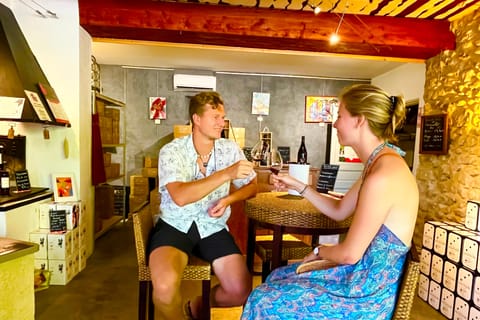
The Wine Tour is an amazing and real experience not to be missed in the surrounding area of Cagliari. Enjoy the beautiful scenery while tasting some...
Ket Szerecsen on Nagymezo utca, Pest's Broadway theatre strip, is a two-floor bistro and cafe serving Mediterranean-Hungarian crossover plates from breakfast.
OrderThe Mediterranean breakfast plate with avocado, jamon and Hungarian sausage.
TipOpen 08:00-24:00 weekdays, 09:00-24:00 weekends; the upstairs balcony is the quieter room.
Ket Szerecsen on Nagymezo utca, Pest's Broadway theatre strip, is a two-floor bistro and cafe serving Mediterranean-Hungarian crossover plates from breakfast.
OrderThe Mediterranean breakfast plate with avocado, jamon and Hungarian sausage.
TipOpen 08:00-24:00 weekdays, 09:00-24:00 weekends; the upstairs balcony is the quieter room.
Costes, Borkonyha, Stand, Salt, Babel, Esca. The country's Michelin-starred density is here. The cooking is paprika-respectful, foie-gras-led, fogas-fish-led, and paired with serious Tokaji.
Budapest bistronomic
Hild Restaurant, KIOSK, Comme Chez Soi, Felix Kitchen and Bar, the casual side of the modern Hungarian scene. Reinterpreted gulyas and paprikash at a lower price point.
Tokaj wine region
Sarga Borhaz, Anyukam Mondta (in nearby Encs), and the cellar restaurants in Tokaj, Tarcal, and Mad. The cooking pairs with the Tokaji aszu and Furmint wines and leans toward game, foie gras, and aged cheeses.
Balaton lake region
Kistucsok, Pasztor Borvendeglo, the lake-fish and Balaton-wine restaurants. The fogas (pike-perch) tradition is here, plus the Riesling-leaning Olaszrizling whites of the north shore.
Defining modern hungarian dishes
Reinterpreted Gulyas
The traditional Hungarian beef-and-paprika soup recomposed as a clear consomme over precisely-cubed Gray Cattle beef and a single dumpling. Same flavor (paprika, caraway, marjoram, beef stock), different presentation.
Mangalica Showcase
The Hungarian woolly pig (a heritage breed nearly extinct in the 1970s, now restored) presented as a multi-course showcase: tartare, cured loin, slow-cooked belly, crisp skin. The Mangalica revival is one of the success stories of modern Hungarian gastronomy.
Foie Gras (Libamaj)
Hungary is the world's second-largest producer of foie gras after France, and the modern Hungarian chefs treat it as a national ingredient. Served seared, as a torchon, or in the older paprikas mode. Often paired with Tokaji aszu.
Fogas with Paprika Cream
Pike-perch from Lake Balaton, pan-seared, served with a paprika cream and lake-vegetable garnish. The river-fish heart of the modern Hungarian menu.
Halaszle Refined
The Hungarian fisherman's soup, traditionally a rough river-fish stew with paprika, presented in a tighter, cleaner format with multiple fish preparations in one bowl. Spicy and acidic; the Szeged and Baja styles differ.
Paprikash Reduced
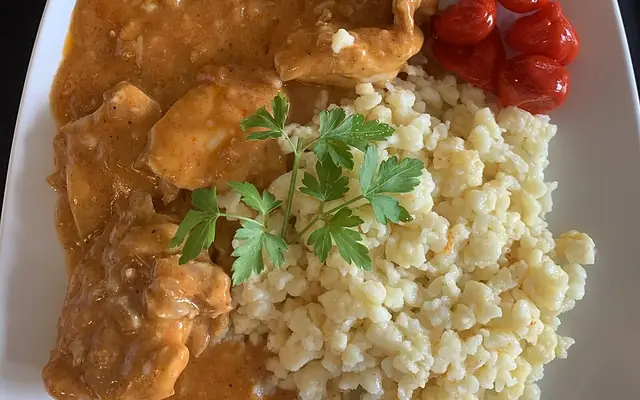
Chicken paprikash with the sauce reduced to a glaze and served alongside hand-rolled nokedli dumplings. The most domestic Hungarian dish, modernized without losing its identity.
Toltott Kaposzta Restyled
Stuffed cabbage with the cabbage cooked separately, the filling cured and seared, and the sour cream as a foam. Same flavors, different architecture.
Tokaji Pairing Course
A foie gras or aged-cheese course explicitly composed to pair with a 6-puttonyos Tokaji aszu. The honeyed-botrytis sweetness is the cuisine's defining pairing move.
Goose Liver and Walnut
Hungary's deep goose tradition (goose is the Christmas-and-November protein) produces foie-quality goose liver, often paired with walnut, fig, and the country's deep paprika tradition.
Somloi Galuska
The Hungarian rum-soaked sponge cake with walnut, raisin, chocolate sauce, and whipped cream, served as a small upscale composition at the end of a modern meal.
How to order
Modern Hungarian at the fine-dining end runs in tasting menus, usually 6 to 9 courses, with optional wine pairing (the Hungarian wine pairing, almost universally, is the right one). Book a week ahead at Costes, Stand, or Borkonyha; closer-in at the bistronomic places (Hild, KIOSK). The pairing is the experience; do not order foreign wine when the Hungarian list is this strong. At lunch, the prix-fixe menus at the Michelin-starred rooms are 30 to 50 percent cheaper than dinner and worth booking deliberately.
The rookie mistakes: ordering paprikash and gulyas at a Michelin-starred room (those are home dishes, and the restaurant has more interesting work), skipping the foie-gras course (Hungary is the second-largest producer in the world, and the chefs treat it as a national specialty), refusing the Tokaji aszu pairing (one of the most distinctive dessert wines on earth), tipping like an American (12 percent rounded up is the local norm), and confusing the Hungarian wine scene with German or Austrian (Tokaji, Furmint, Kekfrankos, Hárslevelu are their own grammar).
What to drink with it
Hungarian wine is the pairing foundation. Tokaji aszu (the noble-rot sweet wine, graded by puttonyos 3 to 6) for foie gras, dessert, and aged cheese. Furmint (the Tokaj dry white) for fish and lighter mains. Kekfrankos (the country's main red, called Blaufrankisch in Austria) for game and beef. Olaszrizling from Balaton, Hárslevelu (the white that runs sweet to dry) from Tokaj. Hungarian palinka (the fruit brandy) is the after-meal pour; tokaji-aszu-based digestifs work too. Hungarian beer (Soproni, Dreher) handles the casual rooms.
Where to eat it
Budapest is the center of the scene. The fine-dining roster runs to Costes Downtown (the original Costes since 2008), Stand (Tamas Szell's room), Borkonyha (the wine-bar-evolved Michelin star), Salt Budapest (the youngest of the Michelin-starred set), Babel (modern Transylvanian crossover), and Esca. Onyx, the former two-star, closed in 2023. The bistronomic tier (Hild Restaurant, KIOSK, Comme Chez Soi, Felix Kitchen and Bar) offers reinterpreted Hungarian classics at lower prices. The Tokaj wine region (Sarga Borhaz, Anyukam Mondta, the cellar restaurants in Mad) and Balaton (Kistucsok, Pasztor) extend the scene outward. Outside Hungary, Vienna's Hungarian-influenced rooms and Cluj-Napoca in Transylvania (where Hungarian minority cuisine runs strong) carry related work.
A short history
Modern Hungarian cuisine emerged in the early 2000s as Budapest chefs (Karoly Gerendai, Tamas Szell, the Costes group) returned from training abroad and started reworking the Hungarian canon at fine-dining level. Costes was the first Hungarian restaurant to receive a Michelin star (2010), Onyx followed in 2011, and the country has held a half-dozen one- and two-star ratings since. The Mangalica pig revival (a heritage breed brought back from near extinction since the 1990s) parallels the cuisine's broader push.
Frequently asked
Is modern Hungarian food really different from traditional Hungarian?
It uses the same pantry (paprika, sour cream, foie gras, Mangalica, river fish, Tokaji) and reworks the same dishes (gulyas, paprikash, halaszle, toltott kaposzta, libamaj), but the technique is fine-dining (clarifications, foams, sous-vide, single-bite plating) and the portions are tasting-menu scale. A first-time visitor will recognize most dishes by flavor.
What is the deal with Tokaji aszu?
Tokaji aszu is the noble-rot dessert wine from the Tokaj region of northeastern Hungary, one of the world's three classic botrytis-sweet wines (with Sauternes and German Trockenbeerenauslese). It is graded by puttonyos (3 to 6), referring to the number of botrytis-grape baskets added to the dry base wine. Six is the sweetest and most concentrated.
What is a Mangalica pig?
A Hungarian heritage breed of woolly pig, traditional to the Carpathian basin, nearly extinct by the 1970s, and now revived as the country's signature pork. The meat is more marbled and flavorful than commodity pork, and the Hungarian charcuterie tradition (kolbasz, szalonna) treats Mangalica as the gold-standard input.


.jpg)