
The plates that define Quebec City: what they are, where they came from, and where to eat the canonical version.
Signature dishes
-
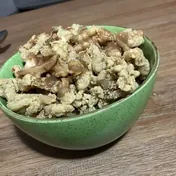
Poutine ★ 4.9
French fries and fresh cheese curds under hot gravy. Québec City cooks also top it with beer gravy or fried chicken, and Le Chic Shack makes it with hand-smashed potatoes.
Where to try it: Le Chic Shack, Restaurant Aucoin de Larue, Aux Anciens Canadiens, Restaurant La Bûche, Les Trois Garçons, Snack Bar Saint-Jean
Poutine emerged in the Centre-du-Québec region in 1959, though its exact origins are uncertain and several restaurants there claim to have invented it. For decades it remained a country snack food in Quebec's dairy region. In Québec City, Chez Ashton grew from a travelling snack cart that Ashton Leblond started in 1969; poutine was first offered in 1972, and Leblond won customers with free samples of a dish that was not yet popular in the city. The chain now has 25 restaurants in the Québec City region.
Watch out for: Milk
-

Tourtière (meat pie) ★ 4.7
A meat pie with a top and bottom crust, often seasoned ground beef or pork; in Saguenay the name is kept for a deep-dish pie of potatoes and diced meats.
Where to try it: Aux Anciens Canadiens, Restaurant La Bûche
Quebec's tourtière descends from the tourtes salées of Poitiers, and its name comes from the pie dish, known in parts of France since the 17th century. The pies were once filled with the tourte, or passenger pigeon, and after it disappeared most tourtières came to be made with beef or pork. It has been called food that is French by way of the British, who took Quebec in 1759. Tourtière is a traditional part of the Christmas réveillon and the New Year's Eve meal in Quebec.
Watch out for: Gluten
-
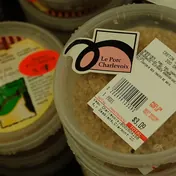
Cretons ★ 4.3
A cold spread of ground pork seasoned with spices such as cinnamon, savory and cloves, similar to rillettes and spread on toast at breakfast.
Where to try it: Restaurant La Bûche, Les Trois Garçons
Cretons are a forcemeat-style pork spread with onions and spices, whose fatty texture makes them resemble French rillettes. Traditional preparation covers ground pork shoulder in milk or water, seasons it with onions and spices, nearly always including ground cloves, and simmers it gently until the liquid is cooked off. Cretons are usually served on toast as part of a traditional Quebec breakfast, and they are on most sugar shack menus alongside pea soup and baked beans.
Book food experiences in Quebec City


-
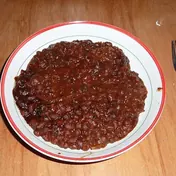
Fèves au lard (baked beans) ★ 4.2
Beans slow-cooked with pieces of pork fatback in an earthenware dish; there are many versions, but the most popular is made with maple syrup.
Where to try it: Le Chic Shack, Aux Anciens Canadiens, Restaurant La Bûche, Les Trois Garçons
In the northeast of America, Native American peoples cooked beans with maple sugar and bear fat in earthenware pots set in pits lined with hot rocks, and settlers later swapped in molasses or sugar, and bacon or ham. In Quebec, fèves au lard is counted among the recipes born of cultural exchange, and maple syrup remains a common component. They are served as a side at breakfast and are on most sugar shack menus in sugaring-off season, alongside pea soup and cretons.
-
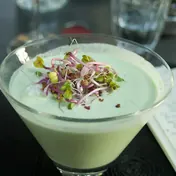
Soupe aux pois (pea soup) ★ 4.4
A soup of dry yellow peas, salt pork and vegetables such as small pieces of carrot, simmered in water seasoned with a bay leaf; it is often part of the sugar shack meal.
Where to try it: Aux Anciens Canadiens, Restaurant La Bûche
Soupe aux pois, yellow pea soup, is a traditional dish of Québec cuisine. One source holds that the most authentic version uses whole yellow peas, with salt pork and herbs for flavour. Dried peas stored easily and were long a cheap, high-protein staple for sailors, boiled with salt pork. Pea soup is often part of the traditional meal served at sugar shacks, and the casse-croûte snack bars served it alongside hamburgers, hot dogs and fries.
-

Pâté chinois ★ 4.5
Three layers baked in the oven, ground beef, then corn, then mashed potato, commonly sprinkled with paprika and served with simple condiments such as pickles or ketchup.
Where to try it: Restaurant La Bûche
Pâté chinois, literally Chinese pie, is often compared to shepherd's pie and hachis Parmentier, but differs by its layer of corn between the meat and the potatoes. Researchers trace it to the French-Canadian working class in Montreal in the 1910s; it became widespread during the Great Depression of the 1930s. Linguist Claude Poirier holds that the name is a calque of China pie, after the town of China, Maine. A public poll by Le Devoir led to it being called the national dish of Quebec.
-

Tarte au sucre (sugar pie) ★ 4.6
A single-crust pie filled with a mixture of cream, flour, egg and brown sugar, which is sometimes replaced with maple syrup; a classic of the Québécois holiday table.
Where to try it: Ciccio Café
Tarte au sucre is a dessert from northern French and Belgian cuisine that is also popular in Canada, where it is considered a classic dish of Québécois cuisine. Versions vary from leavened dough topped with sugar to shortcrust pastry, and the French Canadian version sometimes uses maple syrup. Sugar pie is among the many traditional dishes that take pride of place at Christmas and New Year's, and in 2019 it was featured on a Canadian postage stamp.
Watch out for: Gluten, Milk, Eggs
-
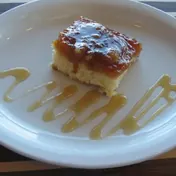
Pouding chômeur ★ 4.6
White cake batter and a brown sugar and cream sauce, layered in a pan and baked until a sweet syrupy pudding forms under a cakey topping; the syrup is often maple.
Where to try it: Restaurant La Bûche
Pouding chômeur, the unemployed man's pudding, often called poor man's pudding in English, was created in Quebec during the early years of the Great Depression. It is a basic cake batter onto which a hot syrup, typically maple or caramel, is poured before baking, and the syrup can be made from brown sugar, white sugar, maple syrup or a mix. During the worst of the Depression, stale bread was used in place of cake batter. It is counted with grands-pères among the traditional desserts of Quebec.
Watch out for: Gluten, Milk, Eggs
-
Tire d'érable (maple taffy) ★ 4.8
Maple syrup boiled down, poured in lines on clean snow and rolled up on a popsicle stick into a chewy lollipop as it cools, a rite of the sugar shack.
Where to try it: Restaurant La Bûche
Maple taffy, tire d'érable or sugar on snow, is part of traditional culture in Quebec. Indigenous peoples first collected maple water as a sweetener, and maple sugar making was brought to New France by Swiss and Norman French settlers in the 17th century. Maple taffy is most often made and eaten alongside the making of maple syrup at a sugar shack, and it is very popular in springtime. In Petit-Champlain, La Petite Cabane à Sucre de Québec serves maple taffy on snow just as a traditional sugar shack does.
-
Caribou ★ 4.1
A sweet drink of red wine, a spirit and maple syrup, drunk hot or cold, carried by carnival goers in hollow canes at the Québec Winter Carnival.
Where to try it: Restaurant La Bûche
Caribou is said to take its name from a mix of caribou blood and whisky drunk by hunters and loggers in colonial times to stave off the cold. Today it is made from red wine, a spirit and maple syrup, at home or as a premixed drink from the Société des alcools du Québec, and is served with citrus and cinnamon like mulled wine. It has long been served at the Québec Winter Carnival, held every year since 1955, at outdoor bars and in hollow plastic walking canes.
Signature Dishes in Quebec City, FAQ
What food is Quebec City known for?
Quebec City's signature dishes include Poutine, Tourtière (meat pie), Cretons, Fèves au lard (baked beans), Soupe aux pois (pea soup). See our signature dishes chapter for where to eat each.