History
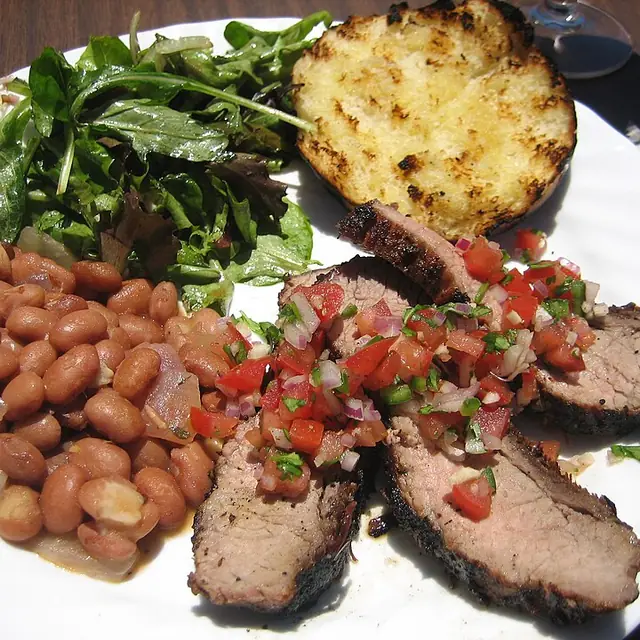
The tri-tip is a Central California Spanish-ranching cut from the bottom sirloin, popularized in Santa Maria Valley in the 1950s when butchers started roasting the previously discarded triangle of beef over red oak. The cut travelled north through Central Valley ranches into Sacramento by the 1970s, and by the 1990s tri-tip had become the standard backyard barbecue centerpiece across Sacramento County. Sacramento's barbecue rooms generally serve it with chimichurri on the Argentinian model, a nod to the city's strong cattle-ranching heritage and the Tank House style of cooking. The Tower Bridge Dinner has featured tri-tip on its menu in multiple years, and it sits permanently on the Tank House BBQ menu as the house steak.
Make it at home
Yield Serves 6Hands-on 25 minTotal 1 hrDifficulty Easy
Ingredients
- 1.2kg tri-tip roast
- 30g coarse salt
- 10g freshly ground black pepper
- 15g smoked paprika
- 10g ground coffee
- 5g garlic powder
- 5g dried oregano
- 60ml olive oil
- Bunch flat-leaf parsley, finely chopped
- 2 cloves garlic, minced
- 1 small shallot, minced
- 1 small red chile, deseeded and minced
- 60ml red wine vinegar
- 120ml extra-virgin olive oil
- Pinch sea salt
Method
- Combine salt, pepper, paprika, coffee, garlic powder and oregano. Rub the tri-tip on all sides. Drizzle with the 60ml olive oil. Rest at room temperature 30 minutes.
- Heat a charcoal grill to medium-high direct heat (red oak or hickory ideally). Sear the tri-tip 5 minutes per side over the coals.
- Move the tri-tip to indirect heat. Cover and cook until internal temperature reads 52C, about 20 to 25 minutes for medium-rare.
- Meanwhile, make chimichurri: combine parsley, garlic, shallot, chile, red wine vinegar and 120ml olive oil in a bowl. Salt to taste.
- Rest the tri-tip 10 minutes, tented in foil.
- Slice across the grain (the grain changes direction halfway through the cut) into 1cm slices. Serve with chimichurri spooned over.
Tip from the editors. The tri-tip grain changes direction at the wide end of the cut. Slice into the cut to find the grain, then turn the knife to keep cutting across the grain throughout.
This is the TableJourney editorial recipe, modelled on the canonical bistro / counter version. The first place to try the dish in its city of origin is below.