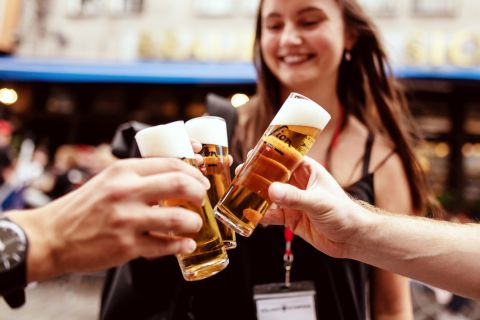
Cologne
Guided tour · 2 hours
Cologne: Brewery Tour with 3 Kölsch Beer Tastings
Experience Cologne's famous brewing culture and old town on this popular brewery tour. Immerse yourself in the exciting, humorous, and bizarre...
from€28Check dates
15 editor-picked kölsch brauhauser across 1 city.
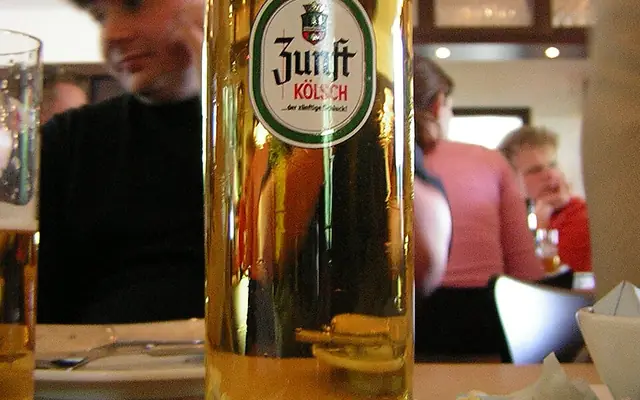
Kölsch Brauhaus refers to the brewery-restaurants of Cologne, Germany, where the city's protected beer style Kölsch is brewed, poured, and paired with a tight set of Rhineland dishes. Kölsch itself is a top-fermented, pale, hop-forward beer with a clean finish, served almost exclusively in slender 0.2-liter glasses called stangen. It is one of the few German beer styles with a legal geographic protection (the Kölsch Konvention of 1986), and only breweries within roughly 50 kilometers of Cologne may use the name.
The brauhaus format pairs the beer with food calibrated to absorb it: pork knuckle (haxe), blood sausage with apple (himmel und ääd), beef-and-onion stew (rheinischer sauerbraten), and various herring preparations. Waiters, called köbes, work the room in long blue aprons and famously make jokes at the customer's expense; the gruff style is part of the show. Empty stangen are replaced without asking until the drinker places a beermat on top of the glass.
This is one of the most ritualized regional drinking-and-eating cultures in Europe. The brauhaus is where Cologne goes to argue, to celebrate, to mourn, and to eat. It is also the most accessible introduction to Rhineland cooking, which has its own grammar separate from Bavarian or Swabian Germany.
Tours, tastings and classes that match this page, bookable on GetYourGuide.
Guided tour · 2 hours
Experience Cologne's famous brewing culture and old town on this popular brewery tour. Immerse yourself in the exciting, humorous, and bizarre...
Guided tour · 1h 30m
Take a guided tour of the Chocoversum in Hamburg and discover how sweet chocolate is made. Taste the chocolate at various stages of production and...

Guided tour · 2.5 hours
Enjoy a guided tour of the Viktualienmarkt in Munich and taste delicious regional foods as well as international delicacies. Enjoy the bustling life...
Guided tour · 1h 30m
Visit a craft brewery in Berlin and embark on a guided tour of the unique facility housed in recycled containers. Discover how beer is made and try a...
The best-scored kölsch brauhaus place in each of 1 cities.
Haus Töller on Weyerstrasse in Cologne occupies one of the oldest buildings in the city; cash only, no website, evening-only Rhenish classics in a historic.
Why locals goNo website, no tourist marketing, no menu online. Walk past twice and you've missed it.
Haus Töller on Weyerstrasse in Cologne occupies one of the oldest buildings in the city; cash only, no website, evening-only Rhenish classics in a historic.
Why locals goNo website, no tourist marketing, no menu online. Walk past twice and you've missed it.
Lommerzheim in Cologne-Deutz has served the city's most argued-over pork chop since 1959; cash only, closed Sundays, unchanged since Mick Jagger ate there.
Why locals goOn the Deutz east bank away from the tourist centre; no concessions to comfort or modernity.
Brauerei Päffgen in Cologne's Friesenviertel is the last independent house brewery in the city, founded by Hermann Päffgen in 1883; still hand-brewing.
OrderPäffgen Kölsch served at the bar with Tatar on dark bread; the only correct way to start an evening here
TipReservations by phone only from noon. Beer exclusively from the barrel. The Brauhaus is open from 12:00 daily.
The historic core houses Früh, Sion, Päffgen, and Gaffel, all family-owned and brewing on site or nearby. These are the loudest, most tourist-visible halls but also the most authentic format; the food is Rhineland classic and the köbes service is at its most theatrical.
Smaller halls in residential districts like Südstadt and Ehrenfeld. Quieter rooms, often with rotating guest Kölsch from smaller breweries (Mühlen, Reissdorf, Bischoff), and a deeper bench of Rhineland home cooking that the central halls treat as commodities.
The format is the order. Sit down at any free seat (brauhauser are communal), and a köbes will bring a Kölsch within seconds. Empty glasses are replaced automatically; a beermat on the rim signals stop. Food orders are simpler than at a restaurant: pick one dish from the chalk board or short menu. Halve Hahn first if testing the waters, then Himmel un Ääd or Sauerbraten. The köbes will mark each Kölsch as a stroke on your beermat; the bill is calculated from the marks at the end. Service is gruff by design; ask politely, accept the jokes, and tip by rounding up a euro or two per round. The rookie mistakes: ordering a different beer (Kölsch is what is served, full stop), letting the Kölsch get warm (drink within 5 minutes; that is why the glass is small), and not removing the beermat before you are ready for the next round.
Kölsch is the only beer most brauhauser pour, and it is the universal pair for the entire menu. The clean, hop-forward finish cuts through pork fat and acid-laden braises. The German-language alternative on most menus is Korn (clear grain spirit) as a digestif, or a Kräuterlikör like Underberg. Coffee with the bill. Wine appears on brauhaus menus mainly as a token gesture; locals drink Kölsch with everything from breakfast Mettbrötchen to dessert.
Cologne is the only place to drink Kölsch the way it is meant to be drunk; the beer's flavor is fragile and travels poorly. The Altstadt halls (Früh am Dom, Sion, Päffgen, Gaffel am Dom) are tourist-priced but authentic. For the locals' brauhauser, head into Südstadt (Päffgen's main brewery is here) or Ehrenfeld. Düsseldorf, despite being 40 kilometers away, drinks Altbier instead and is a rival, not a substitute. Outside Germany, Kölsch is now brewed under license in a few US cities, but the brauhaus format itself does not export.
Kölsch as a defined style emerged in the late 19th century when Cologne brewers shifted to top-fermented pale beer to compete with Pilsner from Bohemia. The Kölsch Konvention of 1986 codified the geographic protection, name use, and serving format. The brauhaus tradition itself predates Kölsch by centuries, descending from medieval Rhineland inns. The köbes role (named for an old word for Jakob) carries forward a guild-era waiter culture preserved nowhere else in Germany.
Not really. The stange is part of the beer's identity, and even regulars get refills in the small glass. A few halls offer a stange-stange (slightly larger), but ordering a Maß (one liter) marks the drinker as a Bavarian tourist.
The gruff köbes style is a deliberate tradition, not actual rudeness. The jokes are part of the show. Returning fire (politely) is the correct response, and the bill at the end will be honest.
Technically a hybrid. It is top-fermented like an ale but conditioned cold like a lager, which gives it the clean finish of a lager with the hop character of an ale. It is one of only a handful of hybrid German styles.
More cities are in research. Want kölsch brauhaus covered somewhere specific? Tell us where you want to eat.